Content
A newly completed fiberglass animal sculpture has come out of the Xinyesheng Sculpture workshop as a black eagle designed to sit at the very top of a client's flagpole. Rendered in a faceted, low-poly style with wings fully extended and talons gripping the pole below, the design reads as a strong, modern silhouette from a distance, which matters most for a piece meant to be viewed from ground level, high overhead. The production video follows the sculpture from its geometric 3D digital design through 3D-printed prototyping to the finished fiberglass-reinforced plastic (FRP) piece in its glossy baked-on black finish.
Eagle finials have topped flagpoles and architectural columns for centuries, usually cast in metal. Reproducing that same commanding silhouette in fiberglass instead offers a lighter, more cost-effective alternative for a client who wants the visual impact of an eagle finial without the weight and mounting demands of a solid metal casting.
The sculpture starts as a fully modeled 3D digital design, built with a deliberately faceted, geometric surface rather than a smoothly rendered, lifelike one. Each wing feather, the curve of the beak, and the set of the talons are constructed from flat angled planes that catch light differently depending on the viewing angle, giving the eagle a bold, contemporary character distinct from a traditional realistic statue.
Because this piece was designed specifically to sit atop a flagpole, the digital model also had to account for how the eagle would read in silhouette against the sky and how its wingspan and center of gravity would balance around the mounting point. Reviewing the design from multiple angles digitally, front-facing, in profile, and from below, allowed these mounting and viewing considerations to be resolved before any physical material was cut or printed.
Once the digital design was finalized, it was produced as a 3D-printed physical model, shown in the video mounted on a turntable in its early black-painted state. 3D printing lets a complex, sharply faceted design like this eagle be reproduced accurately as a physical object without hand-sculpting each angled plane by hand, which is especially useful for a geometric style where every flat surface needs to stay crisp and consistent.
This printed model serves as the master pattern for the next stage of production. Its accuracy directly determines how faithfully the faceted design will translate into the mold used to produce the final fiberglass sculpture, which is why the digital and 3D-printing stages receive as much attention as the fiberglass work that follows.
With the 3D-printed pattern confirmed, a mold is taken from it and used to produce the sculpture in fiberglass-reinforced plastic. Layers of fiberglass cloth are laid into the mold and saturated with resin, building up a shell that is strong and rigid yet significantly lighter than a comparable metal or stone casting. Once cured, the shell is removed from the mold, seams are cleaned up, and the surface is prepared for painting.
This resin and fiberglass construction is what allows a sculpture with this much wingspan and overhang, the wings extend well beyond the body and the central support point, to remain light enough for safe, secure mounting on top of a flagpole, where excess weight and wind load are both practical concerns.
The finished fiberglass eagle is coated in a deep, glossy black through a baked-on paint process, seen in its early stages on the small printed prototype and carried through to the full-scale piece. Baking the paint onto the surface, rather than relying on an air-dried coat alone, produces a harder, more durable finish that holds its color and gloss more consistently over time, which matters for a sculpture that will be mounted outdoors at height and exposed to sun and weather.
A uniform black finish also suits the faceted design intent. Rather than adding painted detail or texture, the flat black surface lets each angled plane of the eagle's wings and body read purely through light and shadow, reinforcing the geometric silhouette that defines the piece.
A sculpture destined for the top of a flagpole has different structural requirements than a piece placed on a plinth or pedestal at ground level. The talons and central body were designed around a mounting sleeve that fits over the pole, and the fiberglass shell needed enough internal reinforcement to support the extended wings without flexing under wind load at height.
Balancing visual drama, the dynamic, wings-spread pose, against these practical mounting and wind-resistance requirements is part of what the digital design stage resolves before production begins, since correcting a balance or mounting problem after the fiberglass shell is cast is far more difficult than adjusting the 3D model.
Fiberglass-reinforced plastic offers a specific combination of advantages for a piece like this eagle finial: it is significantly lighter than cast metal or carved stone, which simplifies both the mounting hardware and the pole's structural requirements, while still holding fine surface detail and a crisp, faceted geometry. It is also weather-resistant and, with a properly baked-on finish, able to maintain its color and surface quality through years of outdoor exposure.
For a client wanting a bold, modern eagle silhouette at the top of a flagpole without the installation demands of a heavy metal casting, fiberglass provides a practical route to the same visual impact.
Xinyesheng Sculpture is a China-based sculpture manufacturer and custom design metal statue supplier with 13 years of experience in sculpture creation. Its R&D and design team has more than a decade of experience and works across stainless steel mirror-finish sculptures, marble works, weathering steel pieces, bronze casting, fiberglass sculpture, and tombstone artistry, integrating design, production, installation, and after-sales service into a single project process.
The black eagle finial reflects this workflow applied to a specific mounting challenge: a faceted digital design built around silhouette and balance, a 3D-printed pattern to confirm proportions before mold-making, fiberglass-reinforced plastic construction to keep the finished piece light enough for pole-top installation, and a baked-on black finish built to hold up outdoors. The same process supports custom projects reaching public squares, campuses, hospitality venues, and, as with this piece, individual client installations such as a residential or commercial flagpole.
The quality of a 3D-printed fiberglass sculpture depends on how well each stage of production supports the next. The digital model needs to account not only for appearance but for how the finished piece will be mounted, viewed, and loaded once installed. The 3D-printed pattern needs to reproduce that design accurately enough that fine surface details, in this case, the sharp, flat facets of the eagle's feathers and body, survive into the mold and, from there, into the final fiberglass shell.
Structural planning matters just as much as surface finish for a piece intended for elevated, outdoor mounting. Internal reinforcement, wall thickness, and the design of the mounting point all affect whether a fiberglass sculpture can safely support its own extended forms, such as a wide wingspan, under wind load over years of outdoor service. The black eagle finial illustrates how these considerations come together, from an early faceted 3D render through 3D-printed prototyping to a finished, baked-black fiberglass sculpture built to sit permanently atop a client's flagpole.
 Fiberglass Floating Coffee Cup Decorative Sculpture
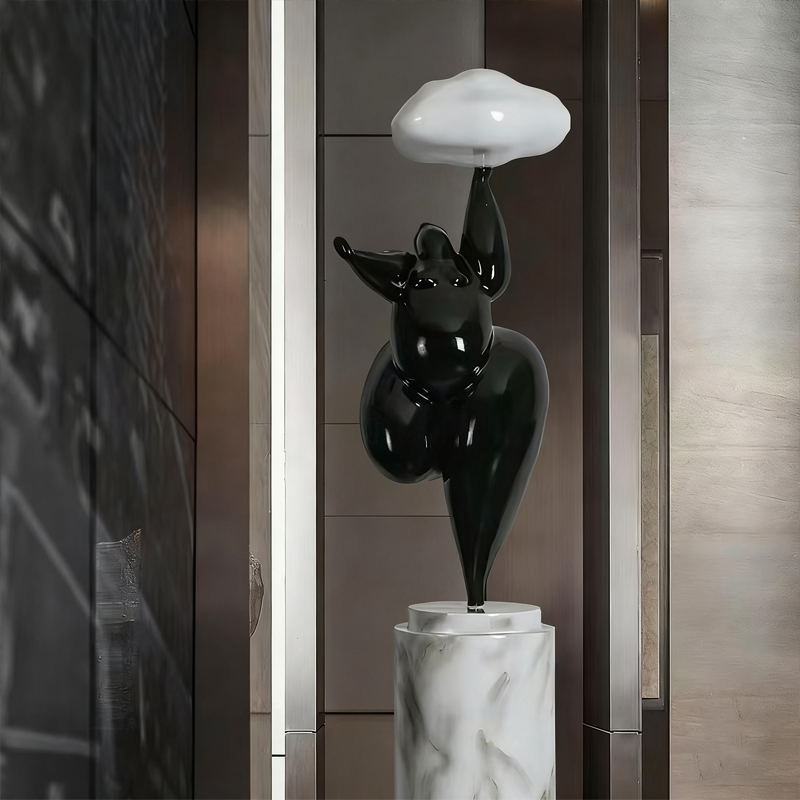 Cloud-Lifting Style Fiberglass Decorative Sculpture
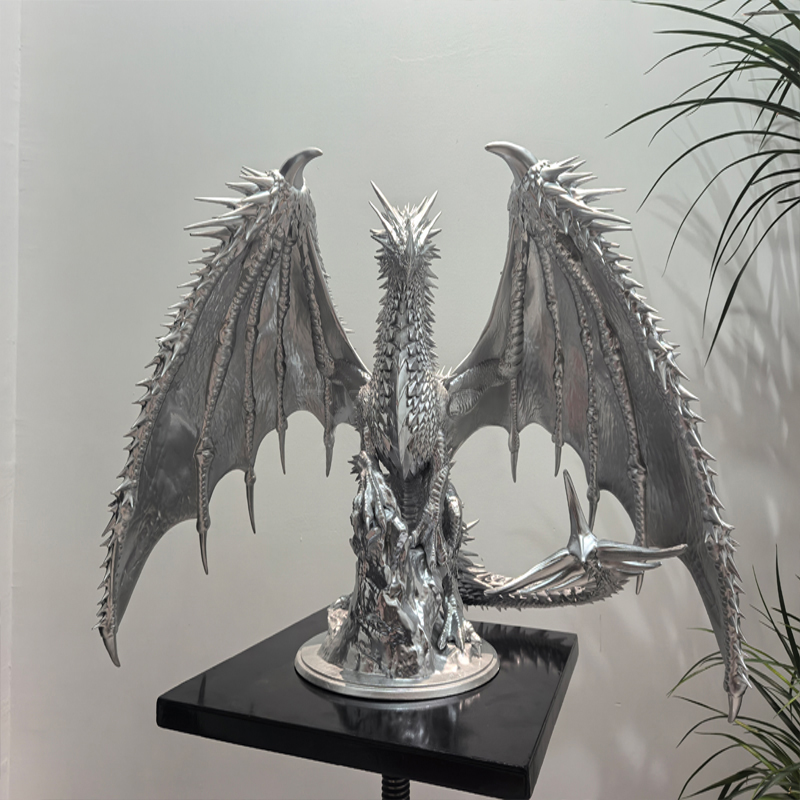 Fiberglass Human Sculpture in a Gargoyle Style
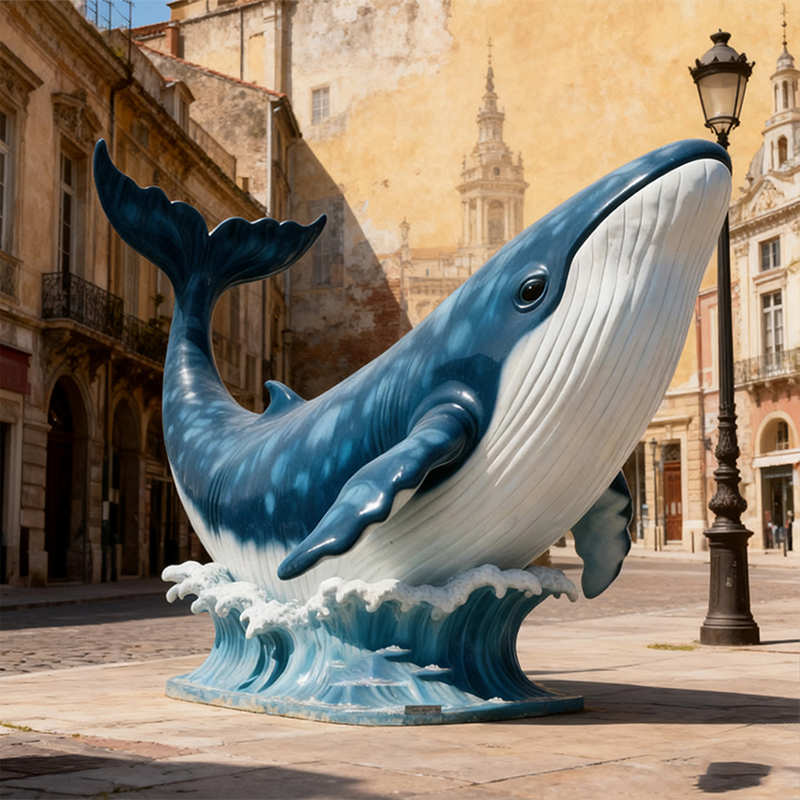 Fiberglass Blue Whale Sculpture
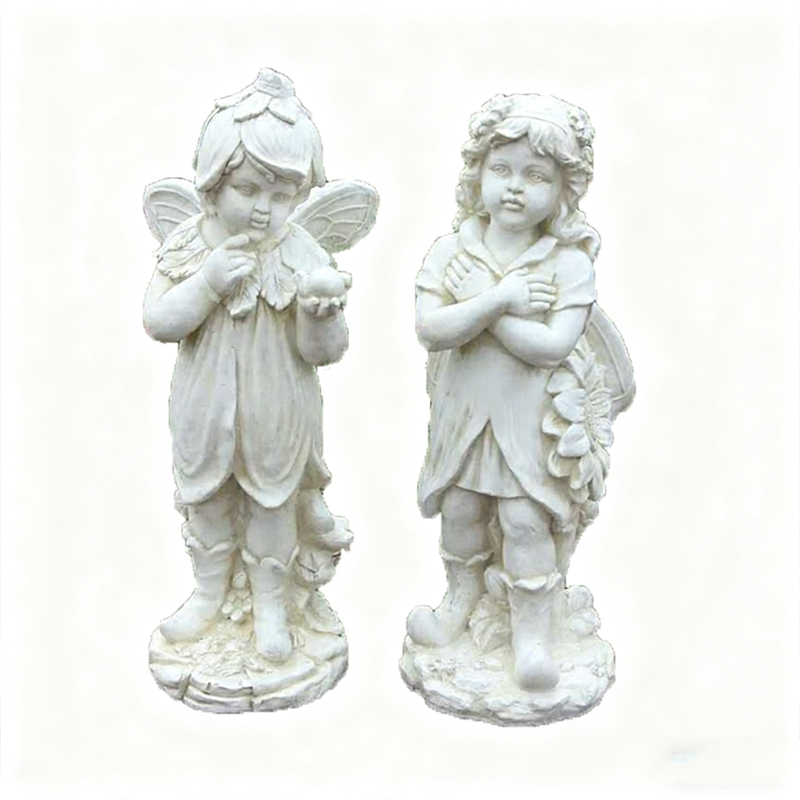 Fiberglass Human Sculpture of a Little Angel
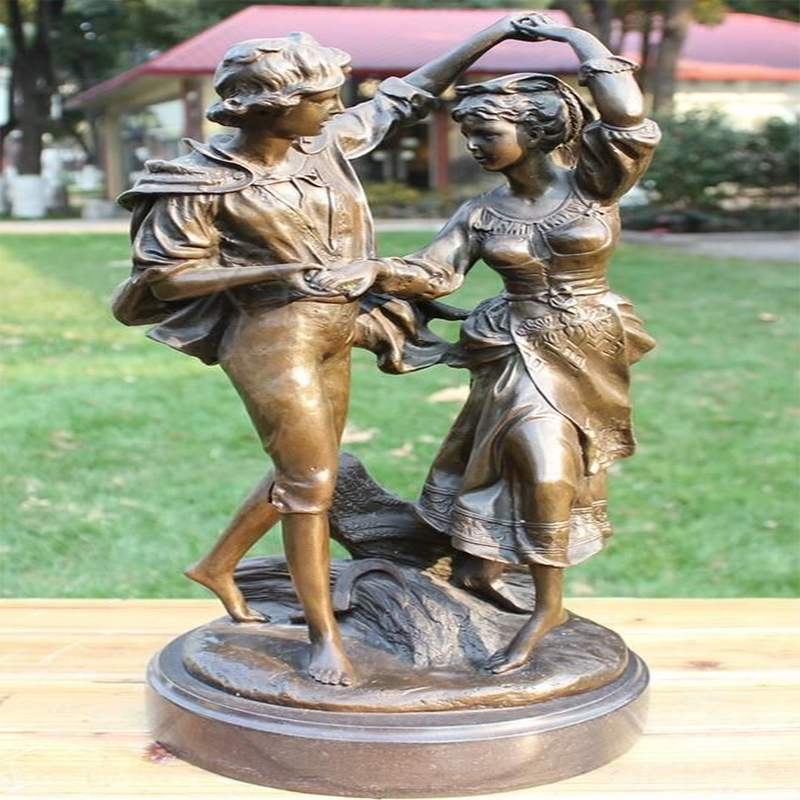 Bronze Life-Size Dancing Couple Sculpture – Heart Figure for Park Decoration



Daniel H.

Amanda R.

Robert B.

Jennifer S.

James W.

Barry G.

Michael T.

Emily K.

David L.

Sarah M.


Mikey XV

Jagxue

 English
 Español
 عربى
 Français
 italiano
 Deutsch