Content
A newly completed white marble human sculpture has left the Xinyesheng Sculpture workshop bound for an art exhibition in Norway. The piece is a classical-style male torso, modeled in the tradition of ancient Greco-Roman fragment sculpture: a muscular figure captured mid-form, with one arm and both legs deliberately broken off at weathered, quarry-like edges. The production video documents the full process behind the work, from an early digital sculpt through CNC roughing on raw marble block to the hand-carved detail that gives the finished piece its anatomical precision and aged surface character.
Fragmentary torso sculpture has a long history in Western art, echoing archaeological finds where time, not the artist, decided which parts of a figure survived. For a contemporary art exhibition, a new marble torso in this style offers viewers a familiar visual language, classical anatomy, weathered stone, an incomplete form, while remaining a fully realized, freshly carved artwork rather than a reproduction of an existing piece.
Before any stone is cut, the design team builds the sculpture as a detailed 3D digital model. For this piece, the design work centered on two contrasting textures within a single figure: the smooth, idealized musculature of a classical torso, and the rough, broken surface where the arm and legs terminate, meant to read as natural stone fracture rather than sculpted detail.
The digital sculpt maps out the muscle definition across the chest, abdomen, and back, the turn of the hips, and the exact placement of each broken edge, since these fracture points determine how the finished piece will balance on display and how convincingly it reads as a weathered fragment rather than an unfinished modern carving. Reviewing the model from every angle before cutting into the marble block let the design team confirm these proportions and the transition between carved and "broken" surfaces ahead of time.
The video opens on the raw material stage: a large, solid block of white marble, freshly cut and still showing the translucent, faintly veined surface typical of high-grade statuary marble. Selecting a block for a figurative sculpture like this involves checking for consistent color, minimal veining across visible surfaces, and enough depth and length to contain the full torso, arm stump, and leg forms without hidden internal flaws.
Because the finished sculpture depends on both smooth carved anatomy and convincing broken edges, the block also needs to be large enough to allow the final fracture points to be shaped from solid stone rather than assembled from separate pieces, keeping the completed torso structurally sound as a single continuous carving.
Once the block is selected, a CNC carving machine mounted above the stone begins cutting the rough form directly from the digital model. In the video, a water-cooled router bit works down through the marble, hollowing out the space between the legs and establishing the basic silhouette of the torso, shoulders, and hip line well before any hand tool touches the stone.
This machine-carving stage removes the bulk of the excess material quickly and accurately, following the proportions set in the digital design. It gives the piece a reliable structural foundation, correct scale, correct placement of major forms, before the more time-intensive work of hand carving begins. For a figure with this level of anatomical detail, starting from a precise CNC-roughed form also protects the sculpture's proportions from drifting during the many hours of manual refinement still to come.
After CNC roughing, the sculpture still carries visible tool marks and a blocky, unresolved surface, as seen in the video where the torso sits half-formed, the muscle groups roughly indicated but not yet defined. From this point, artisans take over with hand tools to carve the fine anatomical detail: the ribcage and abdominal muscles, the collarbone, the natural asymmetry of a standing human figure.
Hand carving is also where the contrast central to this piece is created. The smooth, carefully modeled skin surfaces are worked to a soft, lifelike finish, while the broken arm and leg edges are shaped and textured by hand to resemble natural stone fracture, uneven, pitted, without the tool-mark regularity of a machine-cut surface. Achieving this convincing weathered texture next to precise human anatomy is a skill that depends entirely on experienced hand carving rather than machine roughing alone.
White marble has been the material of choice for classical figurative sculpture for thousands of years, and the reasons remain relevant for a contemporary exhibition piece. The stone's fine grain and slight translucency allow carved musculature to catch light in a way that suggests the softness of skin over structure, while its durability means a finely carved torso can travel internationally and stand up to years of gallery handling and display.
For an art exhibition setting specifically, white marble also carries an immediate visual association with classical and archaeological sculpture, which supports a fragmentary torso design like this one: viewers recognize the material and form language even before reading any accompanying description of the piece.
Xinyesheng Sculpture is a China-based sculpture manufacturer and custom design metal statue supplier with 13 years of experience in sculpture creation. Its R&D and design team has more than a decade of experience and works across stainless steel mirror-finish sculptures, marble works, weathering steel pieces, bronze casting, and tombstone artistry, integrating design, production, installation, and after-sales service into a single project process.
The marble torso sculpture reflects this workflow from concept to export: a digital model developed to balance idealized anatomy against convincing fracture detail, careful selection of a suitable marble block, CNC roughing to establish accurate proportions, and extensive hand carving to complete the figure's musculature and weathered edges. The same process supports projects reaching European public squares and galleries, North American campuses and hospitality venues, religious sculpture commissions in Asia, and memorial art installations across Africa.
The quality of a marble sculpture that combines CNC roughing with hand finishing depends on how well the two stages are balanced. CNC carving establishes accurate proportions and removes bulk material efficiently, but it cannot replicate the subtle asymmetry and surface variation of human anatomy, or the irregular, non-repeating texture needed to convincingly imitate natural stone fracture. Hand carving supplies both, and the final character of the sculpture depends heavily on the carver's experience with anatomical form and surface texture.
Material selection also plays a direct role: a marble block with even color and minimal internal veining allows fine anatomical detail to read clearly under exhibition lighting, without distracting lines running across the carved surface. The white marble torso now on its way to Norway illustrates how these factors come together, from an early digital concept and a carefully chosen block of stone to a finished sculpture built for close viewing in a gallery or exhibition setting.
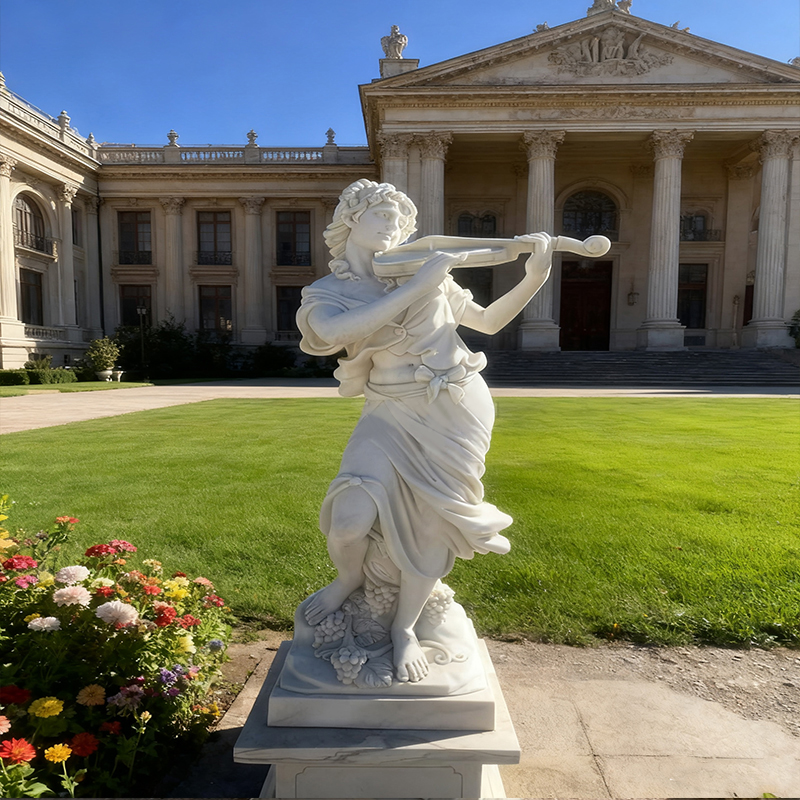 Marble Human Sculpture of a Flute Player
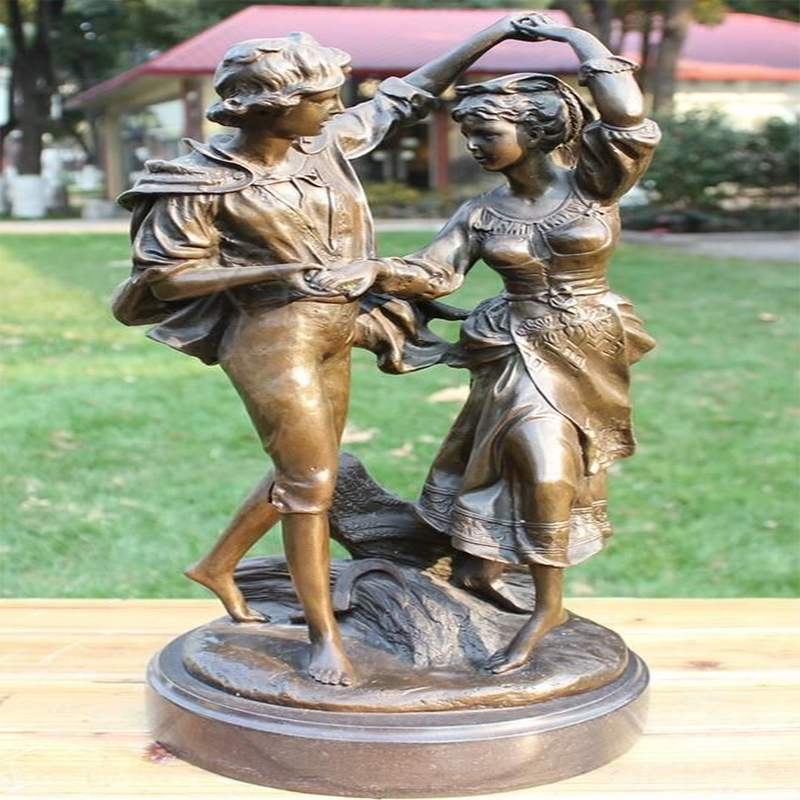 Bronze Life-Size Dancing Couple Sculpture – Heart Figure for Park Decoration
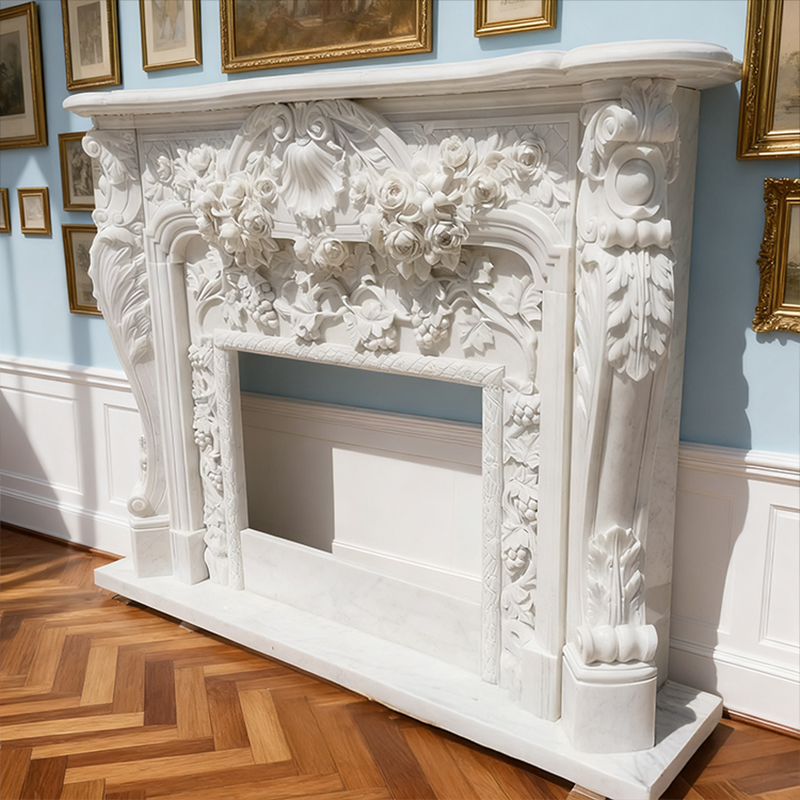 Marble Functional Fireplace Mantel Sculpture
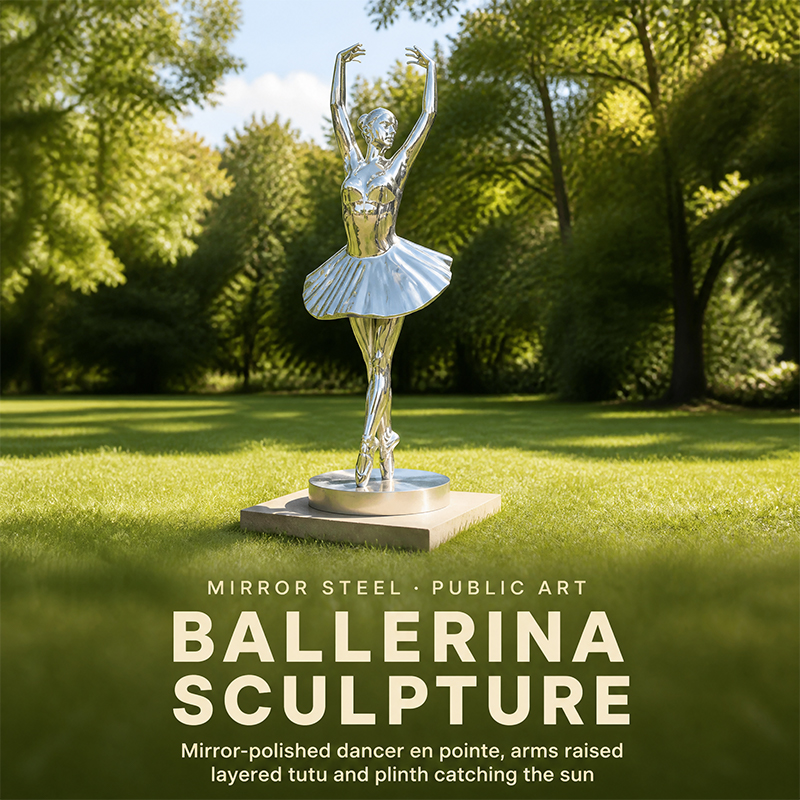 Life-Size Custom Mirror Polished Dancing Woman Stainless Steel Sculpture
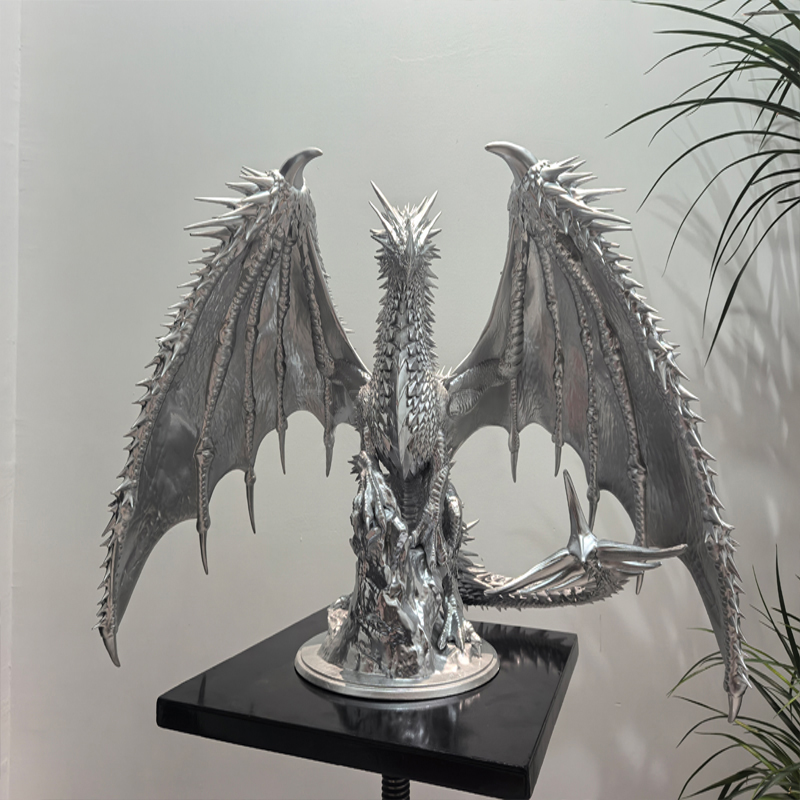 Fiberglass Human Sculpture in a Gargoyle Style
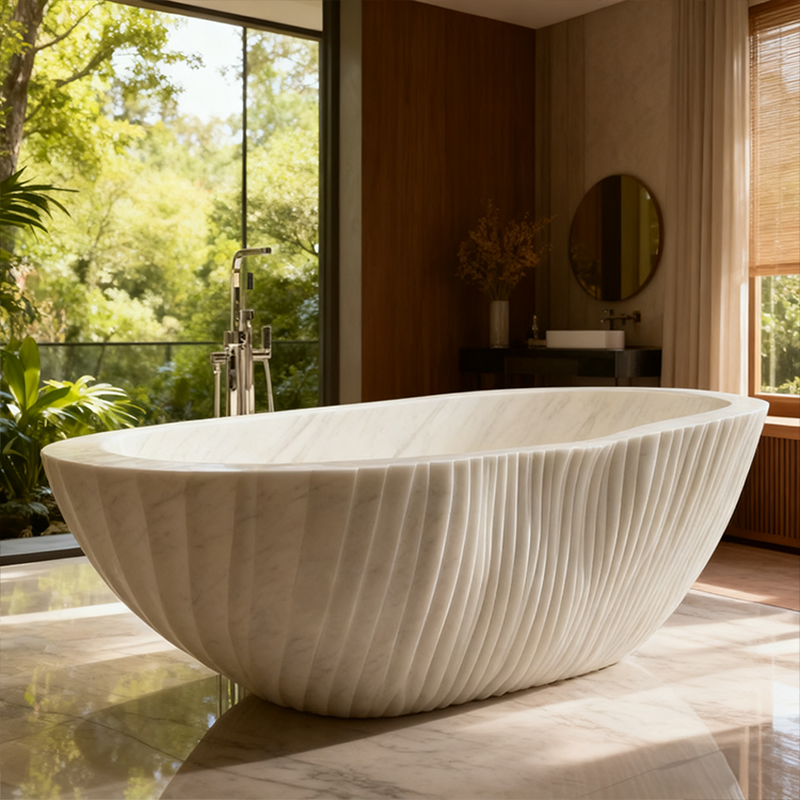 Marble Functional Bathtub Sculpture



Daniel H.

Amanda R.

Robert B.

Jennifer S.

James W.

Barry G.

Michael T.

Emily K.

David L.

Sarah M.


Mikey XV

Jagxue

 English
 Español
 عربى
 Français
 italiano
 Deutsch