Content
A newly completed bronze animal sculpture has left the Xinyesheng Sculpture factory bound for the United States, where it will take its place inside a Russian-themed tea room in New York City. The piece reimagines a familiar figure from Russian circus tradition: a mother bear balancing on one paw atop a stacked tower of teacups, with two cubs joining the act, one perched to the side and the other lifting a small teapot overhead. The production video documents the full lost-wax casting process behind the sculpture, from an early digital concept to the gold-finished bronze now ready for installation.
Performing bears have long been part of Russian circus and folk imagery, appearing in traveling shows, illustrations, and tea culture motifs for generations. For a Russian tea room in New York looking to bring that heritage into a physical space, a bronze sculpture offers a way to translate a familiar cultural image into a durable, detailed centerpiece that fits naturally into a dining or lounge interior.
Before any metal is poured, the design team builds the sculpture as a detailed 3D digital model. For this piece, the challenge was balance in both senses of the word: the composition needed to read as a bear physically balancing on a single raised paw, while the overall silhouette needed to stay visually stable enough to cast, mount, and ship as a finished bronze destined for an interior space rather than an open plaza.
The digital sculpt captures the individual fur texture across the mother bear and both cubs, the folded ears, the gripping paws around the teapot handle, and the layered teacups and saucer that form the base. Reviewing the design digitally from every angle before committing it to a physical mold mattered even more on an export project like this, where the client in New York was approving proportions and posture from photographs and renders rather than an in-person visit to the workshop.
Once the digital design is approved, it is translated into a physical prototype. In the video, this stage appears as a raw, reddish sculpted form: the mother bear's head and shoulders resting on a rounded ball base, still soft and freshly worked by hand. This prototype stage is where the digital proportions are checked against a tangible object, and where fine surface texture, such as the individual claws and the wrinkled skin around the muzzle, is refined before mold-making begins.
This step exists because a screen render and a physical sculpture do not always behave the same way. Weight distribution, surface highlights, and the way light falls across fur texture can only be fully judged once the form exists in three dimensions, which is why Xinyesheng Sculpture builds a physical prototype for complex custom pieces rather than casting directly from a digital file, particularly for a commissioned work that will travel overseas before anyone outside the factory sees it in person.
The next stage shown in the video is the ceramic shell process at the heart of traditional lost-wax bronze casting. Wax patterns for the bear figures and the teacup base are attached to a network of gating rods, then repeatedly dipped in a ceramic slurry and coated with fine sand until a thick, rigid shell builds up around every surface. The wax inside is later melted and burned out, leaving a hollow ceramic mold in the exact shape of the sculpture, ready to receive molten bronze.
In the footage, the bear figures hang from this rod system, fully encased in a rough gray-white ceramic coating, with the gating channels branching out like a skeleton around each piece. Lost-wax casting is what allows molten bronze to later flow precisely into every crevice, from the texture of the fur to the small handle of the teapot, and it is why this method remains the standard for sculptures with this level of surface detail and multiple interlocking figures.
After the ceramic shell is fired and the wax pattern burned out, molten bronze is poured into the resulting cavity. Once cooled, the shell is broken away to reveal the raw cast bronze form, still rough and unfinished, as seen in the video where the individual bear, cub, and teacup components sit among rows of other freshly cast pieces in the factory yard.
Because this sculpture involves several separate figures, the mother bear, two cubs, the teapot, and the stacked teacup base, casting alone is not enough to complete the piece. Artisans weld and fit each cast component together, checking the balance point where the bear's single raised paw meets the ball and teacup tower below, and cleaning up the seams left by the gating system before the sculpture moves on to finishing. For a piece headed to a tea room interior in New York, this stage also confirms that the base sits level and stable on an indoor floor or plinth rather than an outdoor foundation.
The final stage transforms the raw bronze-gray casting into the bright gold figure seen standing in the sunlit factory yard. A gold finish is achieved through careful surface preparation and coating rather than a single coat of paint, and the video shows several completed versions of the sculpture, each capturing a different pose in the circus sequence, from the mother bear balancing on the ball to a cub standing upright on a serving tray.
This gold treatment suits both the storybook character of a performing bear and the warm, decorative interior of a tea room. Unlike the darker antique patinas used on traditional figurative or memorial bronzes, a bright gold finish emphasizes the sculpted fur texture and playful poses, and reads well under the indoor lighting of a hospitality space rather than the open daylight of a garden or plaza installation.
Bronze is often associated with outdoor monuments, but its durability and fine detail reproduction make it equally well suited to a themed interior like a Russian tea room. The same qualities that let bronze survive decades outdoors, resistance to wear, structural strength, and the ability to hold fine surface texture, also make it a low-maintenance choice for a high-traffic hospitality setting where a sculpture may be viewed and photographed up close every day.
A cultural motif like the Russian circus bear works particularly well in bronze because the material can carry both the playfulness of the design and a sense of craftsmanship and permanence that suits a restaurant or tea room built around heritage and atmosphere rather than a purely decorative theme.
Xinyesheng Sculpture is a China-based sculpture manufacturer and custom design metal statue supplier with 13 years of experience in sculpture creation. Its R&D and design team has more than a decade of experience and works across stainless steel mirror-finish sculptures, marble works, weathering steel pieces, bronze casting, and tombstone artistry, integrating design, production, installation, and after-sales service into a single project process.
The Russian circus bear sculpture reflects this full workflow from a client brief to an installed artwork: a digital concept refined for balance, cultural detail, and posture; a physical prototype to verify proportion and texture; lost-wax investment casting to capture fine surface work; hand-finished assembly across multiple cast components; and a custom gold coloring treatment matched to an interior hospitality setting. The same process supports projects that have reached European public squares, North American campuses and hospitality venues, religious sculpture commissions in Asia, and memorial art installations across Africa.
Lost-wax casting remains the preferred method for detailed bronze animal sculpture because the wax pattern and ceramic shell can reproduce fine, irregular surfaces, fur texture, small props like a teapot, layered teacups, that would be difficult to achieve with sand casting alone. The digital or clay model sets the proportions, posture, and balance point of the design; the wax pattern and shell determine how faithfully that detail survives into the metal; and welding and assembly determine whether a multi-figure composition, like a bear supporting two cubs on a narrow base, remains structurally sound once installed indoors or outdoors.
Surface finishing is equally important for a piece meant to be seen up close in a hospitality interior. Whether a sculpture receives a traditional antique patina or a bright decorative finish like the gold treatment used here, the coloring process needs to be applied evenly across complex, uneven surfaces without losing the sculpted detail underneath. The Russian circus bear sculpture now on its way to a New York tea room illustrates how these stages come together, from an early 3D render to a finished, export-ready bronze artwork built for a specific cultural and commercial setting.
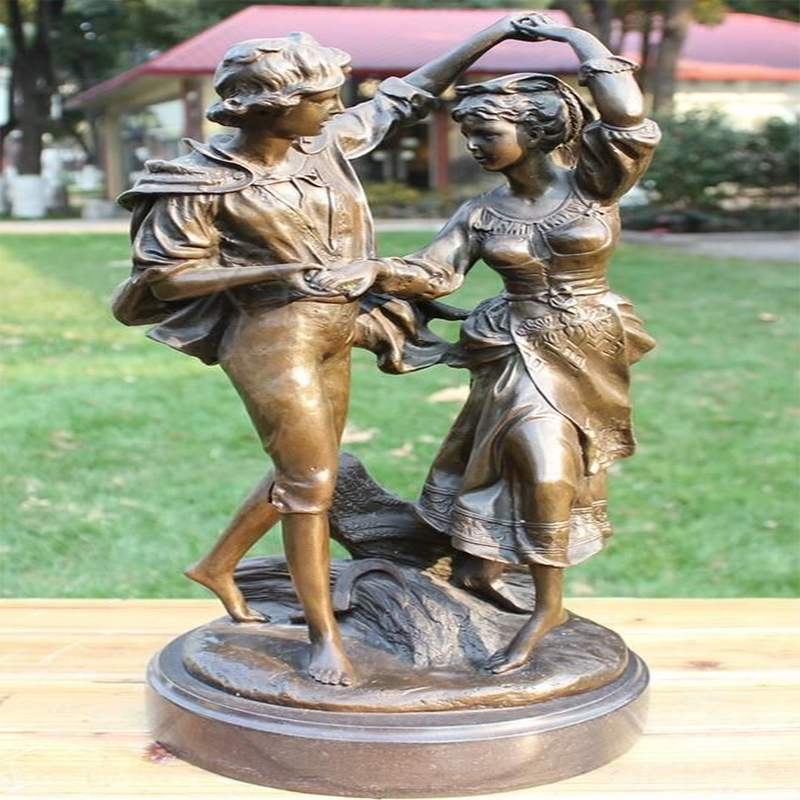 Bronze Life-Size Dancing Couple Sculpture – Heart Figure for Park Decoration
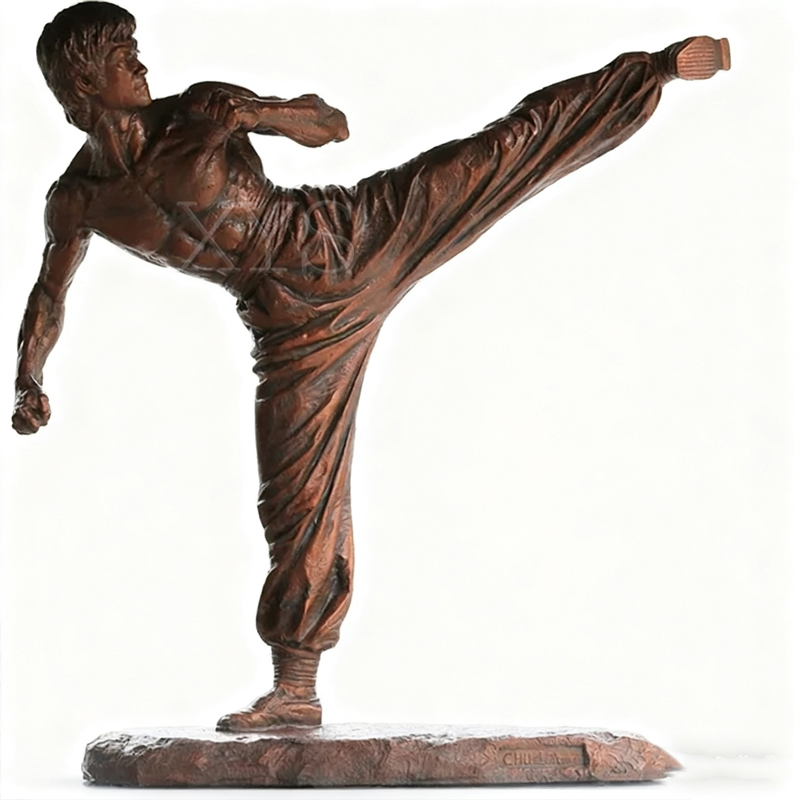 Bronze Life-Size Bruce Lee Martial Arts Sculpture – Outdoor Display
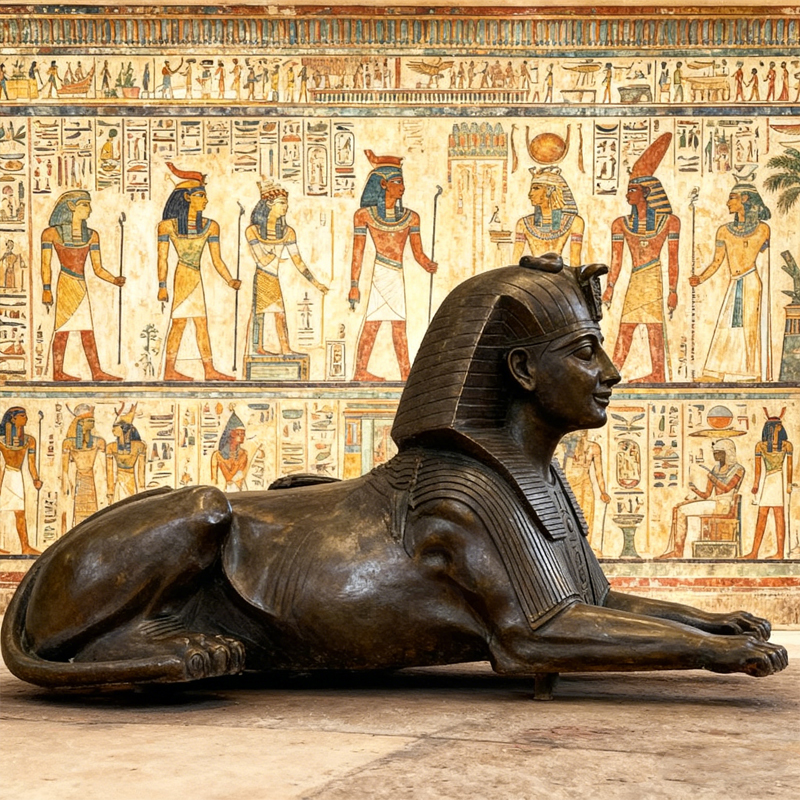 Bronze Large Sphinx Sculpture – Ancient Egyptian Mythology
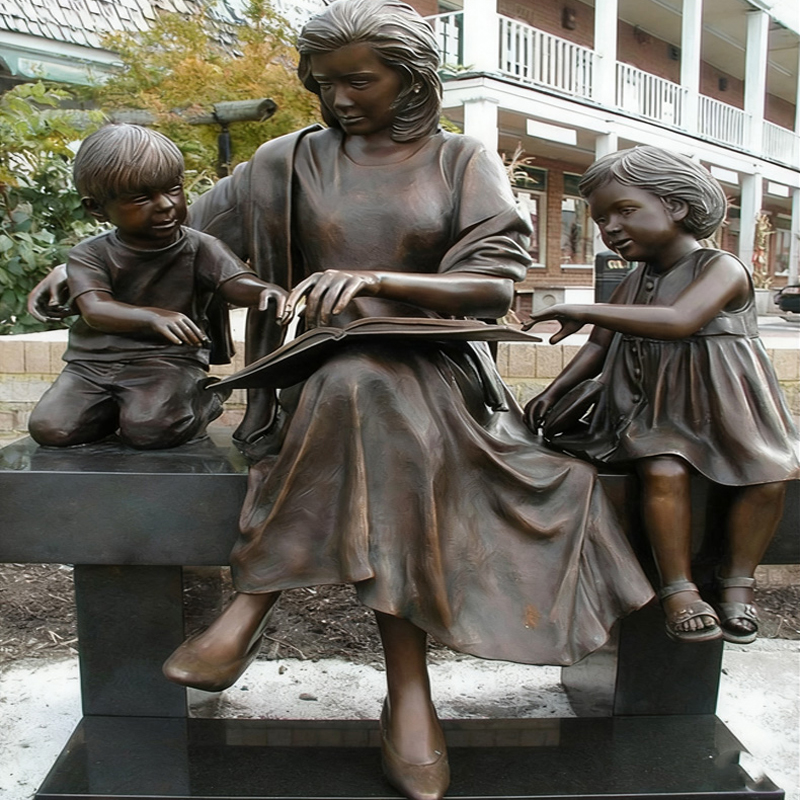 Bronze Parent-Child Reading Sculpture – Modern Artistic Design
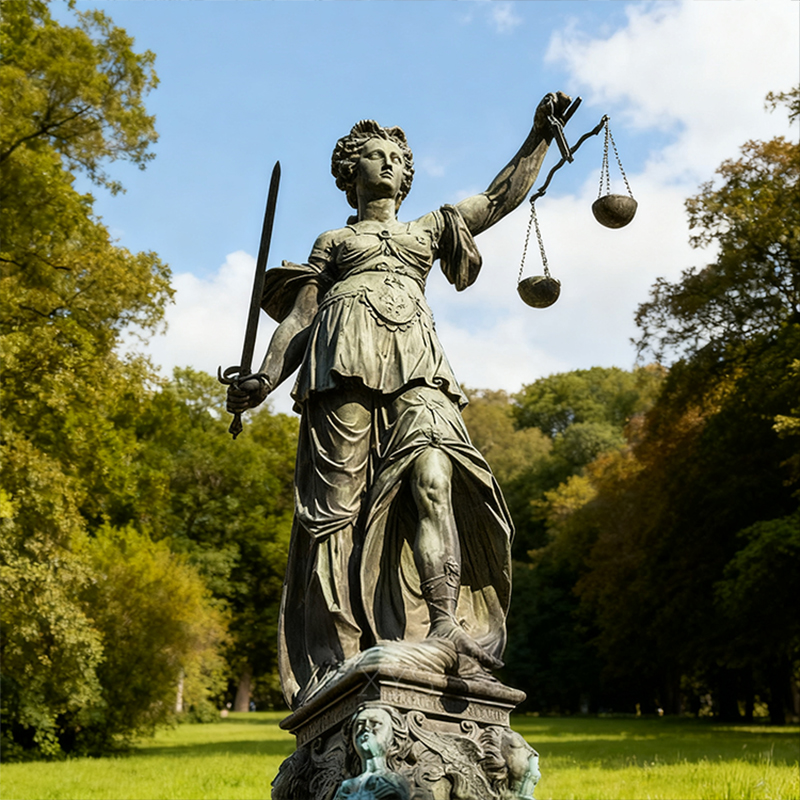 Bronze Libra Lady Justice Sculpture – Metal Model
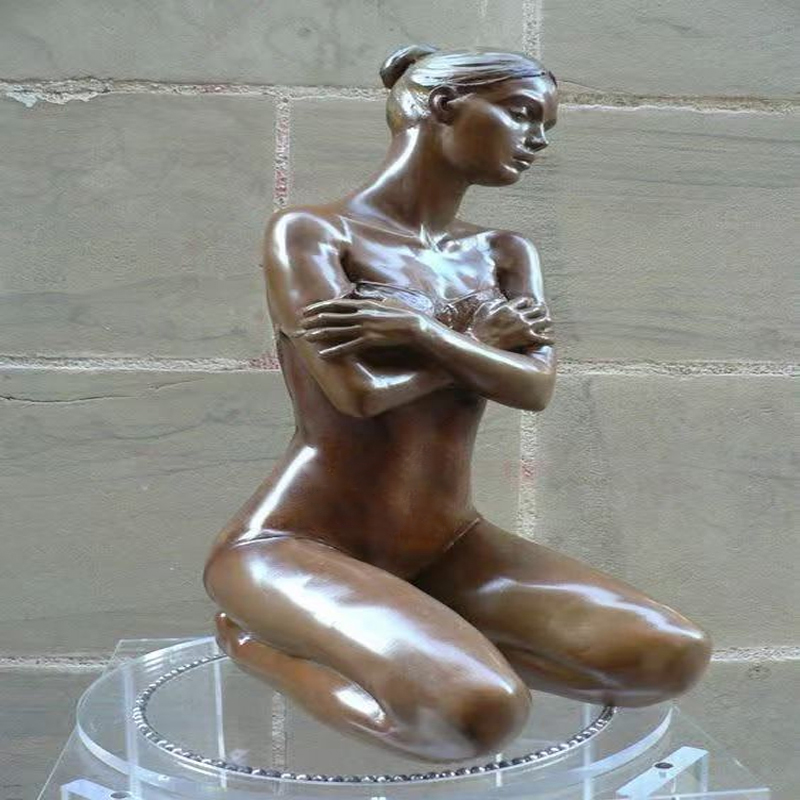 Bronze Female Nude Sculpture – Garden Decoration



Daniel H.

Amanda R.

Robert B.

Jennifer S.

James W.

Barry G.

Michael T.

Emily K.

David L.

Sarah M.


Mikey XV

Jagxue

 English
 Español
 عربى
 Français
 italiano
 Deutsch