Walk through almost any historic city centre and you will meet relief sculpture before you meet a freestanding statue: a frieze along a colonnade, a bronze plaque beside a doorway, an angel carved into a marble headstone. When designers and clients begin comparing options, one question keeps returning: bas relief vs high relief. What really separates the two, and which one belongs on your project?
Both are relief sculpture, and the honest difference between them is depth, light and structure rather than artistic rank. In a studio that has carved, cast and fabricated relief work for public squares, campuses, churches and memorial parks, we have watched the choice make itself once a client understands how each type behaves in real light, real weather and real budgets.
Content
Relief sculpture is created so that the image stays attached to a background plane: a wall, a panel, a stone slab, a stele. That plane is not a limitation but a reference point. It fixes the composition, distributes the load, and gives the eye a place to begin.
Sculptors traditionally sort relief into three bands. Bas-relief, or low relief, keeps the figure shallow. Mezzo-rilievo, half relief, sits in the middle. High relief lets the figure travel far enough from the plane that parts of it are effectively free-standing. These bands are not laws of physics; they describe how much of a figure's natural volume leaves the background, and how much shadow that movement creates.
In bas-relief the figure is compressed, typically to less than half of its real depth. On a cast bronze medal the relief may be only a millimetre or two proud of the surface; on a granite frieze the highest points may stand ten or fifteen centimetres forward while still reading as one shallow layer.
That compression changes how the work is seen. Shadows are short and soft, so the composition relies on outline, silhouette and stacked edges rather than dramatic darkness. The reward is readability: bas-relief is legible from the front, at walking pace, in almost any light, which is why it has served for coinage, dedication plaques, donor walls and narrative friezes for more than two thousand years.
The practical risk is flat light. A shallow carving on a north-facing wall under an overcast sky can lose definition and flatten into a drawing, so we build extra depth into the edges of key forms or let material colour carry part of the work.
Modern designers use the same principle with stacked planes. A layered wall piece in which a face is built from offset plates keeps the projection modest, yet the overlapping edges create exactly the shadow that gives the image its structure.
 Bronze Abstract Stacked Face Sculpture – Modern Wall ArtDimensions: Height 80–120 cm, Length 60–90 cm Price: USD 1,680.32–3,780.66View Product →
High relief pushes the figure further out: more than half of its natural depth, and often with limbs, drapery or foliage completely undercut so that only a hidden core still connects them to the background.
The visual payoff is drama. Deep undercuts trap shadow and release it as the viewer moves, so an alto-rilievo panel behaves a little like a freestanding group while still belonging to its wall. This is the relief of Greek temple pediments, Roman sarcophagi, Gothic church portals and Baroque altarpieces, and it is why those works still hold attention from twenty metres away.
The structural price is real. Undercut sections are thinner and more fragile, so they need hidden stainless pins, generous mass behind the carving, and drainage that stops rainwater sitting in every pocket.
A memorial angel carved in high relief shows both sides of the trade-off. Wings and arms can stand well clear of the slab, throwing a soft shadow across the lettering, but only if the block is thick enough, the fixings are stainless, and the water has somewhere to go.
 Marble Tombstone with Angel Embracing a HeartDimensions: Overall width 1.5-2 meters, heart-shaped monument width 0.8-1.2 meters, thickness 0.4-0.6 meters; height 1.5 meters: US$1750; height 2 meters: US$4640View Product →
Relief type is a design decision with engineering consequences, so it helps to compare the two families on the criteria that actually drive a project.
| Aspect | Bas-relief (low relief) | High relief |
|---|---|---|
| Projection depth | Usually less than half the figure's natural depth | More than half, often with fully detached parts |
| Shadow behaviour | Short, soft shadows; depends on outline and edge | Deep self-shadow; needs directional light |
| Best viewing angle | Straight on, at walking pace or across a plaza | Front, three-quarter and side angles |
| Structural demand | Low; the background plane carries the load | High; undercuts need pins, mass and drainage |
| Typical materials | Cast bronze, carved marble, granite, resin | Marble, bronze, deep-carved stone |
| Relative cost | Lower per square metre of surface | Higher; more material removal and finishing |
| Common applications | Friezes, plaques, donor walls, signage, coinage | Pediments, portals, altarpieces, memorial figures |
Many commissions mix the two: a shallow field for names and inscriptions, with one high relief figure acting as the focal point.
Bronze casting is the most forgiving route to high relief. Lost-wax and ceramic shell moulds allow undercuts and thin drapery, and the metal's strength holds forms that stone would lose. A controlled patina also keeps shallow bas-relief readable outdoors for decades.
Marble and granite are processes of subtraction. Every undercut is a risk of a broken edge during carving, transport or installation, so stone favours mezzo-rilievo and controlled high relief with solid mass behind the deep points. Grain direction, veining and porosity decide how far a carver can safely go, which is why we spend time discussing why marble slabs remain such a versatile material long before the first cut.
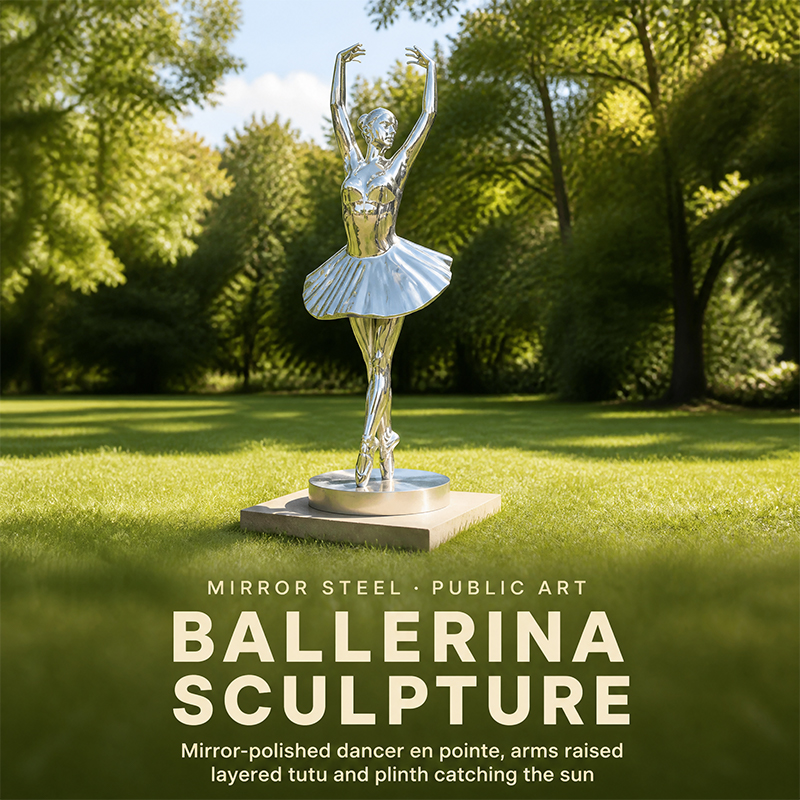
Stainless steel and weathering steel are usually fabricated rather than carved. Relief becomes a question of plate thickness, standoff distance and weld dressing. Weathering steel suits broad silhouettes and layered planes; mirror-polished stainless steel loses shallow detail inside its own reflections and prefers bold depth or pure outline.
Fiberglass and resin allow deep undercuts at low weight, which makes them practical for interior feature walls and oversized lightweight panels that could never be carved in stone.
Here the wall must carry the weight and the audience is usually moving. Bas-relief and mezzo-rilievo win because they stay legible at an angle, resist wind loading, and can be repeated along a long elevation without turning the building into a sculpture park.
These settings ask for stillness, dignity and a strong silhouette. High relief gives an angel, saint or cross real presence in low, flat cemetery light, while the surrounding slab remains a clean surface for lettering. Weather performance matters more than spectacle: correct fall, sealed fixings, and no water traps.
With controlled lighting, shallow work regains everything it loses outdoors. A bas-relief panel in a lobby or corridor reads crisply under directional spots, weighs less, and can be repeated across a series of walls at a predictable cost.
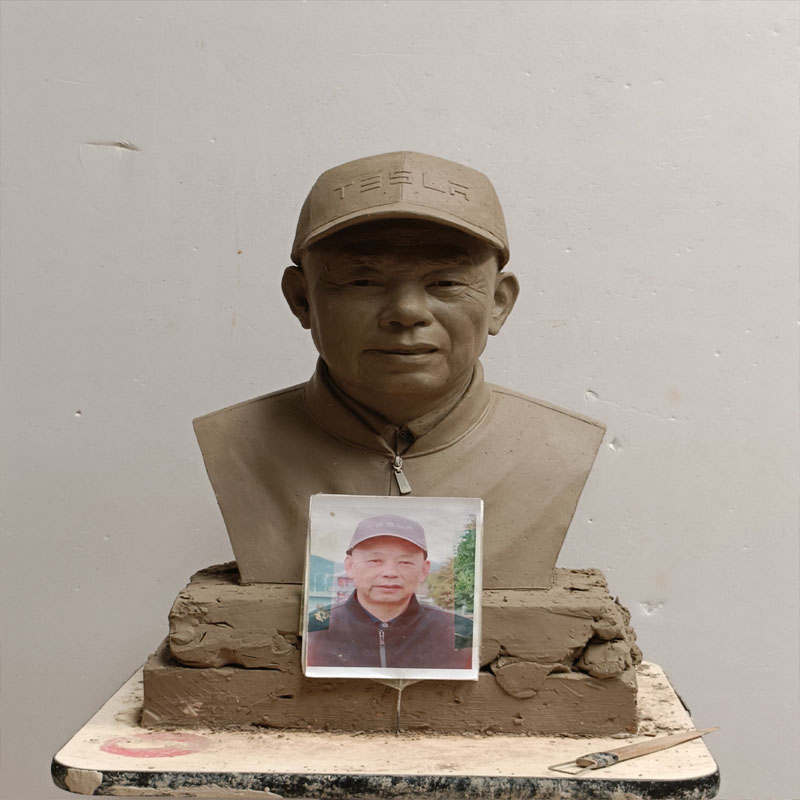
Portrait commissions sit right on the boundary. A shallow plaque version reads well in a corridor, while a deeper portrait with undercut hair and shoulders gives a lobby something closer to a bust. That is exactly the kind of decision best tested at sample scale.
 Custom Bronze Portrait SculptureDimensions: Height 80–120 cm, Length 60–90 cm Price: USD 3,530.32–5,945.66View Product →
A relief commission rarely fails at the carving stage; it fails earlier, when depth is agreed in words rather than numbers. Our own story began thirteen years ago in a small workshop in Quyang, the stone-carving county of Hebei, and has grown into a studio with a partner factory network of more than 8,000 square metres, an annual output of around 10,000 pieces, and five material lines spanning bronze, stainless steel, marble, fiberglass and weathering steel. That scale matters for one practical reason: we can show a client the same design at three different relief depths before anyone commits to a full-size block.
Every project follows the same route: design review, depth and material recommendation, mould or block preparation, carving or casting, surface finishing, crating, shipping, installation and after-sales care, with quality checks at each stage.
If you already have a drawing, a photograph, or a rough idea of how far the figure should stand proud of its background, talk to our team and we will come back with a recommended relief depth, a material proposal and an honest budget range.



Daniel H.

Amanda R.

Robert B.

Jennifer S.

James W.

Barry G.

Michael T.

Emily K.

David L.

Sarah M.


Mikey XV

Jagxue

 English
 Español
 عربى
 Français
 italiano
 Deutsch