Content
When a landscape architect specifies a central plaza feature that must endure decades of freeze-thaw cycles, salt spray, and ultraviolet exposure without losing its visual weight, Corten steel emerges as the most logical choice. Unlike painted mild steel that flakes or galvanized coatings that weather unevenly, weathering steel forms a tightly adherent oxide layer that protects the structural core. This self-forming patina is what gives a Corten steel sculpture its distinctive rusted hue — and its practical longevity.
Corten steel, also referred to as weathering steel, is a high-strength, low-alloy steel originally developed for industrial applications such as railcar hoppers and shipping containers. Its alloying elements — primarily copper, chromium, nickel, and phosphorus — interact with atmospheric moisture to generate a dense, corrosion-resistant surface. Once the orange-brown patina stabilizes (typically after 6 to 18 months, depending on climate), it ceases to shed and acts as a barrier that drastically slows further oxidation. For outdoor art, this means a sculpture can comfortably exceed 50 years of service with virtually no recoating.
Manufacturers experienced in weathering steel fabrication understand that the patina’s uniformity depends on proper surface preparation and controlled exposure cycles. A responsible supplier will manage mill scale removal and initial wet-dry cycling so the finish develops evenly across every facet, weld seam, and crevice. This same attention to thickness selection — typically 2 mm to 5 mm for medium-to-large sculptures — prevents localized perforation in aggressive environments. When you evaluate a Corten steel sculpture, you are not just buying a shape; you are buying a metallurgical system that has to be executed correctly from the steel grade to the final detail. For a closer look at how experts approach this, browse our Corten steel sculpture collection.
Landscape and public art projects place three non-negotiable demands on material: aesthetic distinction, structural resilience, and manageable long-term cost. Corten steel meets each demand in a way that stainless steel, bronze, painted carbon steel, fiberglass, and marble often cannot. The decision comes down to specific trade-offs that affect visual intent, maintenance budgets, and installation logistics.
Aesthetic integration. The matte, earthy patina does not compete with planting palettes or hardscape tones. It registers as warm and organic against both contemporary glass-and-steel architecture and natural meadow or woodland settings. Unlike polished stainless steel, which throws harsh reflections and can look clinical in a garden, Corten steel absorbs light and anchors the composition. Bronze shares some of that warmth, but it typically develops a green-black verdigris that can read as formal or monumental rather than contemporary.
Durability without maintenance weekends. The protective oxide eliminates the need for waxing, painting, or sealing. Even in coastal zones, where airborne chlorides accelerate corrosion, appropriately specified Corten steel performs dependably. The key is sufficient thickness and avoidance of water-trapping details. A well-designed Corten sculpture should show only gradual, uniform patina evolution over years — not pitting or staining of adjacent pavers.
Cost efficiency across decades. Initial material costs for Corten steel run slightly below or on par with 304 stainless steel and significantly below bronze, especially for large-scale works. The real economic advantage, however, is the near-zero maintenance budget over a 50-year lifecycle. Polished stainless demands periodic cleaning to retain its appearance; bronze requires deliberate patina management or wax coatings. Corten steel’s naturally self-renewing surface makes it the most cost-effective option for municipalities and commercial property owners who need artworks that stay beautiful without annual contractor visits.
The material’s ability to be laser-cut, rolled, welded, and assembled into large, structurally self-supporting volumes opens it to an enormous design vocabulary. The right style depends on the spatial role the sculpture is meant to play — focal point, wayfinding marker, or ambient narrative element.
Polyhedral forms, intersecting planes, and torqued ribbons exploit weathered steel’s crisp fabrication capabilities. These pieces work especially well in corporate plazas, rooftop gardens, and museum entrances where they define a contemporary visual language. The faceted surfaces catch raking morning and evening light, turning the patina’s orange-brown into an ever-shifting display. A large, abstract weathering steel decorative sculpture can anchor a hardscape without resorting to representational imagery, giving the space a sense of intentional modernity. See an example of our geometric Corten steel sculptures to understand how volume and void interact.
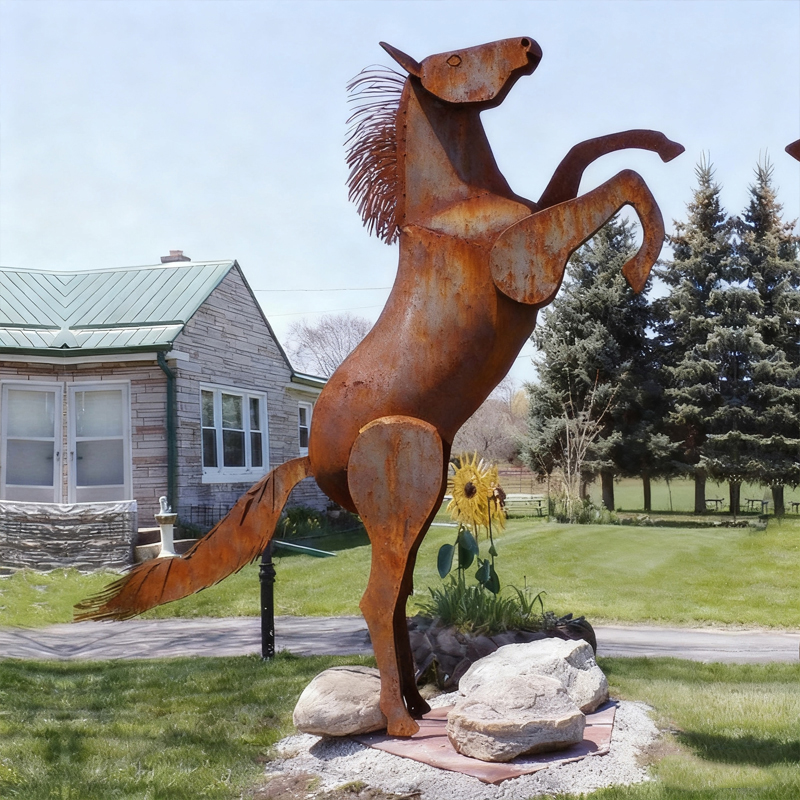
For zoos, ecological parks, school campuses, and nature-themed commercial centers, animal sculptures in weathering steel bring a tactile, storybook quality that resin or fiberglass cannot match. The material’s weight and texture lend permanence, while the warm rust color evokes soil, bark, and fur. A galloping horse Corten sculpture, for example, can capture motion through layered silhouette cutting and welded contour assembly, turning a familiar subject into a dramatic landmark. Figurative works also benefit from the patina’s ability to recede visually into a green backdrop while retaining a strong profile against the sky.
Corten steel’s durability extends naturally into wayfinding and interpretive signage. Integrated lettering, cut-through icons, and layered panel construction allow the sculpture to serve as both art and information. A weathering steel educational signage piece at a nature preserve or botanical garden remains legible for decades, requiring none of the re-painting that painted aluminum signs demand. The sculptural presence of the sign itself elevates the visitor experience from functional to memorable, reinforcing brand identity for resorts and public institutions.
The journey from a client’s initial sketch or reference image to an installed, 4-meter-high landmark follows a disciplined fabrication sequence. Understanding this process helps buyers assess lead times, quality control, and the feasibility of their ideas.
XYS’s approach integrates these steps under one roof, with a design team averaging over 10 years of experience in custom weathering steel art. The result is a predictable, documented process from the first concept review to the final bolt-down.
Landscape designers frequently weigh three metal choices for permanent outdoor art. Each has a distinct personality and set of practical behaviors. The table below summarizes the factors that most directly influence selection.
| Attribute | Corten Steel | Stainless Steel | Bronze |
|---|---|---|---|
| Surface appearance | Warm, matte orange-brown patina | Highly reflective, silver | Brown, green, or black; develops patina slowly |
| Outdoor durability | 50+ years with stable rust barrier | Excellent; resists corrosion but can tea-stain | Very high; centuries-long track record |
| Maintenance | None; no painting or sealing required | Periodic cleaning to maintain luster | Optional waxing; patina can be chemically managed |
| Cost range (large work) | Moderate | Moderate to moderately high | High |
| Best suited for | Large-scale outdoor landmarks, modern and natural settings | Polished urban plazas, iconic reflective features | Classical figurative memorials, high-budget institutional art |
Marble and fiberglass are also valid sculpture materials but serve different roles. Marble offers timeless formality but requires sheltered placement or rigorous sealing to avoid freeze-thaw damage in most climates. Fiberglass provides lightweight, colorful options for temporary installations or themed environments where a painted surface is acceptable. For permanent outdoor art that must withstand the elements without annual attention, weather-resistant steel remains the leading choice among the metal options.
Not every metal fabricator understands the nuances of weathering steel. A supplier that mainly builds stainless steel railings or painted steel structures may lack the specific welding certifications and oxidation-management protocols that a Corten steel sculpture demands. Before you engage a partner for a high-visibility landscape project, measure them against four practical criteria. If you are ready to discuss a specific concept, you can explore custom Corten steel fabrication services that include full design and engineering support.
A factory with over a decade of experience in weathering steel art, a network of 8,000-square-meter production facilities, and an annual output in the five figures is in a position to handle both one-off commissions and multi-piece site packages with consistent quality. The key is to verify these claims with evidence before you commit.
Corten steel has moved from an industrial novelty to a mainstream artistic medium because it solves a persistent dilemma: how to combine powerful aesthetic presence with genuine “set and forget” durability. Landscape architects trust it for public art because the patina improves with age instead of degrading. Developers value it because a single capital purchase eliminates decades of maintenance budgeting. Private clients enjoy the fact that a Corten steel sculpture feels bespoke and monumental without requiring a climate-controlled environment.
The information chain from selecting the right style to vetting a fabrication partner is not complicated, but each decision has consequences for cost, timeline, and final appearance. Define your spatial goal first — focal point, threshold marker, or narrative accent. Then match that goal to a geometric, figurative, or functional form. With a clear brief in hand, you can engage a manufacturer who can translate your vision into weathering steel with the engineering precision it demands. A well-made Corten steel sculpture does more than occupy a site; it becomes a permanent reference point that grows more interesting with every season.
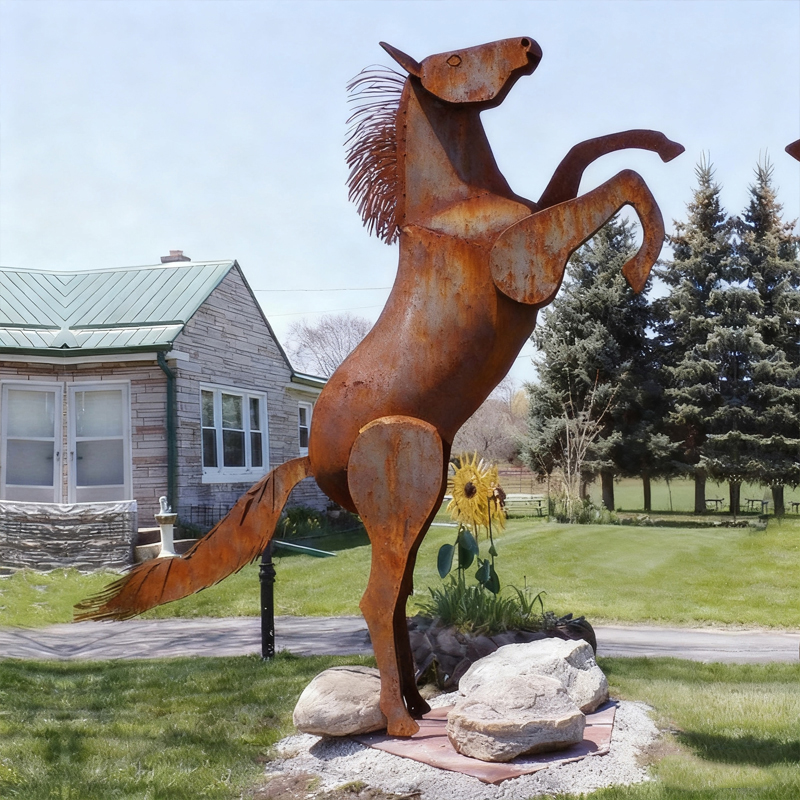 Weathering Steel Galloping Horse Animal Sculpture
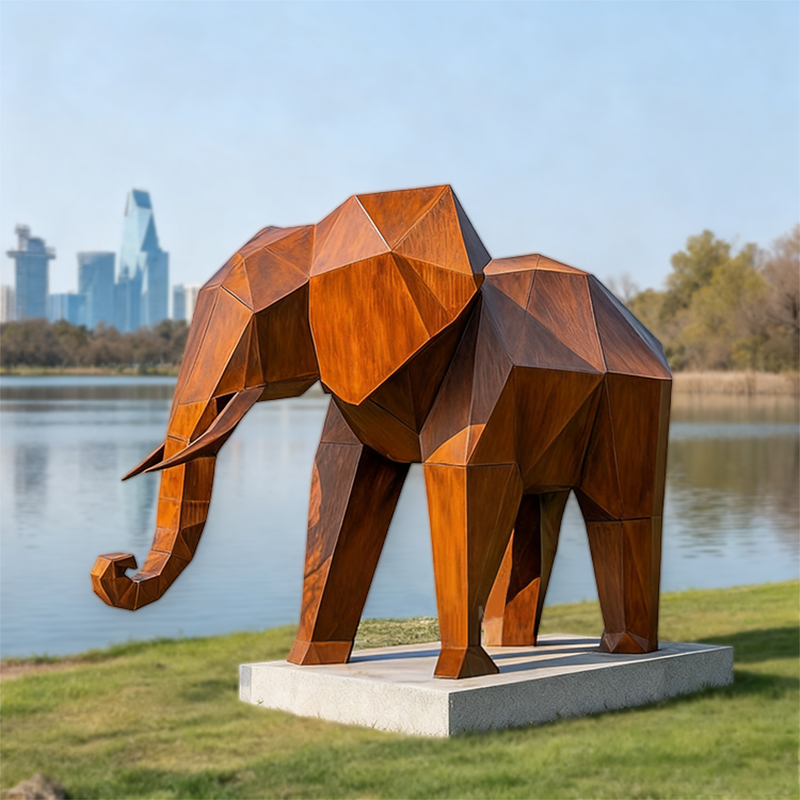 Weathering Steel Faceted Geometric Elephant Animal Sculpture
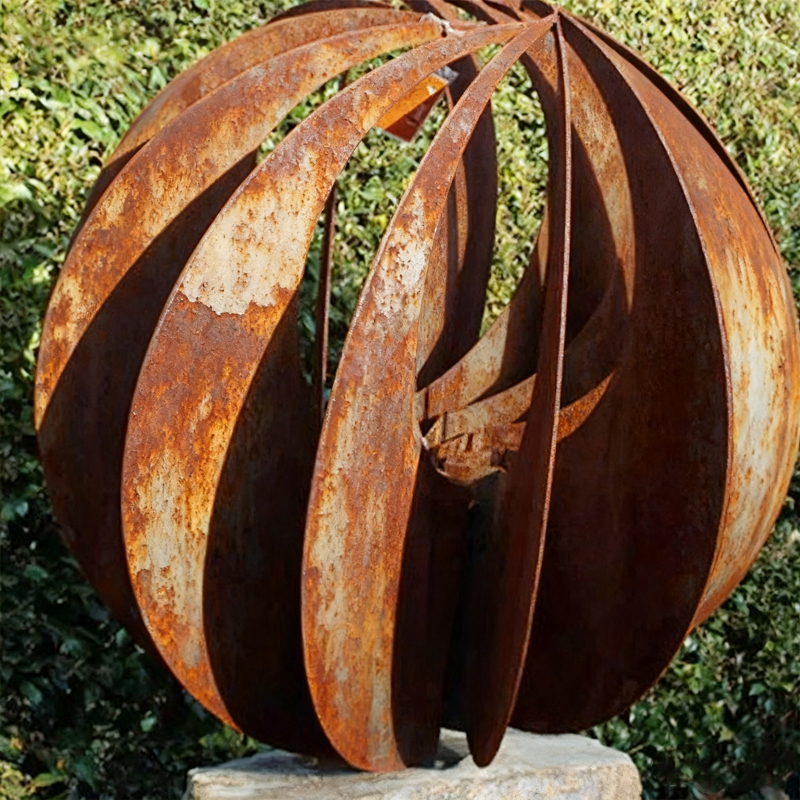 Hollow-Pattern Spherical Weathering Steel Decorative Sculpture
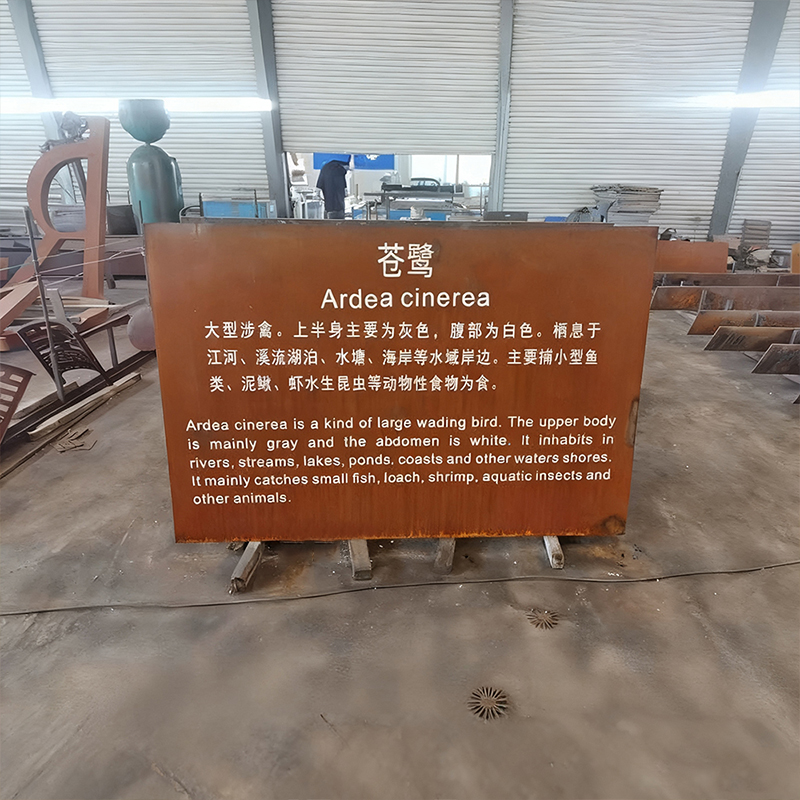 Weathering Steel Heron Science Education Weathering Steel Sign
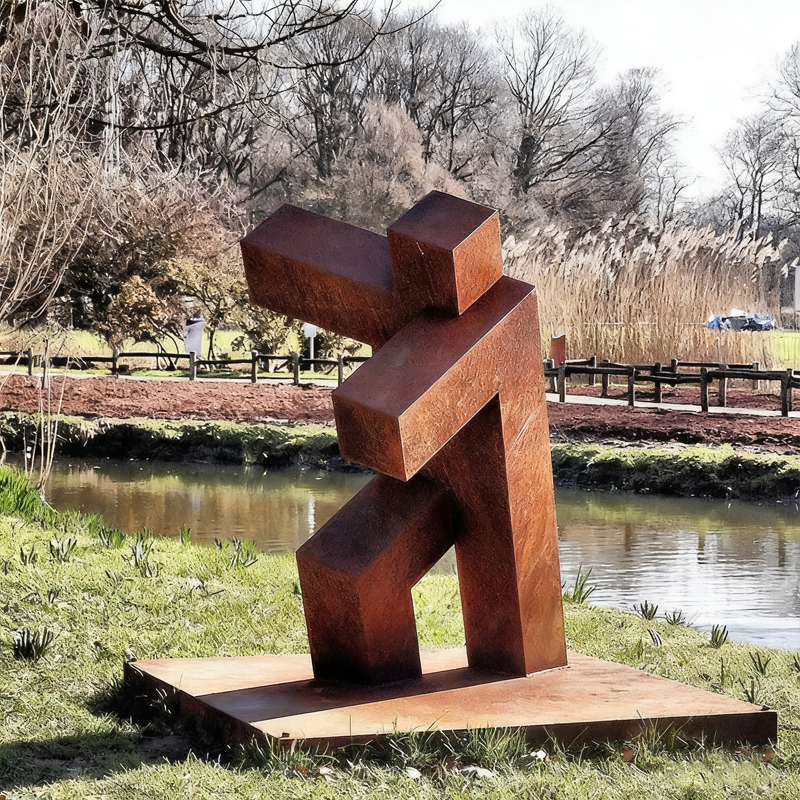 Abstract Weathering Steel Decorative Sculpture
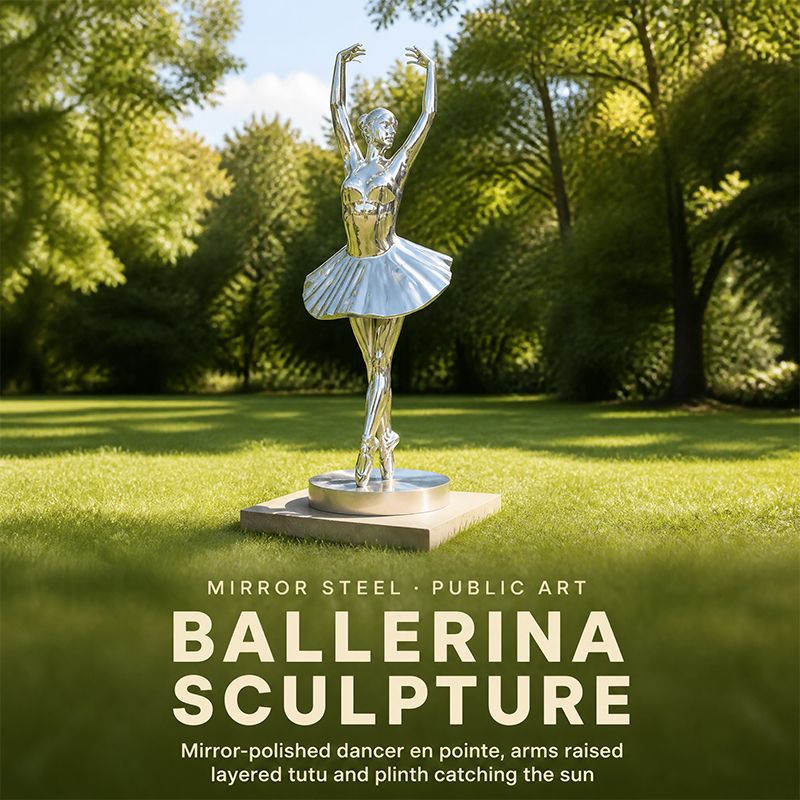 Life-Size Custom Mirror Polished Dancing Woman Stainless Steel Sculpture



Daniel H.

Amanda R.

Robert B.

Jennifer S.

James W.

Barry G.

Michael T.

Emily K.

David L.

Sarah M.


Mikey XV

Jagxue

 English
 Español
 عربى
عربى Français
 italiano
 Deutsch