If you have ever run your fingers over a coin, traced the outline of a figure on an ancient temple wall, or admired the ornate panels on a bronze door, you have already encountered bas-relief. In simple terms, bas-relief is a sculptural technique where the design projects only slightly from a flat background, creating an image that is readable from the front without being fully three-dimensional. The term comes from the Italian basso-relievo, meaning "low relief," and it is pronounced "bah-relief" — not "bass-relief." Unlike a freestanding statue that you can walk around, bas-relief is attached to a surface and designed to be viewed primarily from one angle, making it a hybrid between painting and sculpture. For a deeper understanding of where this technique sits within the broader world of sculpture, knowing how it differs from high relief and understanding its materials is essential.
Content
Bas-relief is a form of relief sculpture in which the carved elements remain attached to a solid background of the same material. The depth of the projection is shallow — typically less than half of the natural thickness of the subject. For example, if you were sculpting a human profile, the nose might rise only a few centimeters from the background plane. This shallow depth is what distinguishes it from high relief, where figures can be undercut and stand out dramatically from the background.
The key characteristics of bas-relief include a strong dependence on light and shadow to define form, a preference for linear composition, and an inherent suitability for narrative scenes. Because the projection is minimal, the artist must rely on subtle variations in depth to suggest volume and perspective. This makes bas-relief an excellent medium for storytelling on walls, friezes, and panels, where a sequence of figures can unfold across a flat surface.
It is also worth noting that bas-relief is not a modern invention. It has been a fundamental part of architectural decoration for thousands of years, from the carved panels of ancient palaces to contemporary lobby installations. Understanding this technique gives you a new lens for appreciating both historical monuments and modern design details.
To fully grasp what bas-relief is, it helps to compare it with other forms of relief sculpture. The primary distinction lies in how much the figures project from the background. Here is a quick breakdown of the main categories:
| Type | Projection Depth | Typical Use |
|---|---|---|
| Bas-relief (low relief) | Shallow; less than 50% of the natural depth of the subject | Coins, architectural friezes, wall panels, memorial plaques |
| High relief | Deep; more than 50% of the natural depth; may be partially undercut | Monumental pediments, church portals, large narrative scenes |
| Sunken relief (intaglio) | Figures are carved into the surface, below the background plane | Ancient Egyptian temple walls, seals, and inscriptions |
| Stiacciato (shallow relief) | Extremely shallow; almost flat, with only a few millimeters of variation | Renaissance medallions and panels, particularly by Donatello |
An easy way to distinguish them is to look at the object from the side. If the figures rise only slightly above the background, it is a bas-relief. If they project by more than half of their apparent depth, it is a high relief. Sunken relief reverses the logic: the background remains untouched, and the image is carved below it. For practical purposes, bas-relief is ideal for surfaces that need to remain smooth and passable, such as walls or coins, while high relief is better suited for dramatic, eye-catching compositions where depth is an asset.
The history of bas-relief is as old as human expression itself. It has evolved from simple marks on cave walls to sophisticated Renaissance panels, adapting to the materials and aesthetic values of each era. Here is how the technique developed over time.
The earliest examples of relief-like carving date back to prehistoric times, where early humans incised animals and symbols into rock surfaces. However, the first true bas-reliefs appeared in the ancient civilizations of Mesopotamia and Egypt. The Egyptians perfected sunken relief for their temple walls, where the carved images would catch the sunlight at certain times of day, while also using bas-relief for interior scenes. The Assyrians, meanwhile, created vast narrative friezes depicting hunting and warfare, such as the famous lion hunt reliefs from the palace of Ashurbanipal, which are now housed in the British Museum.
The Greeks elevated bas-relief to an art form of extraordinary refinement. The Parthenon frieze in Athens, created in the 5th century BCE, is a prime example of low relief used to depict a grand procession. The figures are carved with varying depth to suggest movement and spatial depth, all while maintaining the shallow projection characteristic of the technique. The Romans continued this tradition, often combining bas-relief with high relief on monuments like the Ara Pacis (Altar of Peace) in Rome, where intricate floral patterns and mythological scenes decorate the marble surface.
During the Renaissance, artists began to experiment with the spatial possibilities of bas-relief. Donatello pioneered a technique called stiacciato, a form of extremely shallow relief that used subtle variations in depth to create the illusion of perspective. His panel "The Feast of Herod" is a masterclass in this style. Another landmark is Lorenzo Ghiberti's "Gates of Paradise" on the Florence Baptistery, a set of bronze doors that combine multiple scenes in high and low relief to achieve a sense of pictorial depth. For those interested in how these classical styles have persisted, modern craftsmen still create European-style stone angel carvings that echo these Renaissance techniques.
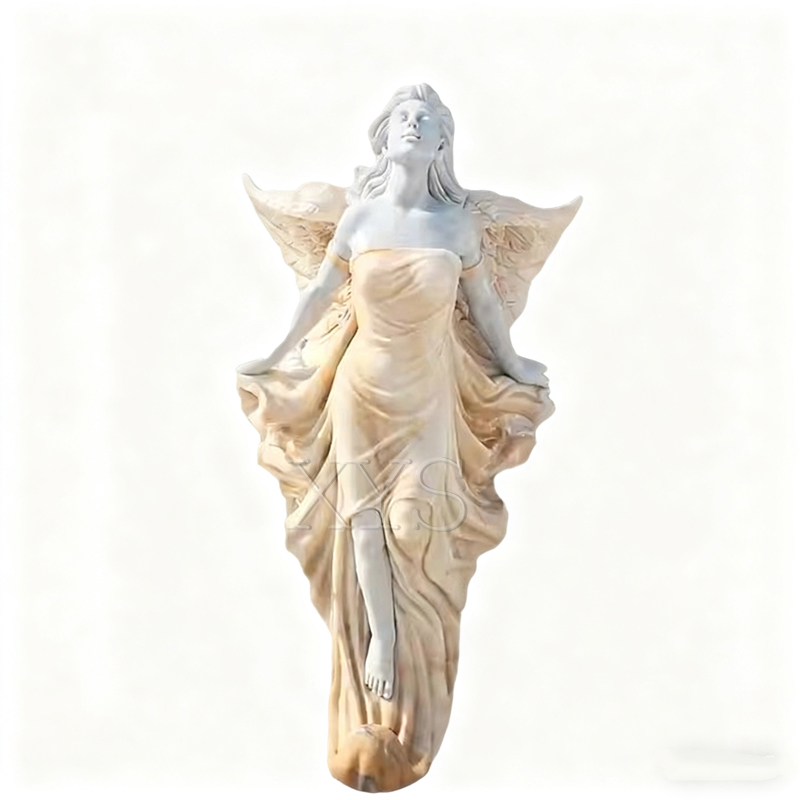 Custom Design European Style Stone Angel Carving - Jiangsu Xinyesheng Sculpture Xinyesheng offer Custom Design European Style Stone Angel Carving, Our Company Supply European Style Stone Angel Carving For sale, Hand-c...View Product →
In the 19th century, bas-relief found a new home in public monuments. The Arc de Triomphe in Paris, with its famous "La Marseillaise" relief, demonstrates how the technique can convey dramatic patriotic fervor. In the 20th century, the use of bas-relief expanded into interior design, with artists creating decorative panels for buildings and private homes. Today, modern technology such as 3D scanning and CNC carving has made the production of bas-relief more efficient, but the fundamental principles remain unchanged. A particularly moving contemporary application is in tactile museums, where bas-relief versions of famous paintings allow visually impaired visitors to "see" art through touch.
Creating a bas-relief involves two primary methods: carving away material (subtractive) or building up material (additive). The choice of technique largely depends on the material selected. Understanding these processes is crucial for anyone considering a custom project.
Carving (Subtractive Method): This is the traditional approach for stone and wood. The artist starts with a flat slab and removes material from the background, leaving the figures raised. This requires precision, as mistakes cannot be easily corrected. Marble is a favorite material for this method because of its fine grain and ability to hold crisp detail. A white marble angel statue exemplifies the clean, luminous quality that carved marble can achieve.
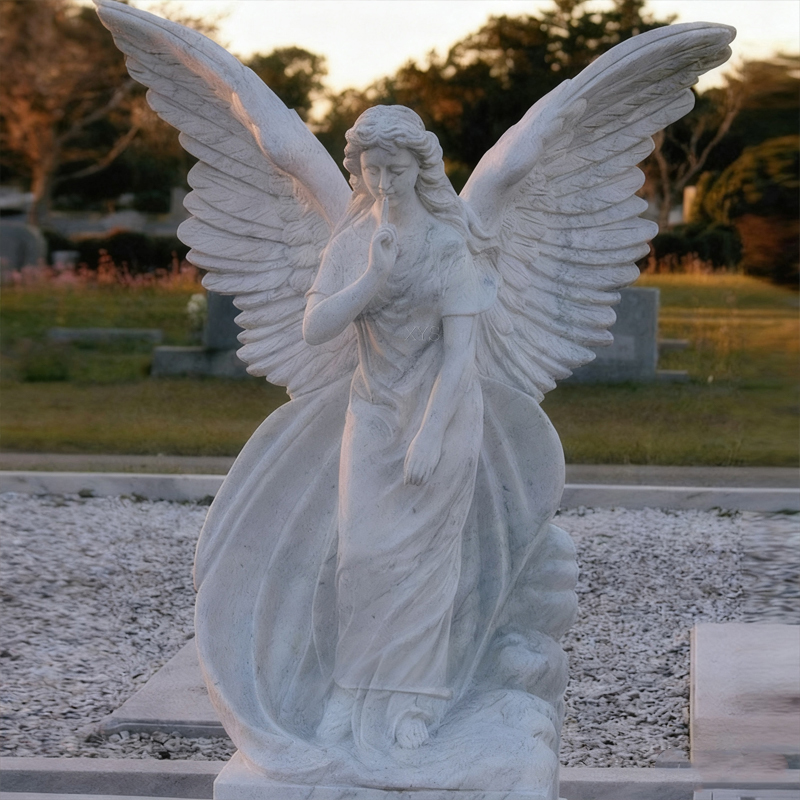 Custom Design White Marble Angel Statue - Jiangsu Xinyesheng Sculpture Co., Ltd.Xinyesheng offer Custom Design White Marble Angel Statue, Our Company Supply White Marble Angel Statue For sale, Hand-carved from natural...View Product →
Modeling (Additive Method): This method involves applying a pliable material like clay or plaster onto a flat surface to build up the design. Once the model is complete, it can be used to create a mold for casting in metal or fiberglass. This is a more versatile method, allowing for greater spontaneity and easier correction of errors.
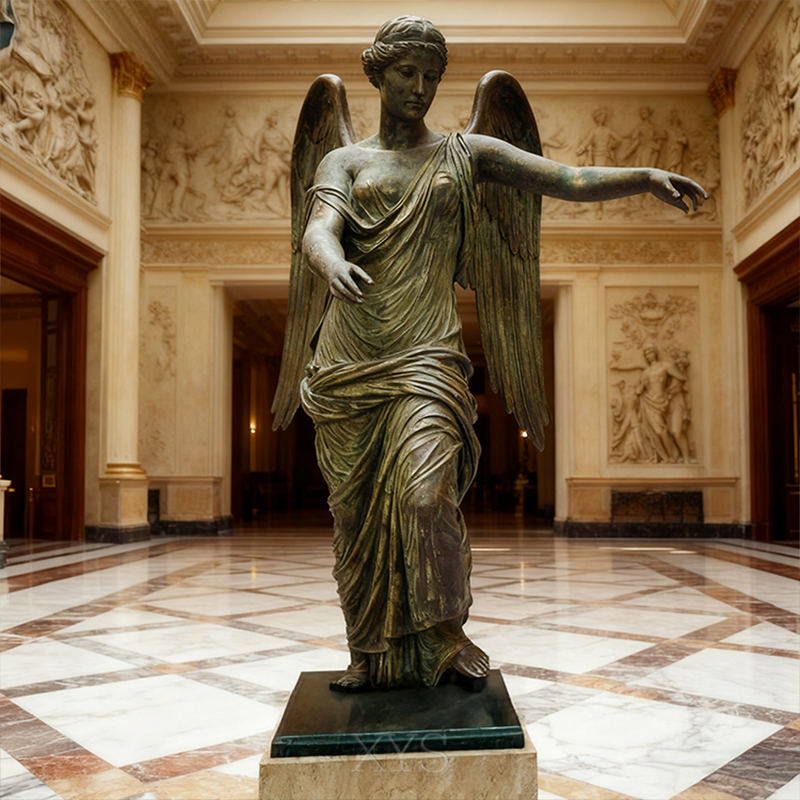
Casting: Bronze bas-reliefs are typically made through the lost-wax casting process. A wax model of the relief is coated in a ceramic shell, heated to melt away the wax, and then filled with molten bronze. This technique allows for the reproduction of highly intricate details. A bronze angel sculpture made through the casting process is a testament to the durability and fine detail achievable with metal.
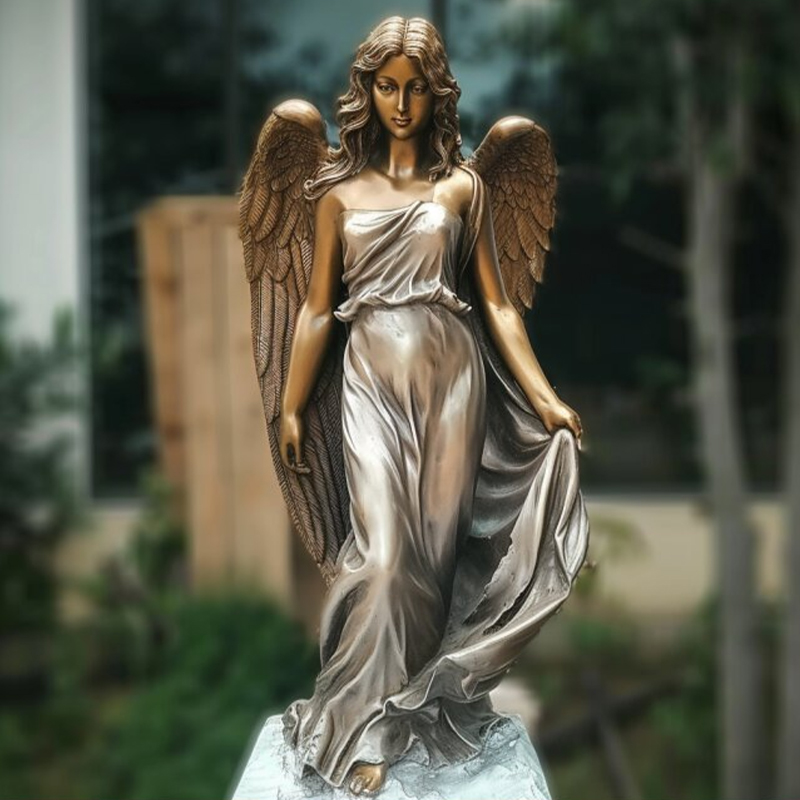 Custom Design Bronze Angel Sculpture - Jiangsu Xinyesheng Sculpture Co., Ltd.Xinyesheng offer Custom Design Bronze Angel Sculpture, Our Company Supply Bronze Angel Sculpture For sale, This bronze angel sculpture en...View Product →
| Material | Method | Key Properties |
|---|---|---|
| Marble | Carving | Classic look, durable, excellent for fine detail, but heavy and costly |
| Bronze | Casting | High detail, ideal for outdoor use, develops a natural patina over time |
| Fiberglass | Molding | Lightweight, cost-effective, suitable for large installations |
Regardless of the material, the creation process generally follows a similar path: an initial design sketch, a scale model (either physical or digital), mold-making, casting or carving, and finally surface finishing. A typical project, from design approval to final installation, can take anywhere from a few weeks to several months, depending on the complexity and size.
Certain works of bas-relief are so significant that they define the art form itself. Here are five examples that span history and geography, each demonstrating a different strength of the medium.
While often associated with antiquity, bas-relief is a versatile tool in contemporary design. Its low profile makes it ideal for adding texture and narrative to surfaces without intruding on usable space. Architects and interior designers use bas-relief in several key ways:
The interplay of light and shadow is critical in these applications. Because the relief is shallow, subtle changes in lighting can dramatically alter its appearance. Designers often work with lighting specialists to ensure that the piece is lit from an angle that enhances its depth. For a deeper look at how traditional methods find a place in modern settings, this article on how marble sculptures blend traditional craftsmanship with modern design offers a useful perspective.
If you are considering commissioning a bas-relief, whether for a private residence, a public building, or a commemorative project, a few practical considerations will help ensure the result meets your expectations. The process is a collaboration, and clear communication is key.
Planning ahead is crucial. Experts recommend consulting with a sculpture studio early in the design phase of a building project, so that the relief can be integrated into the architecture rather than being an afterthought. When discussing materials, a white marble angel statue can serve as a useful reference for understanding the surface finish and tonal qualities of natural stone. Working with an experienced team ensures that your vision is translated into a lasting piece of art that enhances its environment for years to come.
Custom Design White Marble Angel Statue - Jiangsu Xinyesheng Sculpture Co., Ltd.Xinyesheng offer Custom Design White Marble Angel Statue, Our Company Supply White Marble Angel Statue For sale, Hand-carved from natural...View Product →



Daniel H.

Amanda R.

Robert B.

Jennifer S.

James W.

Barry G.

Michael T.

Emily K.

David L.

Sarah M.


Mikey XV

Jagxue

 English
 Español
 عربى
عربى Français
 italiano
 Deutsch