Roman sculpture is the most studied, copied, and reproduced body of classical art in the Western tradition, and the reason is practical as much as artistic: these statues communicated specific stories of power, memory, and victory with a clarity that still works in public space.
Nearly every famous example that survives came close to being lost. The Augustus of Prima Porta spent almost nineteen centuries underground before workmen found it in 1863. The gilded equestrian statue of Marcus Aurelius escaped the furnace only because medieval Romans mistook the rider for Constantine the Great, the first Christian emperor. Those accidents narrowed the canon, and the surviving works are exactly what a buyer, designer, or collector should study before commissioning a Roman-style sculpture — because the same visual language that made the originals famous is what turns a modern reproduction from generic decor into an authoritative presence.
Content
The list below is not a ranking; it is the group of works that reappears in museum galleries, art history surveys, and professional references. Together they define what we mean when we say a sculpture is Roman.
| Sculpture | Date | Material | Where to see it today |
|---|---|---|---|
| Augustus of Prima Porta | c. 20 BCE | Marble | Vatican Museums |
| Equestrian Statue of Marcus Aurelius | c. 176 CE | Gilded bronze | Capitoline Museums, Rome |
| Capitoline She-Wolf | c. 5th century BCE (wolf); twins c. 1490s | Bronze | Capitoline Museums, Rome |
| Laocoön and His Sons | c. 40–20 BCE (debated) | Marble | Vatican Museums |
| The Orator (Aulus Metellus) | c. 100 BCE | Bronze | National Archaeological Museum, Florence |
| Belvedere Torso | c. 1st century BCE | Marble | Vatican Museums |
Augustus of Prima Porta is the closest thing Rome left to a political poster in marble. The breastplate relief shows the recovery of the standards lost to the Parthians in 53 BCE, and the small Cupid riding a dolphin at the emperor's feet claims Julian descent from Venus. The bare feet deliberately blur the line between mortal ruler and heroic figure — a distinction that still matters when a portrait is meant to communicate status rather than just likeness.
Marcus Aurelius on horseback remains the only full-size ancient Roman equestrian bronze to survive intact. Its pose, with the raised foreleg and outstretched hand, became the template for countless later monuments in European squares. The original now stands inside the Capitoline Museums; the statue in the center of Piazza del Campidoglio is a copy.
The Laocoön group was found in 1506 in a vineyard that had once been part of Nero's Golden House, and Pliny the Elder had already described it as superior to any painting or bronze. Whether it is a Greek original from Rhodes or a Roman copy of a lost bronze is still debated, but the twisting bodies and the serpents coiling around the priest and his sons shaped Renaissance ideas of expression and anatomy for generations.
The Capitoline She-Wolf carries the founding myth of Rome. The wolf figure was long dated to the fifth century BCE, though thermoluminescence testing has led some scholars to argue for a medieval cast; the twins were certainly added in the 1490s, traditionally credited to Antonio Pollaiuolo.
The Orator, also known as Aulus Metellus, is one of the few surviving life-size togate bronzes. The raised arm, the senatorial gown, and the Etruscan inscription make it a primary document of civic life at the end of the Republic — a statue made not to entertain but to address citizens.
The Belvedere Torso, a fragment signed by the Athenian sculptor Apollonios, was studied closely by Michelangelo, who considered it the work of a master beyond nature. Two further names are worth knowing: the Head of a Roman Patrician and the Fonseca Bust both show the shallow-wrinkled realism — weathered skin, thin lips, tired eyes — that separates Roman portraiture from the polished idealism of Greek athletes and gods.
People often dismiss Roman sculpture as copied Greek work. The truth is more useful: the Romans preserved Greek compositions only when those compositions served Roman purposes, and they developed a visual language the Greeks had never needed.
Republican and early imperial portrait busts deliberately emphasized age and imperfection: wrinkles, furrowed brows, and receding hairlines were not mistakes but signs of experience, gravitas, and respect for ancestors. Roman patrons asked for individuals, while Greek artists generally idealized athletes and gods. That tradition remains the foundation of commemorative portraiture in bronze and marble, and it still guides how modern workshops approach a sculpted bust. If you want the same verist language for a historical figure or a family commission, a Roman-style marble human sculpture bust translates that legacy into a piece designed for your own space.
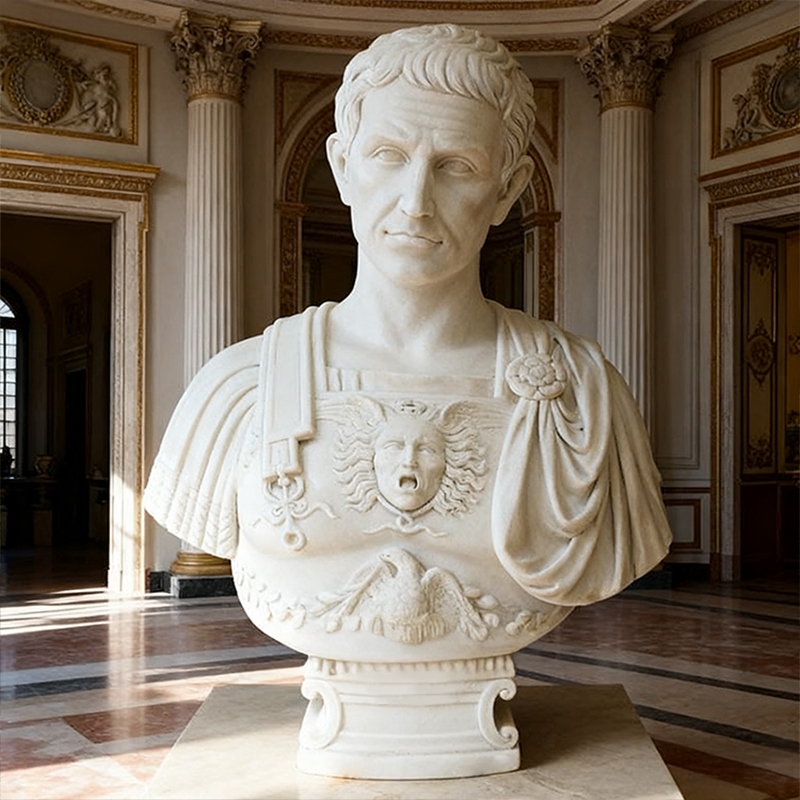 Custom Design Roman-Style Marble Human Sculpture Bust - Jiangsu Xinyesheng SculpXinyesheng offer Custom Design Roman-Style Marble Human Sculpture Bust, Our Company Supply Roman-Style Marble Human Sculpture Bust For sa...View Product →
The Ara Pacis, consecrated in 9 BCE, and Trajan's Column, dedicated in 113 CE, introduced a kind of sculptural storytelling the Greeks rarely attempted: continuous narrative for a mass public. The column's spiral frieze, roughly 200 meters long, recounts two military campaigns as a visual document that citizens could read by walking around the monument. This public-narrative approach is the reason civic memorials and university plinths still feel incomplete without a figure, a relief, or an inscription.
The physical survival of these works is a story of two materials: marble and bronze. Each behaves differently over time, and those differences matter for anyone commissioning new work.
Roman marble carving began with point and claw chisels to establish the mass, then moved to rasp and abrasive stones for the surface. Deep drilled channels created the shadow lines of curls and beards — a technique visible in the Laocoön's hair. The finished statues were painted: eyes, lips, and drapery received color, and the gleaming white look we associate with classical sculpture is a museum effect caused by pigment loss. Natural stone still offers the translucency and grain that made it the standard for imperial portraiture, and for anyone weighing a stone commission, our review of how marble human sculptures fuse traditional craftsmanship with modern production explains the options in detail.
Bronze statues were cast in sections using the lost-wax method, joined with tenons and rivets, finished by chasing, and sometimes gilded. The reason so few ancient bronzes exist today is not poor workmanship; bronze melts down conveniently into coins, bells, and cannons, and that is what happened to most Roman public statuary. Ancient sources describe thousands of bronze figures in Rome, yet only a handful survive. For a modern buyer, the practical lesson is that bronze is still the permanent outdoor option, and contemporary foundries rely on the same sectional casting and chasing methods. A practical guide to bronze sculpture types, techniques, and how to choose the right one covers the selection criteria in more depth.
The vocabulary of Roman sculpture shows up everywhere: courthouse pediments, university gates, Italian-style gardens, hotel lobbies, and memorial plinths. Clients rarely want a damaged archaeological original; they want the authority and presence of the Roman form without its missing arms and weathered surface.
Military figures remain one of the most requested categories. A bronze European armored warrior sculpture reproduces the stance, armor, and commanding gesture of Roman imperial statues and works well in a commercial courtyard or on a private estate.
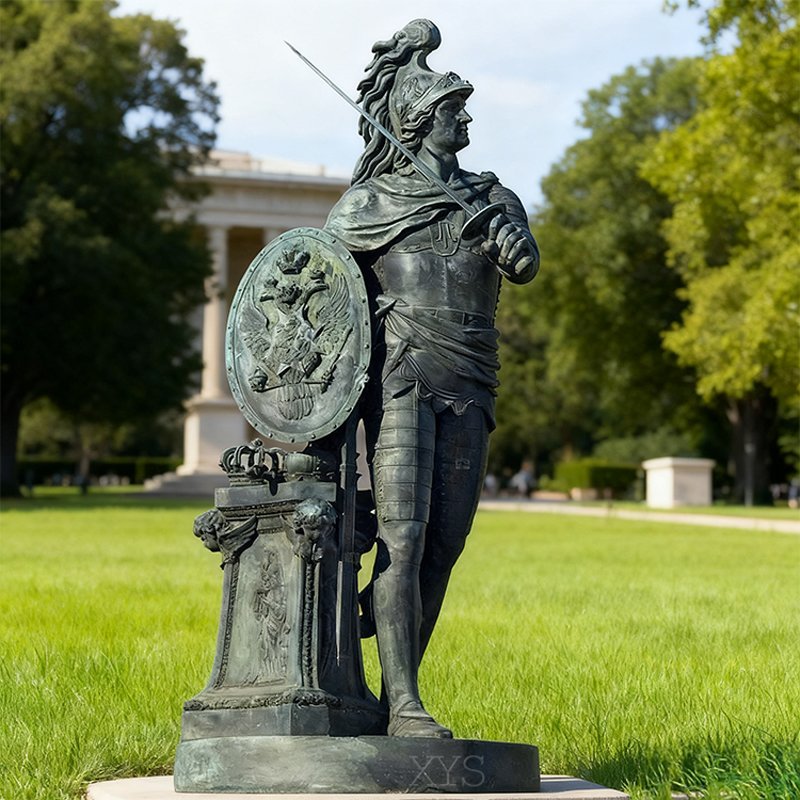 Custom Design Bronze European Armored Warrior / Roman War God Sculpture - JiangsXinyesheng offer Custom Design Bronze European Armored Warrior / Roman War God Sculpture, Our Company Supply Bronze European Armored Warr...View Product →
The winged victory motif follows the same path. The Nike figure, with lifted wings and flowing drapery, once stood in temple sanctuaries across the Roman world; an indoor bronze winged Nike goddess sculpture brings that same sense of triumph to interior spaces today.
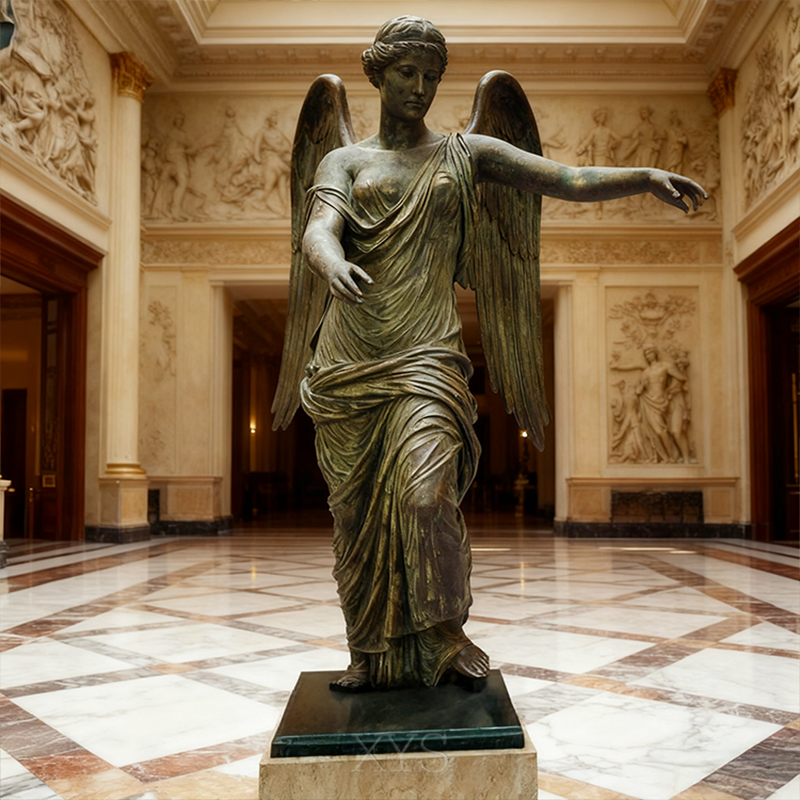 Custom Design Bronze Indoor Winged Nike Goddess Sculpture - Jiangsu Xinyesheng SXinyesheng offer Custom Design Bronze Indoor Winged Nike Goddess Sculpture, Our Company Supply Bronze Indoor Winged Nike Goddess Sculptur...View Product →
Because these pieces are cast from new molds rather than excavated, they arrive with clean surfaces, engineered mounting, and the exact patina you request — qualities an ancient original simply cannot offer.
A reproduction is not complicated to buy, but skipping the technical review creates predictable problems. Go through the following points before you sign.
A workshop that has produced classical realism for years will show process photographs, discuss tolerances, and answer material questions directly. That is the kind of conversation that separates a sculpture that merely decorates from one that carries the authority of a Roman original. When you are ready to discuss scale, material, and finish, contact our sculpture studio — most projects begin with a reference image and a site photo.
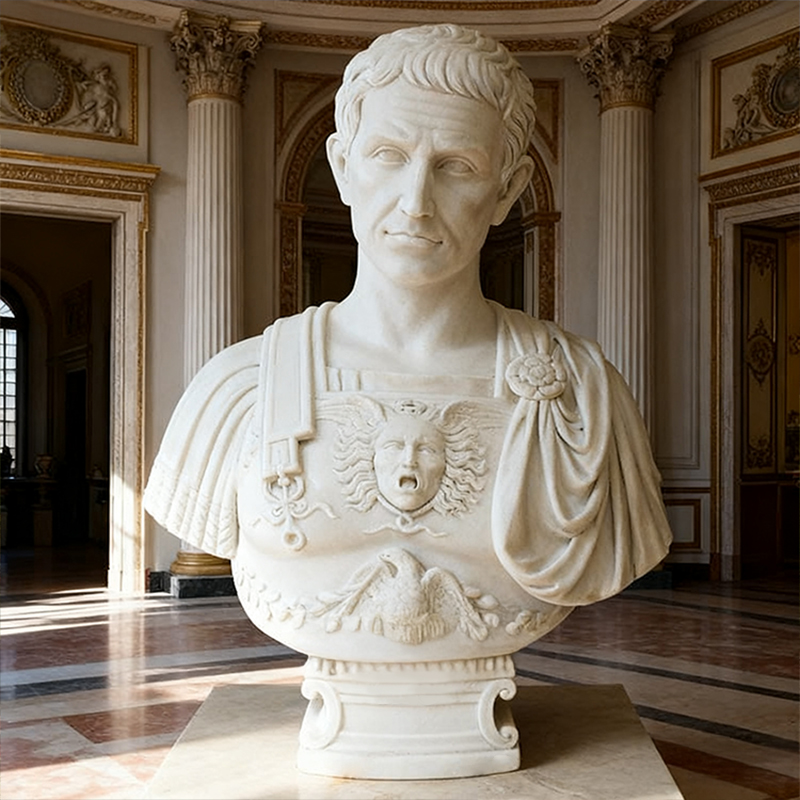 Roman-Style Marble Human Sculpture Bust
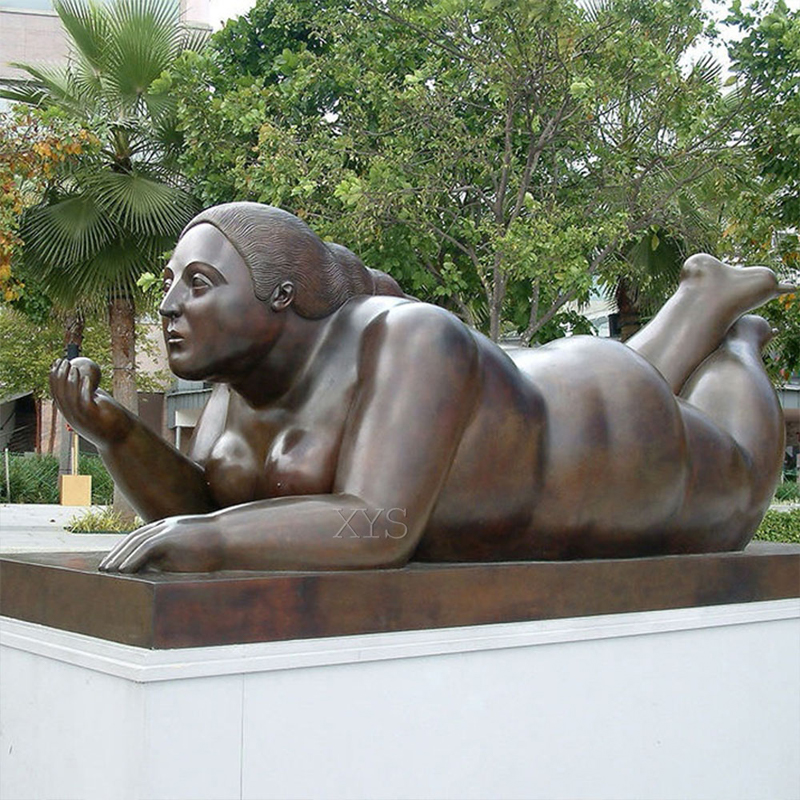 Bronze Fernando Botero Style Reclining Nude Woman Modern Art Sculpture
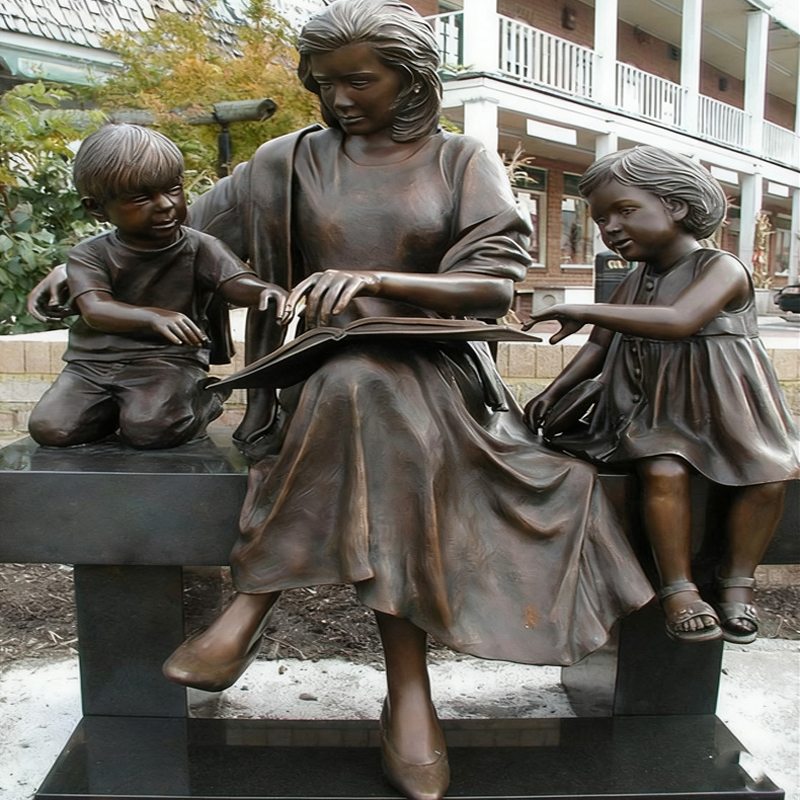 Bronze Parent-Child Reading Sculpture – Modern Artistic Design
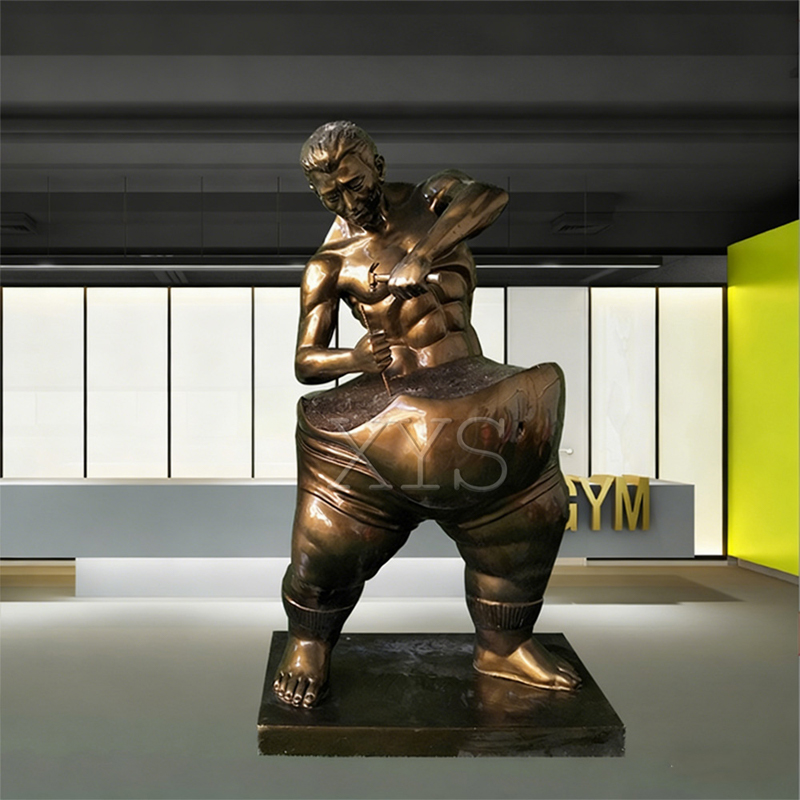 Bronze 'Self-Sculpting / Fitness Transformation' Modern Art Sculpture
 Wave and Crescent Stainless Steel Water-Feature Sculpture
 Interwoven Twist-Band Mobius Stainless Steel Water-Feature Sculpture



Daniel H.

Amanda R.

Robert B.

Jennifer S.

James W.

Barry G.

Michael T.

Emily K.

David L.

Sarah M.


Mikey XV

Jagxue

 English
 Español
 عربى
عربى Français
 italiano
 Deutsch