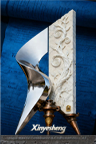
Fiberglass — formally known as glass-fibre-reinforced polymer (GRP) — entered the sculptor's vocabulary in the mid-twentieth century and has never left. Its combination of near-zero weight, extraordinary formability, and weather resistance opened avenues of expression that stone, bronze, and wood simply cannot provide. Yet fiberglass remains underestimated as a fine-art material, often associated with commercial props rather than serious sculpture. A closer look at its technical and aesthetic properties reveals a medium capable of extraordinary artistic nuance — one that challenges and rewards the sculptor in equal measure.
Content
The single most consequential artistic quality of fiberglass is its ability to assume any geometry without structural penalty. Because the material is laid up as a liquid resin reinforced with woven or chopped glass strands, it conforms perfectly to the contours of a mould — concave undercuts, organic curvatures, knife-thin flanges, and hollow volumes that would require immense structural engineering in bronze or stone are all achievable in a single laminate shell weighing a fraction of equivalent cast material.
This freedom directly influences creative decision-making. Artists working in bronze must constantly negotiate between expressive intent and the physics of molten metal: thin sections may not pour cleanly, deep undercuts complicate mould removal, and large hollow forms require internal armatures that add weight and cost. Fiberglass imposes none of these constraints. A sculptor can model an original in clay or foam, take a silicone or plaster mould, and laminate a shell that reproduces every surface decision — including deliberate imperfections, gestural marks, and millimetre-scale texture — with absolute fidelity.
This has enabled sculptors to pursue radically thin, floating, or cantilevered compositions. Jeff Koons's large-scale Balloon series, for example, exploits fiberglass (in combination with mirror-polished steel) to achieve the visual tension of a weightless object frozen in solid matter — an effect impossible to replicate in stone. On a more intimate scale, figurative sculptors use fiberglass to achieve elongated limbs and fragile extremities that would snap under their own weight if carved from marble.
The surface of a fiberglass sculpture is not an afterthought — it is an independent expressive layer that can be completely decoupled from the underlying form. Because fiberglass accepts virtually any applied treatment, the sculptor can make a single geometric form read as stone, rusted iron, skin, fabric, wood, ceramic, or a material that has no real-world equivalent. This capacity for surface illusion is arguably fiberglass's most distinctive artistic characteristic.
Texture is introduced at the mould stage. If the artist presses coarse fabric, crumpled foil, or hand-modelled clay texture into the mould surface, the fiberglass laminate picks up every detail. Grain sizes as fine as 50 microns are reproduced reliably, meaning a wood-grain texture built into a master model will appear on every cast pulled from that mould — a controlled repeatability that stone carving can never guarantee.
The outermost layer of a fiberglass laminate is typically a pigmented gelcoat — an unfilled polyester or vinylester resin applied to the mould before lamination. The gelcoat becomes the sculpture's skin, cured to a hard, glossy, or matte surface that requires no primer before painting. Artists exploit this by specifying custom gelcoat colours that penetrate the surface, so minor abrasion does not reveal a contrasting substrate beneath. Over the gelcoat, painters apply automotive lacquers, automotive pearl effects, polyurethane topcoats, patination chemicals, or encaustic wax — each producing a radically different visual character.
A less widely discussed technique involves embedding materials within or immediately behind the laminate. Glass beads, metal leaf, crushed stone aggregate, or coloured fabrics pressed against the gelcoat before lamination become permanently fused into the sculpture's surface. The result is a composite skin that catches light in ways no applied paint can replicate — a technique that gives fiberglass sculpture a tactile richness that rewards close viewing.
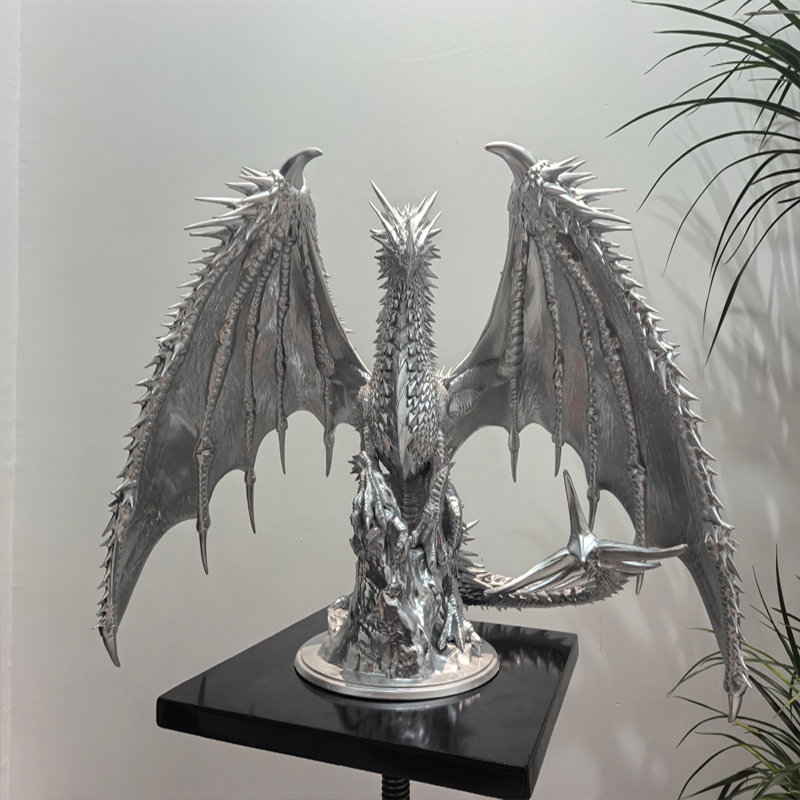
Most sculptural materials are coloured by surface application — paint sits on top of stone, patina sits on top of bronze. Fiberglass offers a fundamentally different relationship with colour because pigment can be mixed directly into the resin matrix. A sculpture cast in red-pigmented resin is red throughout its wall thickness; chips and surface damage do not reveal a foreign substrate. This integral colouration matters artistically because it changes how the viewer perceives material authenticity — the colour seems to emanate from within rather than being applied as a cosmetic layer.
Translucency is an even more unusual expressive option available to fiberglass sculptors. Thin laminates — as little as 1.5 mm — transmit diffused light when backlit, creating a glow effect exploited by artists like Peter Regli and numerous installation practitioners. By controlling laminate thickness across a single form, an artist can make certain passages opaque and others luminous, directing the viewer's attention through light rather than line or mass. This effect is wholly unavailable in bronze, stone, or ceramic and represents a unique expressive register specific to fiberglass.
Public sculpture has historically been limited in scale by the weight of available materials. A bronze figure at 10 metres height requires an internal steel armature, a reinforced concrete foundation, and a budget that excludes most artists and municipalities. A fiberglass equivalent of identical external dimensions might weigh 80–90% less, require a far simpler foundation, and be fabricated in sections that can be transported in a standard container and assembled on-site by a small crew.
This weight advantage has enabled a generation of large-scale public sculpture that would otherwise be economically impossible. Yinka Shonibare's large outdoor works, Niki de Saint Phalle's Nanas, and the giant animal sculptures produced by studios such as Bilbao's Imaginarium all exploit fiberglass's strength-to-weight ratio to achieve presence at architectural or urban scale.
 Fiberglass Human Sculpture in a Gargoyle Style
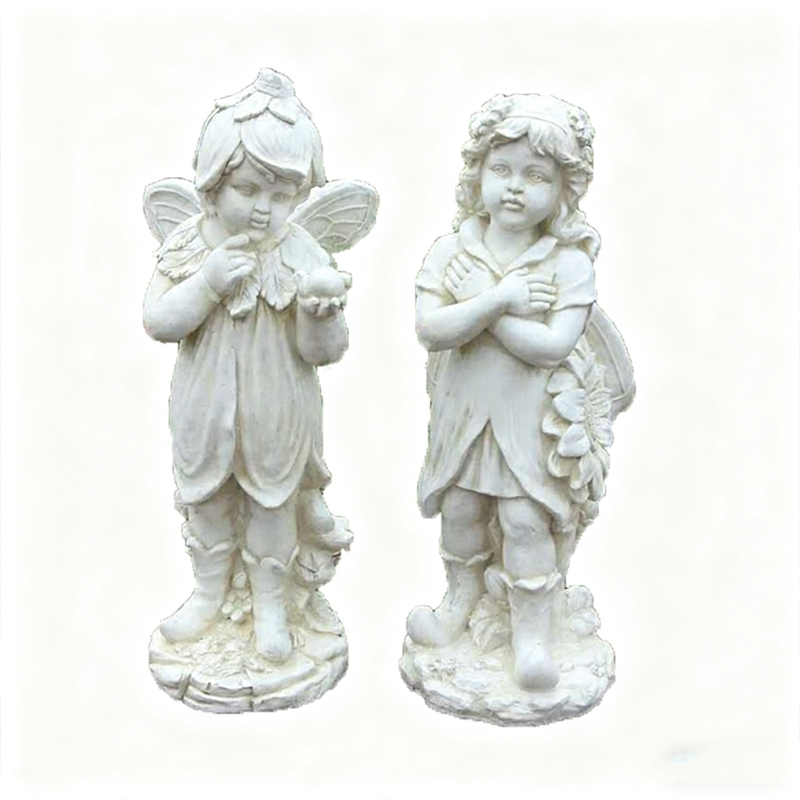 Fiberglass Human Sculpture of a Little Angel
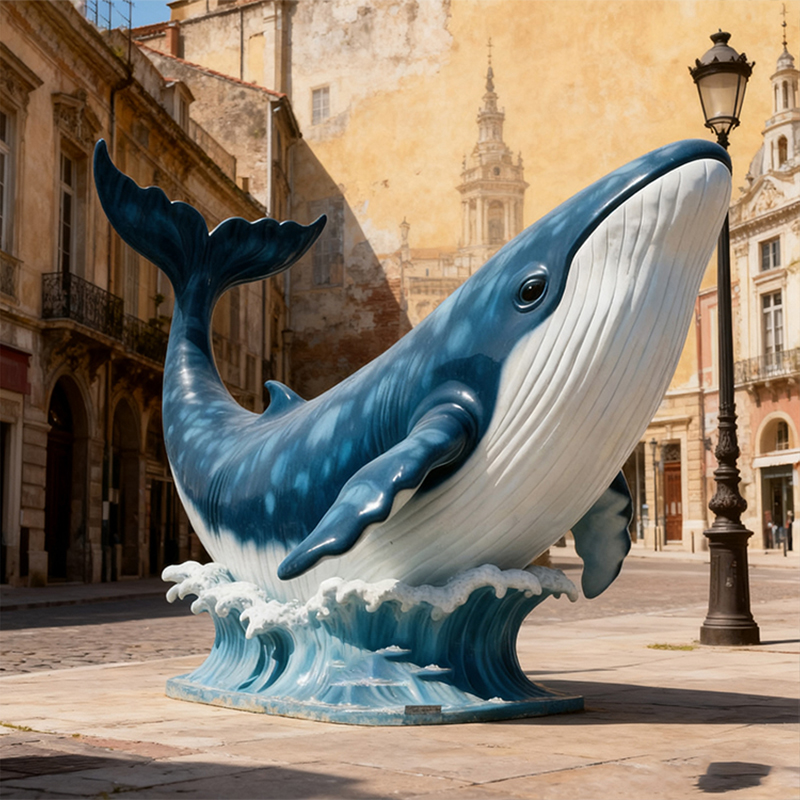 Fiberglass Blue Whale Sculpture
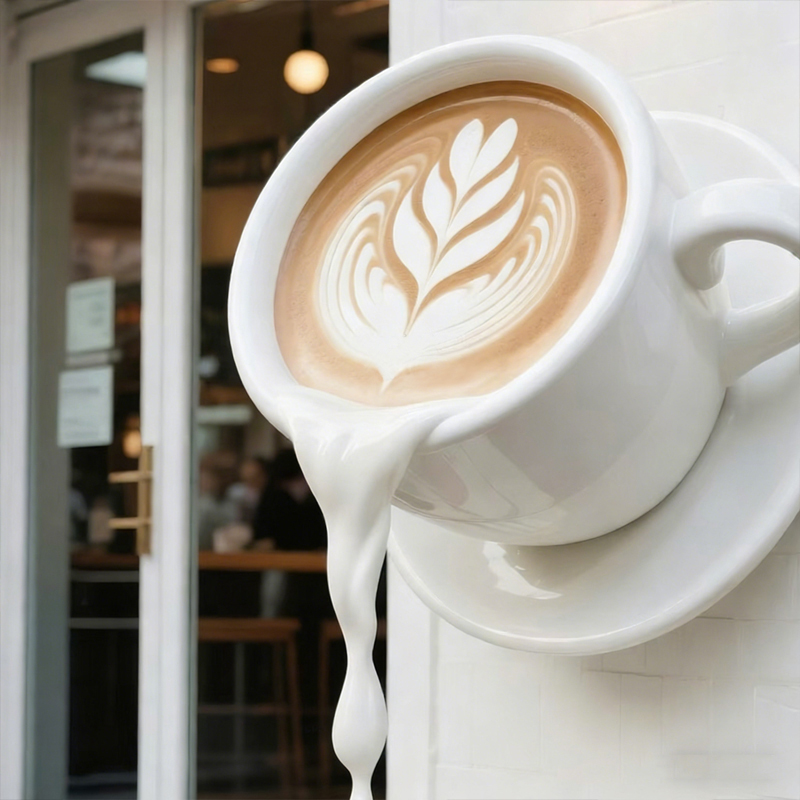 Fiberglass Floating Coffee Cup Decorative Sculpture
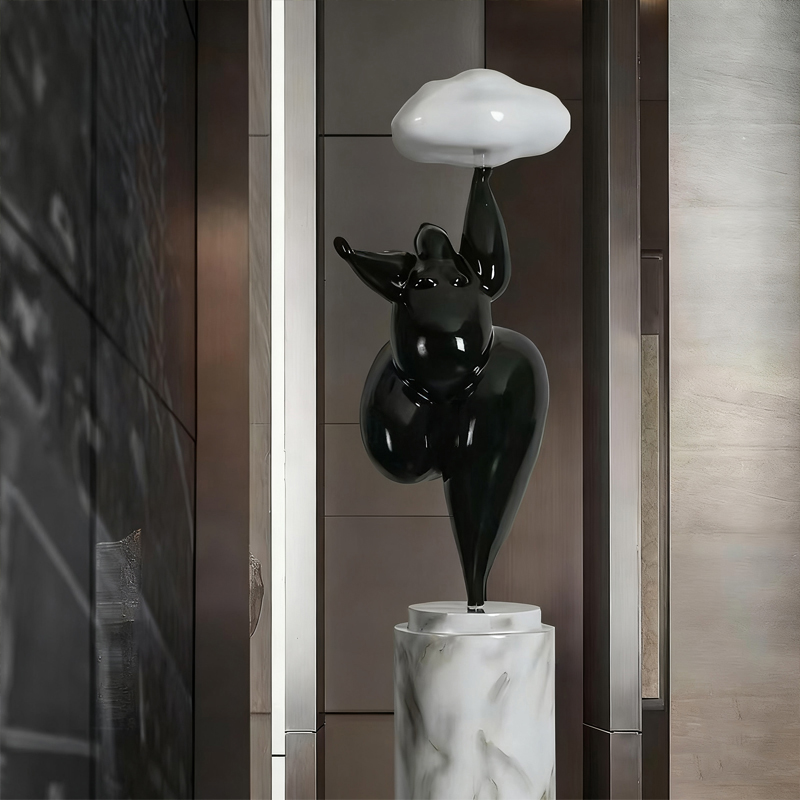 Cloud-Lifting Style Fiberglass Decorative Sculpture
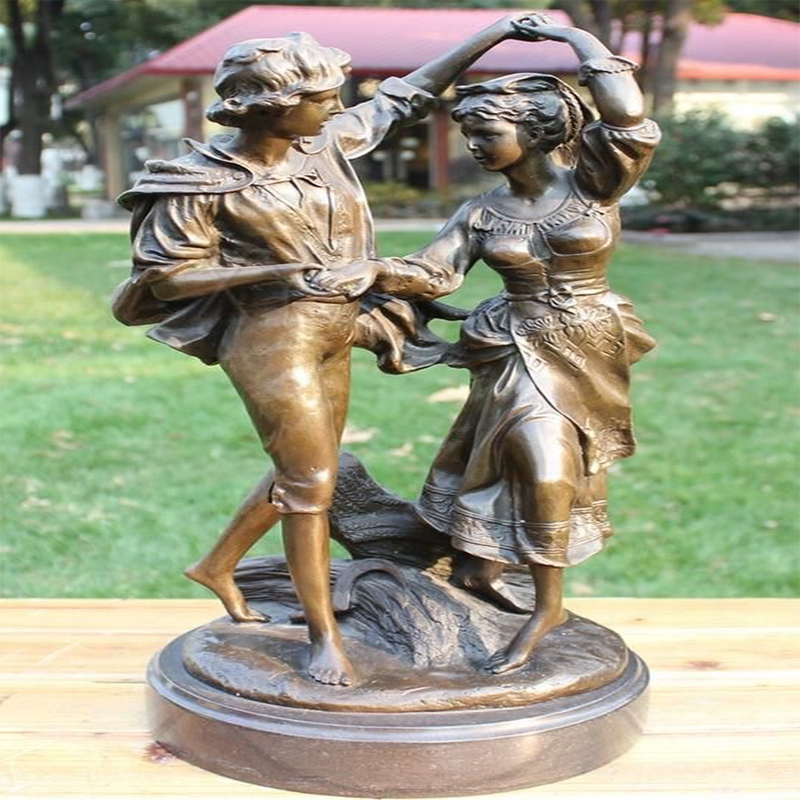 Bronze Life-Size Dancing Couple Sculpture – Heart Figure for Park Decoration



Daniel H.

Amanda R.

Robert B.

Jennifer S.

James W.

Barry G.

Michael T.

Emily K.

David L.

Sarah M.


Mikey XV

Jagxue

 English
 Español
 عربى
عربى Français
 italiano
 Deutsch