Content
Stainless steel has established itself as one of the most widely used materials in contemporary sculpture, and for good reason. Its combination of structural strength, aesthetic versatility, and environmental resilience addresses nearly every challenge a sculptor faces — whether creating a small gallery installation or a monumental public artwork intended to stand for generations. Understanding why stainless steel occupies this dominant position begins with its core material properties and how those properties translate into real-world sculptural advantages.
The alloy composition of stainless steel — primarily iron combined with a minimum of 10.5% chromium — creates a passive oxide layer on the surface that continuously reforms when damaged. This self-healing characteristic is not merely a preservation feature; it fundamentally changes the long-term economics and aesthetics of outdoor sculpture. Where bronze develops a patina that may or may not align with the artist's vision, and where carbon steel demands protective coatings that degrade over time, stainless steel maintains its intended surface appearance with remarkably little intervention.
Common grades used in sculpture include 304 stainless steel for indoor and sheltered applications, and 316 stainless steel for coastal or chemically exposed environments, where the addition of molybdenum provides enhanced resistance to chloride-induced corrosion. This graded approach allows sculptors and commissioners to match material specification precisely to the installation environment without compromising on appearance or longevity.
Outdoor sculpture is subjected to a sustained assault of environmental stressors — ultraviolet radiation, temperature cycling, rain acidity, atmospheric pollutants, and in coastal zones, salt-laden air. Few materials withstand this combination as effectively as stainless steel. The passive chromium oxide film that forms on its surface does not require painting, sealing, or annual treatment to remain functional. It regenerates spontaneously in the presence of oxygen, meaning that superficial scratches from handling or cleaning do not permanently compromise corrosion protection.
This durability has significant implications for public art commissions, where maintenance budgets are often constrained and works may go without professional care for years at a time. Municipalities, universities, and corporate campuses increasingly specify stainless steel in public artwork procurement precisely because the lifecycle cost — purchase price plus maintenance over a 30- to 50-year service period — is demonstrably lower than that of alternatives requiring periodic re-coating or structural restoration.
Studies on outdoor metal sculpture in urban environments have shown that 316L stainless steel installations retain over 95% of their original surface reflectivity after 20 years in moderately polluted urban environments with only basic periodic cleaning. This performance metric is difficult to replicate with bronze, aluminum, or painted carbon steel under comparable conditions.
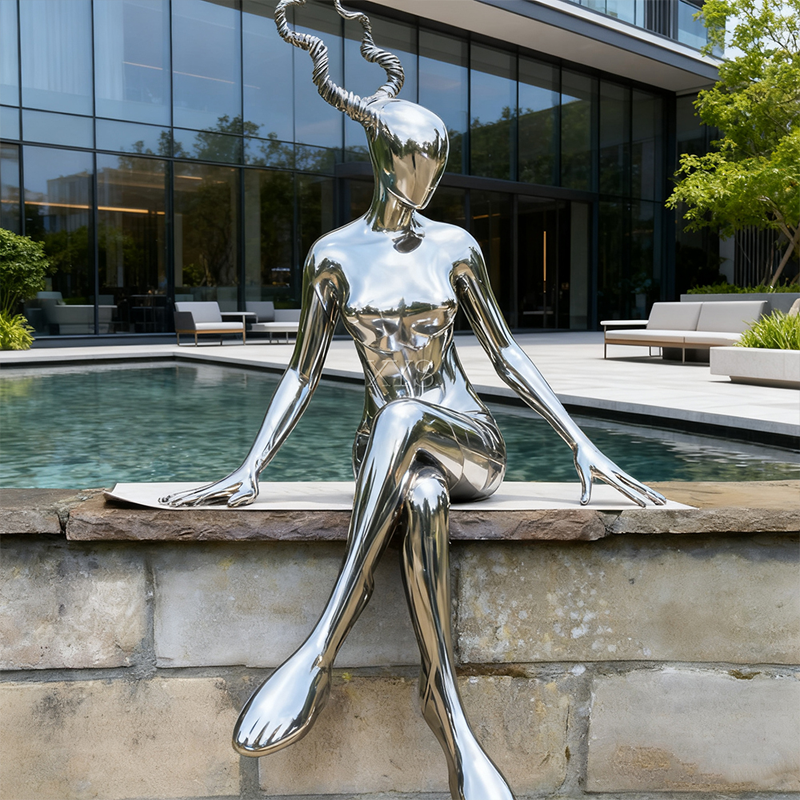
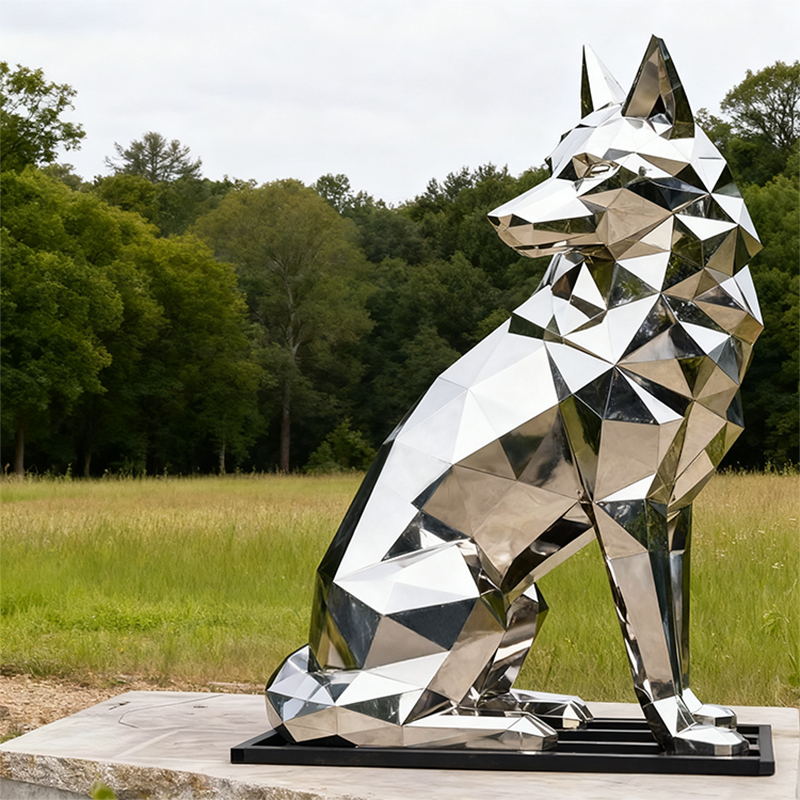
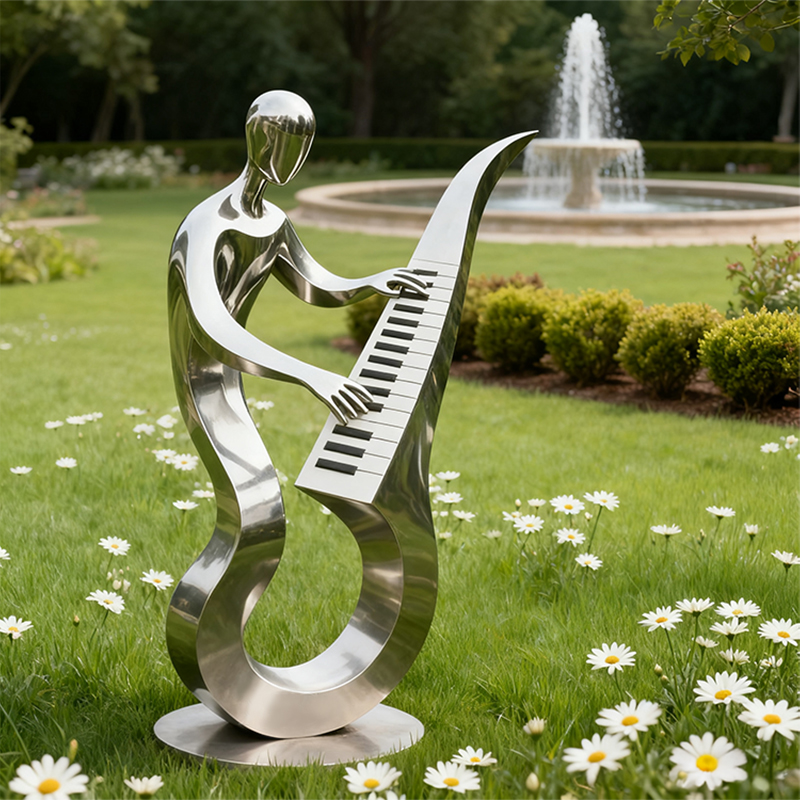
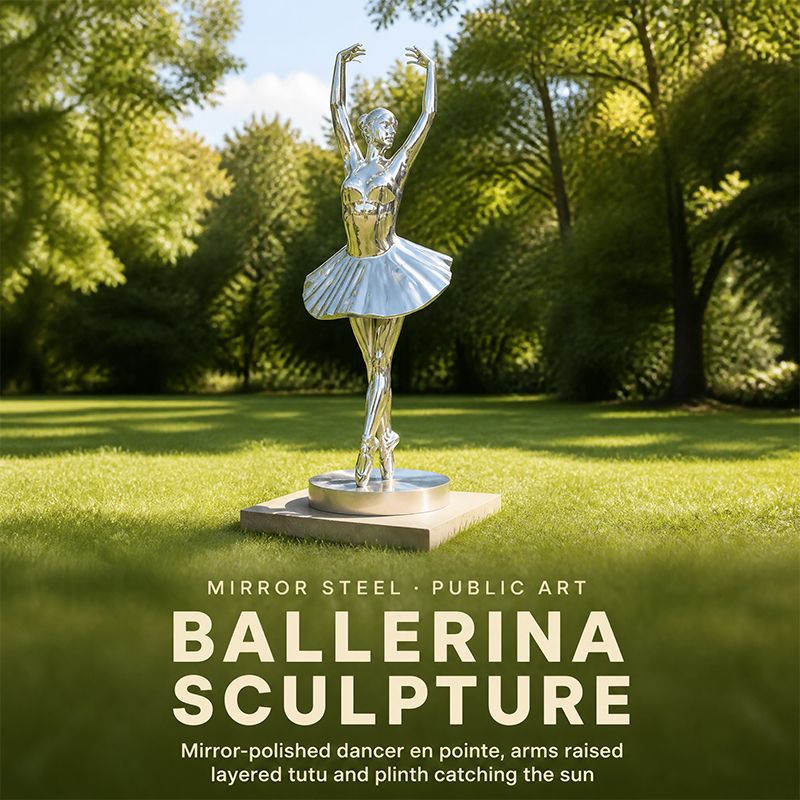
Beyond its functional properties, stainless steel possesses an aesthetic identity unlike any other sculptural material. Its ability to reflect, distort, and interact with its surrounding environment gives stainless steel sculpture a dynamic, site-responsive quality that static, matte-surfaced materials simply cannot achieve. A polished stainless steel sculpture in an urban plaza does not merely occupy space — it incorporates the surrounding architecture, sky, and viewer into its own surface, creating an artwork whose visual content changes continuously with light conditions, weather, and perspective.
Surface finish selection is one of the most powerful tools available to the stainless steel sculptor. The principal finish options and their aesthetic effects are distinct and purposeful:
This range of surface treatments gives stainless steel a breadth of aesthetic expression that few other sculptural materials can match, spanning from warm, metallic tones to cool, hyper-reflective surfaces within the same fundamental material category.
Stainless steel is a remarkably workable material given its strength. It can be cut, bent, rolled, stamped, welded, and formed into complex three-dimensional geometries using both traditional metalworking methods and modern computer-controlled fabrication technologies. CNC laser cutting, water jet cutting, and press-brake forming allow sculptors to translate highly detailed digital designs into physical form with precision tolerances measured in fractions of a millimeter. For monumental sculpture requiring structural integrity at scale, stainless steel's high yield strength — typically 170–310 MPa for annealed 304 grade — allows large-span and cantilevered forms that would require significantly more material volume in lower-strength alternatives.
Welding stainless steel requires skill and appropriate filler materials to prevent heat-affected zone sensitization and carbide precipitation, but when properly executed, welded stainless steel joints achieve strength comparable to the parent material while remaining visually invisible after grinding and polishing. This capability to create seamless, joint-free surfaces on complex three-dimensional forms distinguishes stainless steel from materials like stone or cast bronze, where seams and casting marks are structurally or aesthetically limiting.
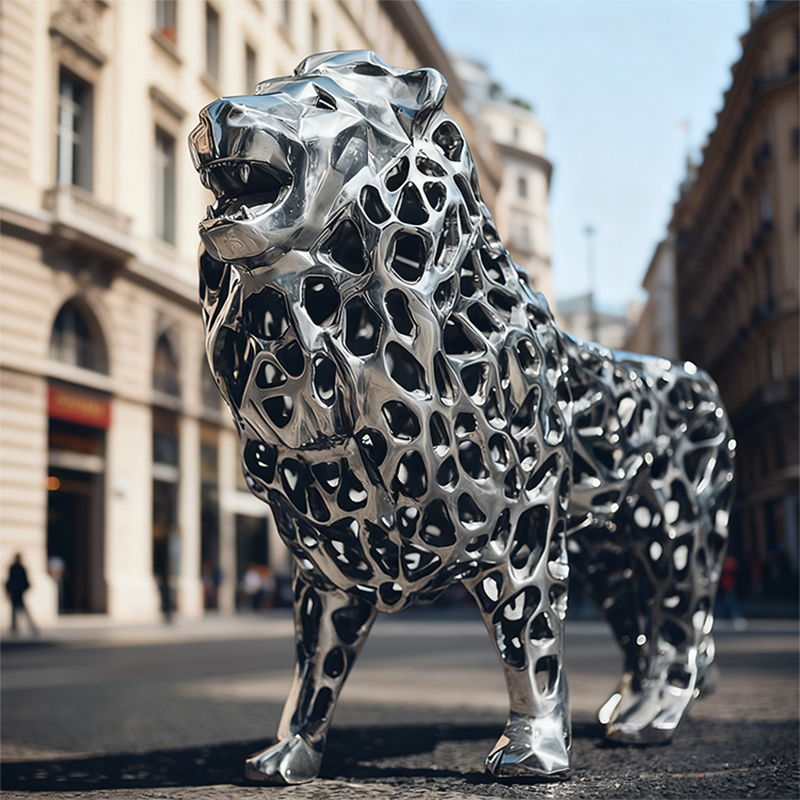
The compatibility of stainless steel with modern digital fabrication pipelines has also opened new creative territory. Sculptures generated through algorithmic or parametric design processes — forms defined by mathematical equations rather than hand-drawn sketches — can be output directly to CNC fabrication equipment in stainless steel, enabling levels of geometric complexity that were practically unachievable by hand before the digital era.
To appreciate stainless steel's advantages fully, it is useful to compare it directly against the materials it most frequently competes with in sculptural applications:
| Material | Corrosion Resistance | Maintenance Required | Aesthetic Range | Structural Strength |
|---|---|---|---|---|
| Stainless Steel (316) | Excellent | Low | Very Wide | High |
| Bronze | Good (patinas) | Moderate | Moderate | Moderate |
| Carbon Steel | Poor (rusts) | High | Limited | High |
| Aluminum | Good | Low–Moderate | Moderate | Low–Moderate |
| Stone (Granite) | Excellent | Low | Limited | High (compression) |
Stainless steel's combination of excellent corrosion resistance, low maintenance requirements, wide aesthetic range, and high structural strength is unmatched by any single alternative material. Bronze comes closest in terms of tradition and prestige, but its higher maintenance demands, patination unpredictability, and lower yield strength limit its performance in large-scale or low-maintenance applications.
Stainless steel is fully recyclable without loss of material properties, and the global recycling infrastructure for stainless steel is mature and efficient. Approximately 80% of stainless steel ever produced is estimated to still be in active use — a figure that reflects both the material's longevity and its high recovery rate at end of life. For public and institutional sculpture commissioners increasingly subject to sustainability mandates, the ability to specify a material with documented recyclability and low lifecycle environmental impact is a meaningful procurement advantage.
When evaluated on a cost-per-year-of-service basis, stainless steel sculpture consistently outperforms materials that require periodic protective treatment, structural repair, or replacement of corroded components. The higher initial material and fabrication cost compared to carbon steel or aluminum is typically recovered within 8–12 years through avoided maintenance expenditure in outdoor installation contexts.
For artists, fabricators, and commissioners looking for a material that supports creative ambition, survives demanding environments, and retains its visual identity over decades without constant intervention, stainless steel offers a proposition that is difficult to improve upon. Its combination of beauty, durability, formability, and sustainability positions it not merely as one option among many, but as the material of choice for serious, long-horizon sculptural work.



Daniel H.

Amanda R.

Robert B.

Jennifer S.

James W.

Barry G.

Michael T.

Emily K.

David L.

Sarah M.


Mikey XV

Jagxue

 English
 Español
 عربى
عربى Français
 italiano
 Deutsch