Content
Stainless steel decorative sculpture has moved from industrial workshops into gardens, lobbies, and living rooms because it solves two problems at once: it survives years of weather and handling, and it looks contemporary without trying too hard. Designers and homeowners alike are drawn to the material because it holds a crisp form, reflects light in a way that changes with the time of day, and requires far less upkeep than bronze, stone, or wood. As outdoor art installations and modern interior décor trends grow, stainless steel has positioned itself as the practical answer to the question of how to keep a piece looking new for decades.
Unlike materials that fade, crack, or corrode quickly, stainless steel sculptures maintain their structural and visual integrity across a wide range of climates. This reliability is what makes the material a favorite among landscape architects, hotel designers, and corporate art curators who need pieces that will still look presentable after a decade of sun, rain, and foot traffic.
The durability of stainless steel comes down to its chromium content. When chromium is exposed to oxygen, it forms a thin, invisible layer of chromium oxide on the surface of the metal. This layer is self-repairing, meaning that even if the surface gets scratched, the exposed steel reacts with oxygen again and reforms the protective barrier. This is why stainless steel sculptures resist rust, pitting, and corrosion far better than carbon steel or iron alternatives.
Beyond corrosion resistance, stainless steel also offers excellent mechanical strength. Sculptures made from this material can support thin, dramatic forms and cantilevered shapes that would be structurally risky in more brittle materials like ceramic or cast stone. This strength-to-weight ratio allows artists to create bold, sweeping silhouettes that remain stable in high winds or seismic activity, which is particularly valuable for large-scale outdoor installations.
Not all stainless steel sculptures are created equal. The grade of steel and the type of surface finish both play a significant role in how the piece performs over time and how it fits into a design scheme.
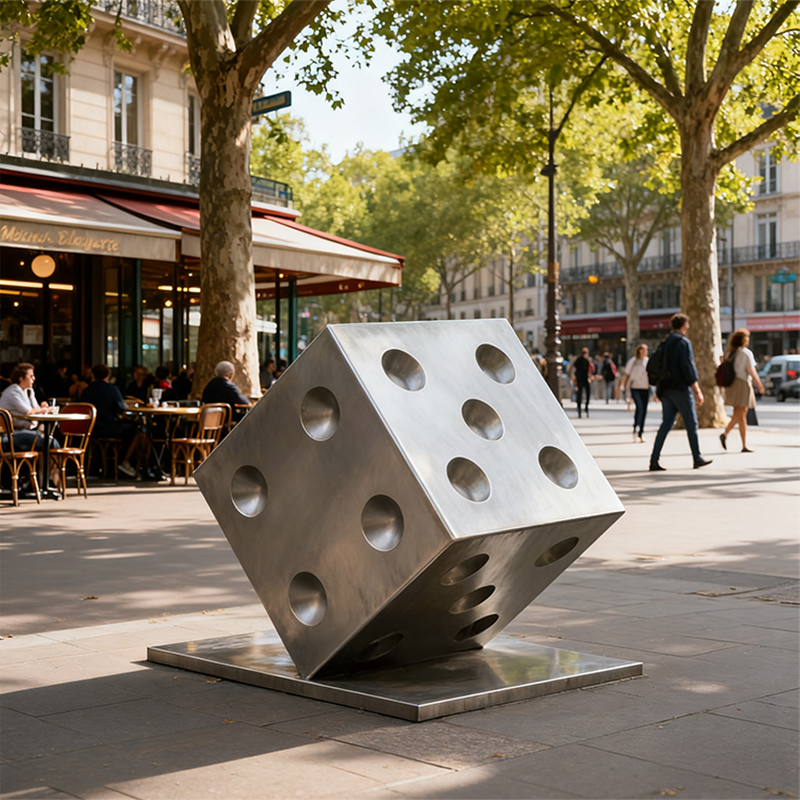
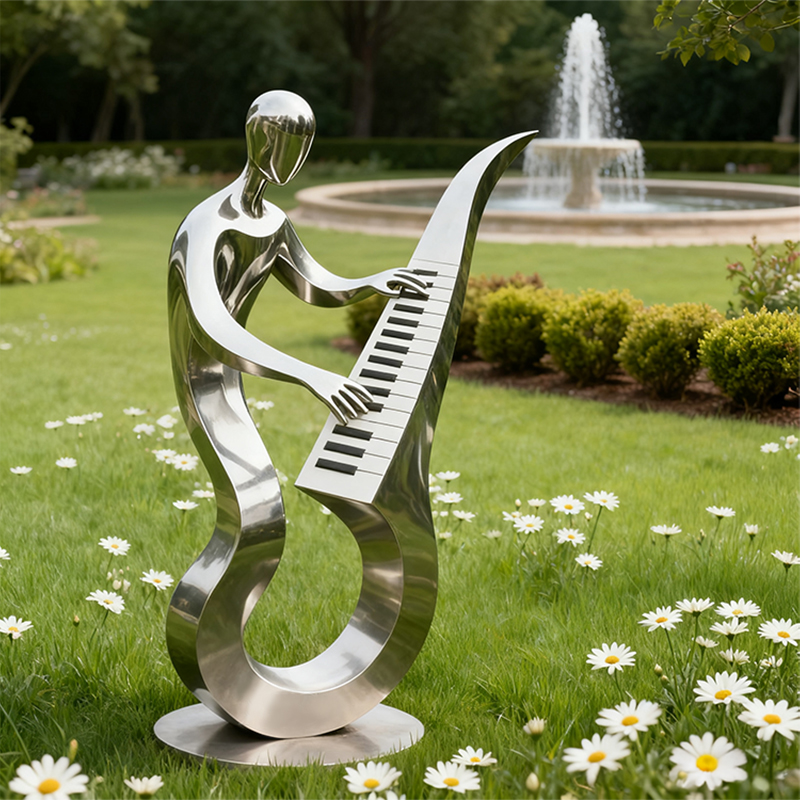
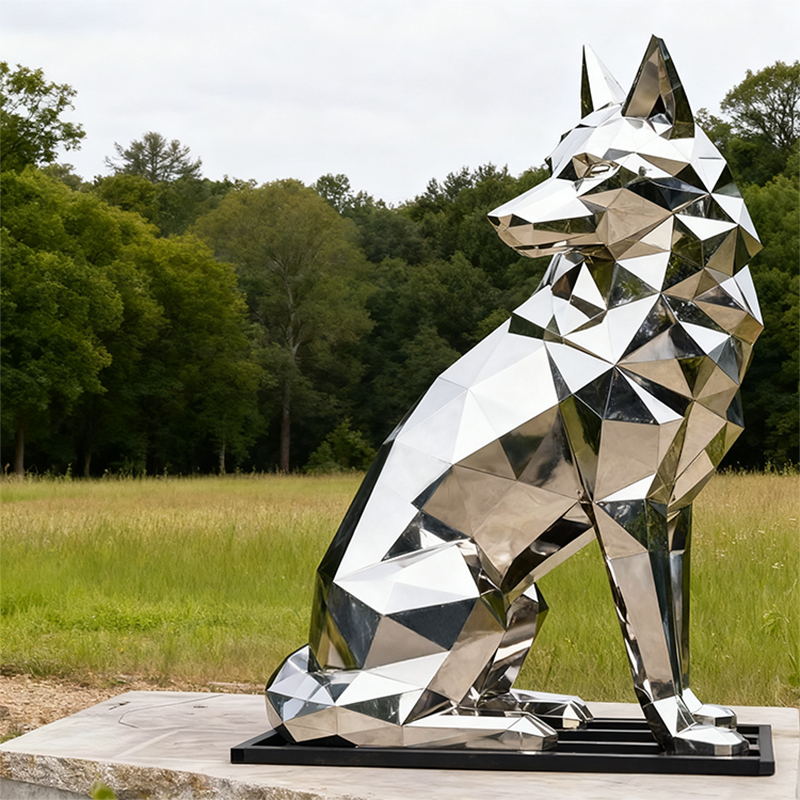
A mirror-polished finish creates a highly reflective surface that mimics the surrounding environment, making the sculpture appear to blend into its setting while still standing out as a focal point. This finish is popular for modern art installations because it interacts dynamically with light and color. A brushed finish, on the other hand, has a matte, linear texture that hides fingerprints and minor scratches more effectively, making it a practical choice for high-traffic public spaces or pieces that will be touched frequently.
Grade 304 stainless steel is widely used for indoor and moderate-climate outdoor sculptures due to its balance of cost and corrosion resistance. Grade 316 stainless steel contains additional molybdenum, which significantly boosts resistance to chloride exposure, making it the preferred choice for coastal properties, poolside installations, or any location near saltwater. Choosing the correct grade before purchase can prevent premature surface degradation and extend the sculpture's usable life by many years.
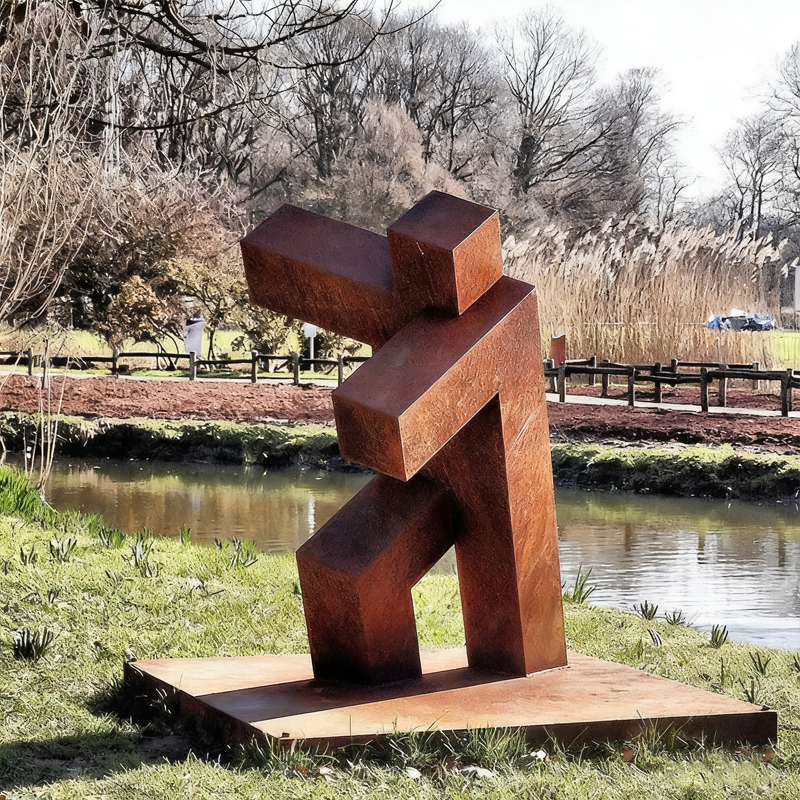
Stainless steel's clean lines and metallic sheen lend themselves naturally to a range of contemporary design languages. Minimalist geometric sculptures, abstract organic forms, and kinetic pieces that move with the wind all benefit from the material's ability to hold precise angles and smooth curves simultaneously. Because the surface reflects its surroundings, the same sculpture can look dramatically different depending on the lighting, season, or nearby landscaping, giving the piece a sense of movement even when it is completely still.
This adaptability makes stainless steel sculptures a favorite for spaces that need to feel current without being tied to a single decorating trend. A polished abstract form can anchor a minimalist courtyard, while a brushed animal figure can add warmth to a rustic garden without clashing with natural materials like wood or stone.
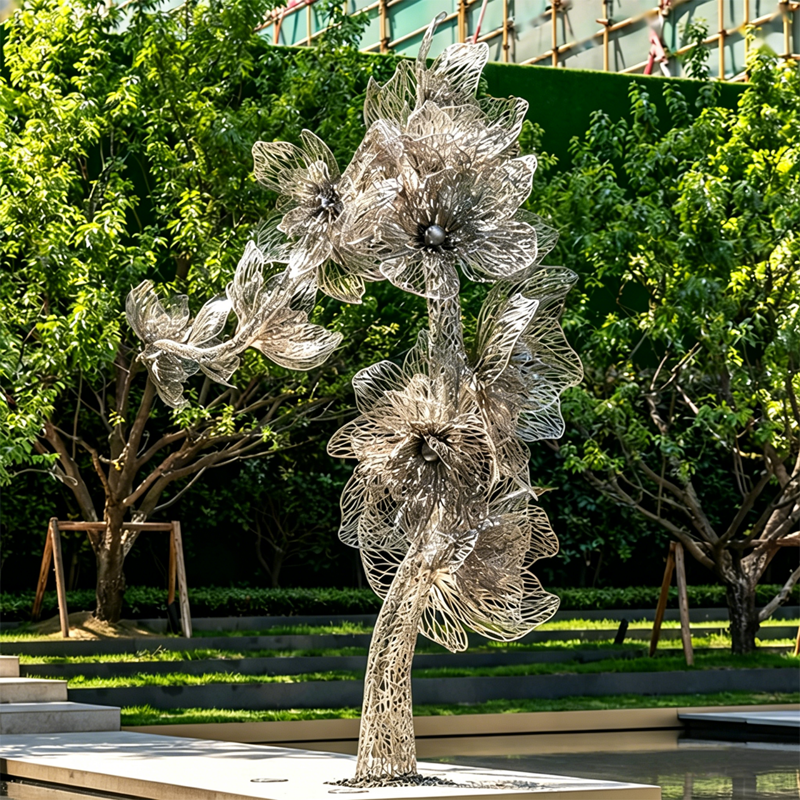
Understanding how stainless steel stacks up against traditional sculpture materials helps clarify why it has become so popular for both residential and commercial projects.
| Material | Weather Resistance | Maintenance Needs | Typical Lifespan |
| Stainless Steel | Excellent | Low | 30+ years |
| Bronze | Good | Moderate | 50+ years |
| Cast Stone | Fair | Moderate | 15-25 years |
| Carved Wood | Poor | High | 5-15 years |
Where a sculpture will live changes what to prioritize when selecting a piece. Outdoor installations near coastlines or pools should always use marine-grade stainless steel to prevent chloride-induced pitting. Sculptures placed in direct sunlight for long periods should favor brushed or matte finishes, since mirror-polished surfaces can create intense glare that may be uncomfortable in certain sightlines. Indoor pieces have more flexibility, but should still be positioned away from direct contact with cleaning chemicals such as bleach, which can dull the protective oxide layer over time.
One of the strongest arguments in favor of stainless steel sculpture is how little maintenance it demands compared to other materials. A routine cleaning with mild soap, water, and a soft cloth is usually enough to remove dust, pollen, or light grime. For polished finishes, a specialized stainless steel polish applied every few months can restore reflectivity and remove minor water spots. Abrasive pads, steel wool, or harsh chemical cleaners should be avoided, as they can scratch the surface and compromise the protective oxide layer that gives the material its corrosion resistance.
For outdoor pieces, periodic rinsing after storms helps remove salt, pollutants, or acid rain residue before they have a chance to settle into surface details. Sculptures with intricate cutouts or textured surfaces may benefit from a soft-bristle brush during cleaning to reach recessed areas without scratching the metal.
Selecting a stainless steel sculpture involves balancing artistic intent with practical performance. Buyers should consider the scale of the piece relative to the space, the finish that suits the lighting conditions, and the grade of steel appropriate for the local climate. A well-chosen sculpture becomes a long-term design investment rather than a decorative item that needs replacing after a few seasons.
When durability and style are both non-negotiable, stainless steel remains one of the most reliable choices available. Its resistance to corrosion, structural strength, and ability to look modern in nearly any setting explain why it continues to dominate both residential gardens and large-scale public art installations.



Daniel H.

Amanda R.

Robert B.

Jennifer S.

James W.

Barry G.

Michael T.

Emily K.

David L.

Sarah M.


Mikey XV

Jagxue

 English
 Español
 عربى
عربى Français
 italiano
 Deutsch