
Standing in the Bargello Museum in Florence, the cast bronze David produces a strange effect. At 158 cm, it is shorter than a grown adult, yet it holds the space with the confidence of a monument. Donatello made it around 1440 for Cosimo de' Medici, and the work changed how European artists thought about bronze. It was the first free-standing male nude cast in bronze since antiquity, and the first such figure in the Renaissance to support itself without a tree trunk or architectural back. That technical achievement, and the expressive modeling that came with it, is the reason "David bronze" remains one of the most searched terms in classical art.
Content
Cosimo de' Medici commissioned this David for the courtyard of the Medici palace, not for a church. That domestic setting influenced its scale, its nudity, and its private tone. The biblical story of David and Goliath was a familiar civic metaphor in Florence, but Donatello chose to show a moment of aftermath, not action. The giant's armored head lies at the hero's feet, while the right hand grips a sword almost casually. The face is calm, almost detached. This reading of the myth as something intimate and psychological was unusual in the 1440s.
Reception was mixed in the Renaissance. A nude male figure outside a religious context drew attention to the beauty of the body, which meant the sculpture was also read in later centuries as one of the earliest surviving works with homoerotic undertones. Modern scholars do not agree on the exact meaning, and that ambiguity is precisely why Donatello's David remains a touchstone for the expressive possibilities of bronze.
Donatello almost certainly used the lost-wax process. He made an initial model in wax or clay, surrounded it with a refractory mold, then fired the assembly. The wax melted away, leaving a cavity that received molten bronze. This method allowed far more freedom than direct carving: undercut shapes, separated fingers, and a hairline that could be modeled rather than sawn. In this sense, bronze was a material that rewarded thinking in volumes and surfaces rather than in blocks.
Wall thickness is one of the most practical concerns. A figure cast with thin walls is lighter, which matters when the statue stands on one foot. Donatello managed to cast a figure that rests on two small contact points without collapsing or warping. In modern bronze commissions, wall thickness typically runs from 6 to 8 mm for outdoor work. A foundry that knows how to control thickness can reduce overall weight while keeping structural strength under wind loads or seismic movement.
The surface finish is another reason this work survived. Parts of the hair, the helmet, and the boots retain traces of gilding. Gilding added brilliance to the reddish-brown alloy and visually separated the figure from the raw metal. For a buyer today, the same idea appears in patina choices. A patina is not just cosmetic. It protects the metal, limits corrosion, and gives the sculpture its final color, whether deep green, warm brown, or black. Application methods range from cold patinas for indoor pieces to hot patinas that are fixed with wax.
If you want to understand how material choices affect the final result, a practical overview of bronze sculpture types, techniques, and selection criteria makes the decision process much clearer.
The helmet with its laurel wreath signals victory, reinforcing the story of David's triumph. The body is nude, and the modeling of the torso is close to classical ideals: the chest is balanced, the arms are held away from the trunk, and the abdomen shows a relaxed but firm structure. Donatello also used a refined contrapposto. The weight is carried on the right leg, the left hip drops, and the shoulders tilt in the opposite direction. This long S-curve was a direct revival of ancient Greek practice.
At the same time, the face does not look like a generic Greek hero. It is rounded, younger, and slightly melancholic. The head has a bit of movement, so the sculpture feels alive when the viewer walks around it. For modern commissions, this is a key point: an expressive face and a convincing pose are what create a lasting piece, and they are also what separate a mass-produced casting from a carefully supervised work.
The scale is one of its most distinctive features. Donatello's bronze David measures about 158 cm. That is roughly the height of a person, not a monument. Standing next to it, you feel like you are standing with another person. This intimacy is not accidental. For private gardens, lobbies, and interior atriums, a life-size bronze figure works better than many buyers imagine, as long as the proportions and placement are planned seriously.
Understanding why Donatello chose bronze requires comparing it with marble. The table below sets the two materials side by side.
| Feature | Bronze | Marble |
|---|---|---|
| Production method | Lost-wax casting | Direct carving |
| Structural freedom | Allows deep undercuts, thin limbs, and open spaces | Requires a supporting tree or block for fragile parts |
| Outdoor durability | High resistance to weather and UV exposure | Susceptible to acid rain, pitting, and biological staining |
| Weight | Lighter than a carved stone of the same volume | Heavy, with a high shipping cost |
| Surface treatment | Patina, gilding, or polished finish | Polished, honed, or rough texture |
For a life-size human figure intended for an outdoor space, bronze is usually the more durable and structurally flexible choice. Marble still has a place in covered interiors or theatrical landscapes, but the practical all-weather advantages of bronze have never changed.
The same lost-wax approach Donatello refined in the 1440s is still in use. Today bronze sculptures are built for plazas, university campuses, hotels, memorial gardens, and religious sites. They are also adapted to complex themes: a firefighter memorial, a dancing pair, an athlete mid-stride. Because the process starts with a model, the customer can review a maquette before anything is cast. That degree of control did not exist in the same way when a master sculptor worked directly in stone.
For public and commercial owners, the main questions are about climate and installation. Bronze will darken or develop a green patina over time, but that change is generally considered part of its character. In coastal environments, salt spray accelerates corrosion, so a thicker wall and a sealed patina are recommended. In urban environments, acid rain can interact with copper in the alloy, and a protective wax layer is a good solution. Anchoring also demands attention. A full-size bronze figure can weigh hundreds of kilograms, so the foundation and the hidden steel armature must be calculated together.
Buyers often focus only on the surface finish, but the deeper quality issues are hidden. Here are the most important checks.
Making these decisions alone is hard. In commissioning a work, speaking with a foundry that has both design experience and a quality control team is the safest route.
Donatello's David is the ancestor of an entire family of classical bronze human figures. The modern equivalent is not a copy but an original adaptation of that expressive tradition. It may be an armored figure, a goddess with a weapon, or a hero in repose.
When a European classical style is the goal, a work based on a Roman warrior brings the same calm authority and vertical presence that Donatello achieved:
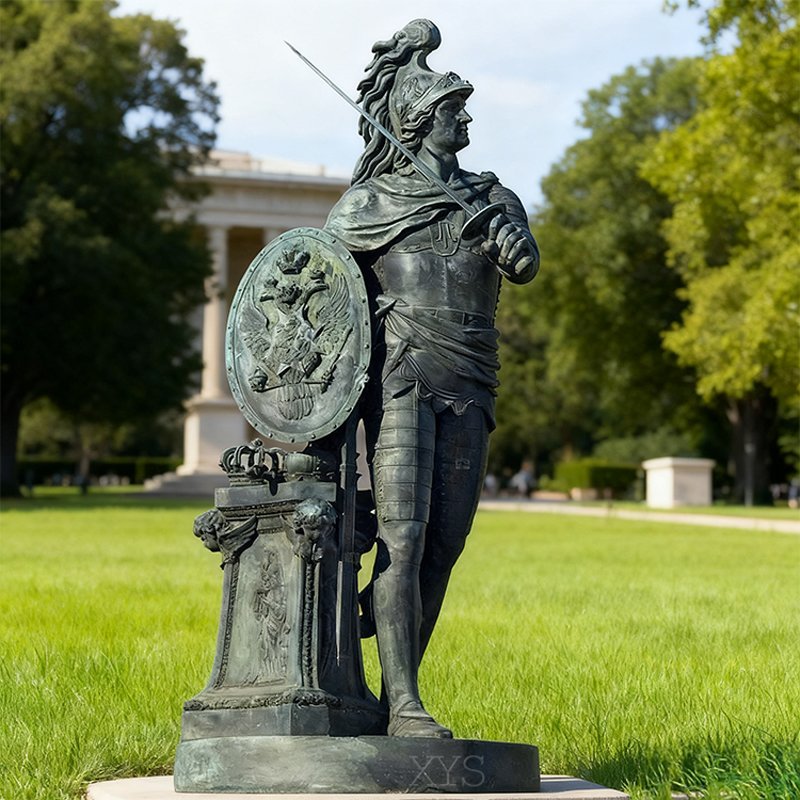 Bronze European Armored Warrior / Roman War God SculptureSize: Total height (incl. base) 2 m Price: ¥48,000View Product →
For a mythological female form, the hunting goddess with a bow carries the grace of a classical figure in a pose that works well in gardens and terraces:
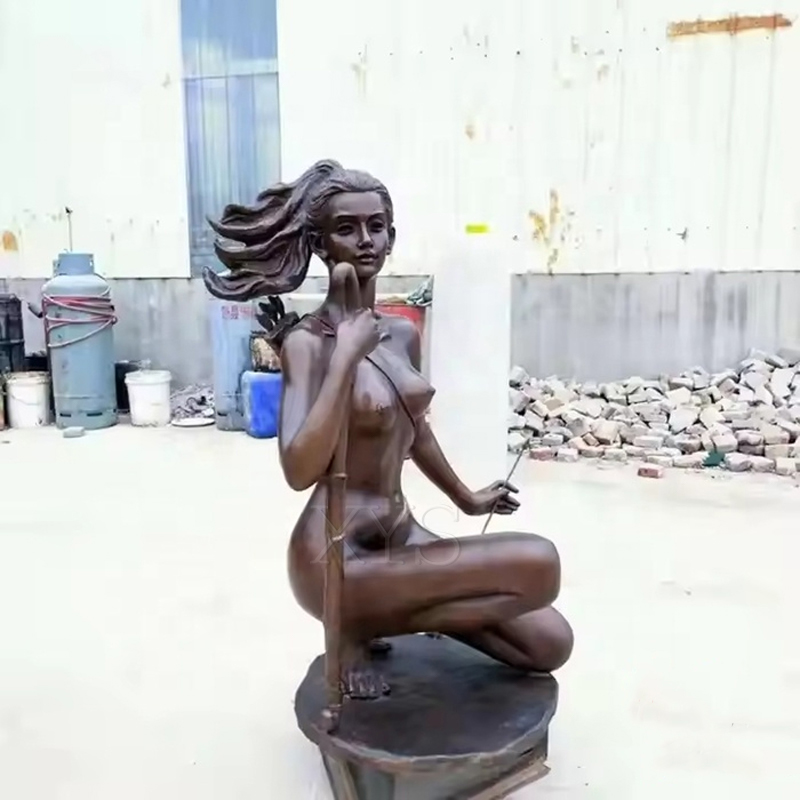 Bronze Hunting Goddess (Diana / Amazon Warrior) SculptureSize: Total height (incl. base) 1.6 m Price: ¥43,200View Product →
Animal sculpture is a parallel discipline. A European neoclassical horse, rooted in the same proportions as Renaissance monumental equestrian art, can fill a driveway or a public lawn with the same presence as a human figure:
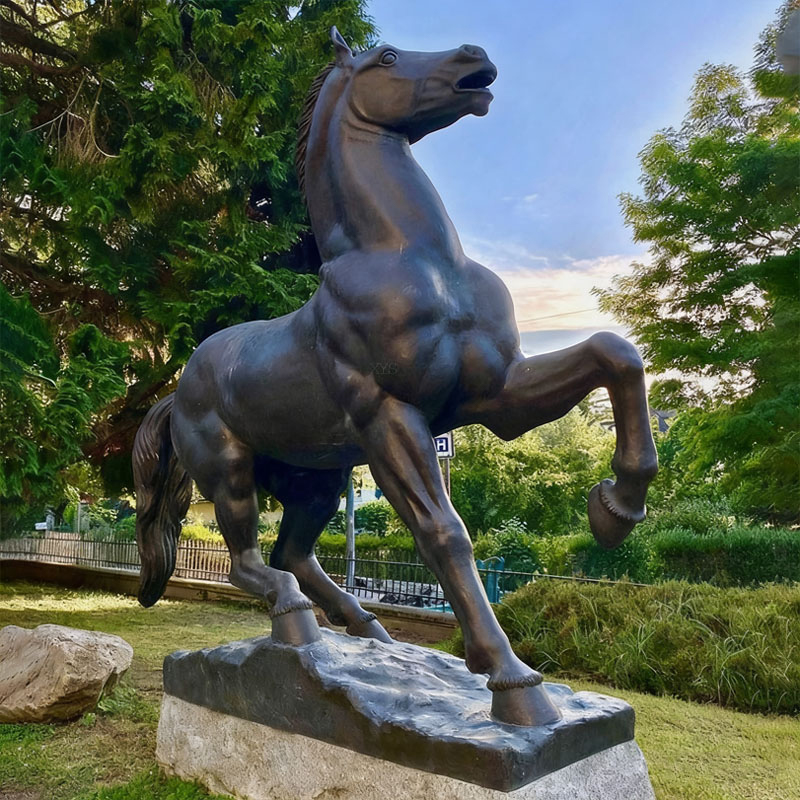 Bronze Horse Sculpture (European Neoclassical Style)Size: Total height (incl. base) 2.5 m Price: ¥49,000View Product →
The path from a historical masterpiece to a custom commission is shorter than it seems. The main principles are unchanged: choose a material that can express motion and lightness, make sure the walls are thick enough to survive the environment, and invest in a patina that protects the surface while giving it character. Then concentrate on the scale and the base.
Donatello's David proves that a relatively small bronze can outlast empires. It was made in the mid-1400s, survived changes of taste, war, and relocation, and is still one of the most studied works in European art. A carefully designed bronze sculpture today can be just as durable. Before you settle on a design, spend time with the sculptor or supplier on the specific materials and installation requirements. If you want to see what the maker's available range looks like, the best-sellers collection offers a useful starting point.
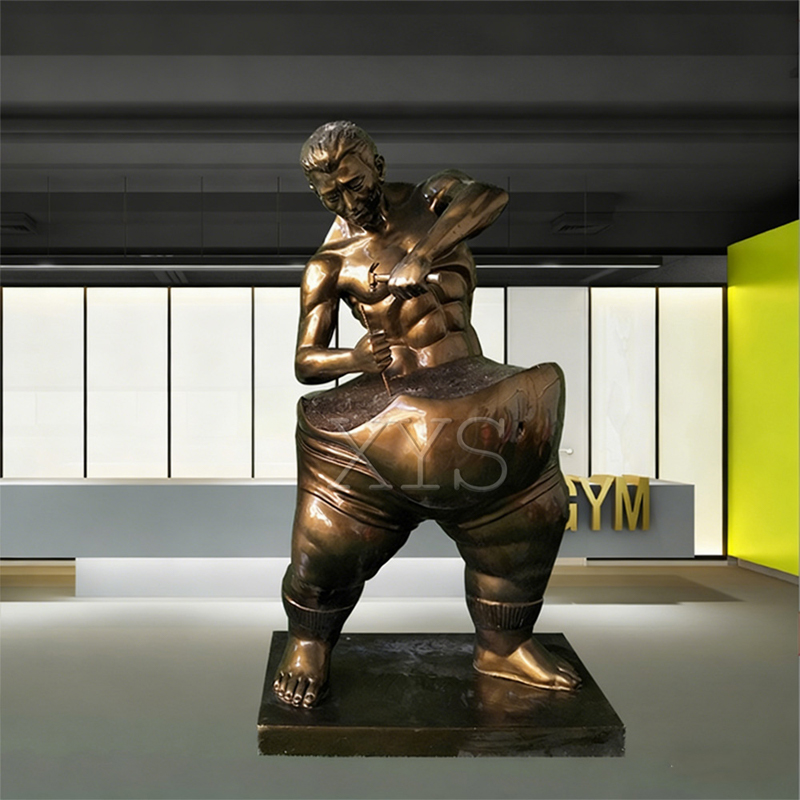 Bronze 'Self-Sculpting / Fitness Transformation' Modern Art Sculpture
 Bronze Parent-Child Reading Sculpture – Modern Artistic Design
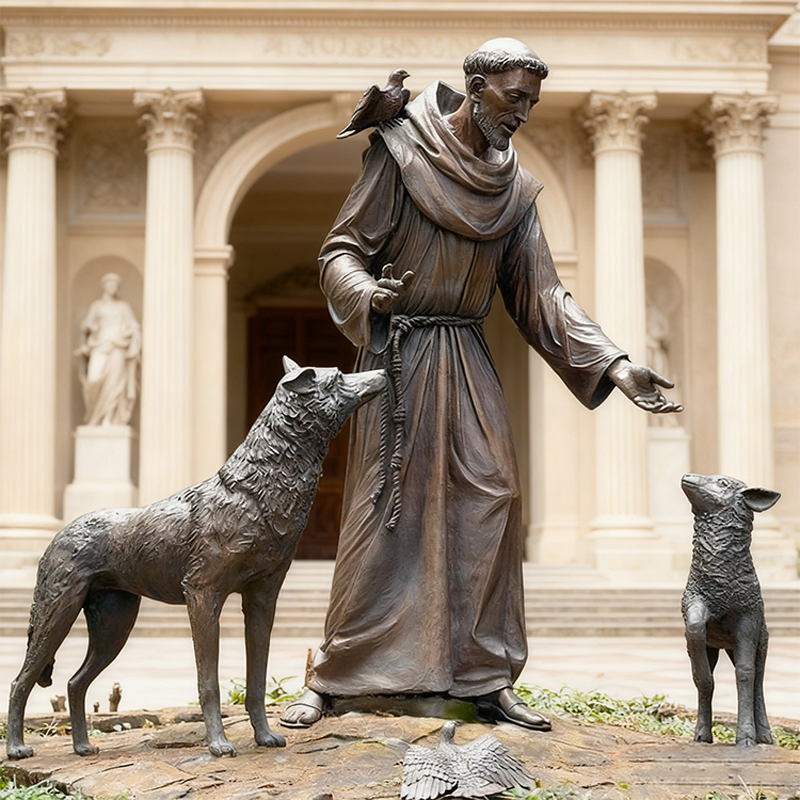 Bronze Saint Francis of Assisi with Animals (Saint Francis and the Wolf)
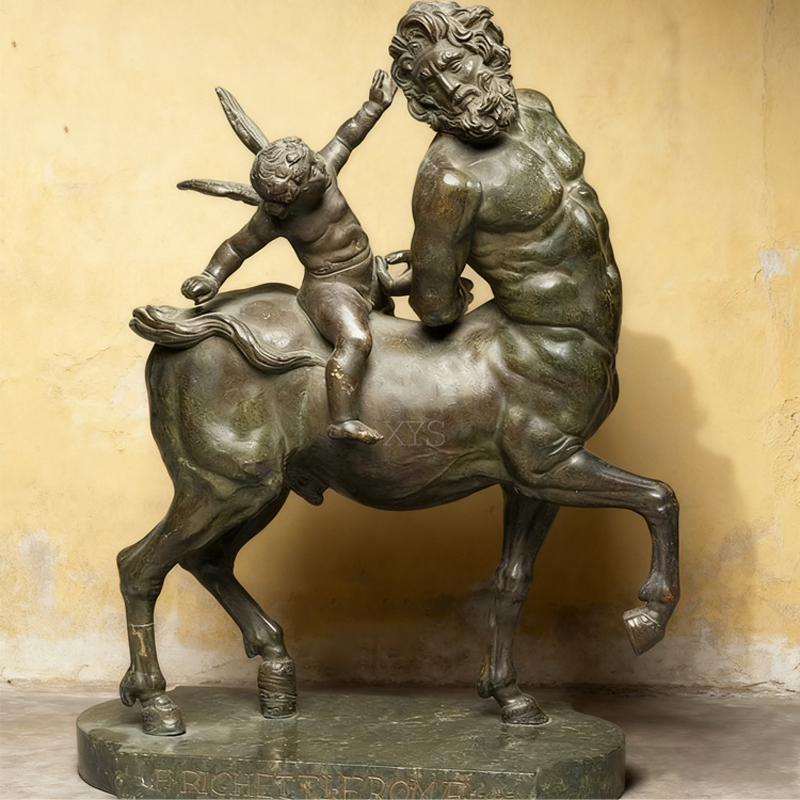 Bronze Centaur and Angel Sculpture
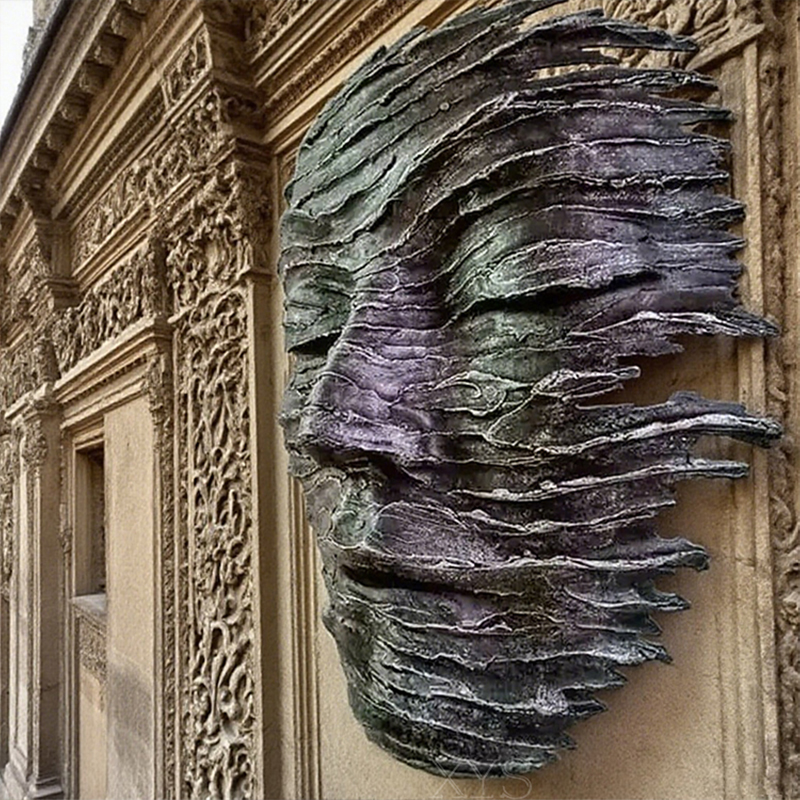 Bronze Abstract Stacked Face Sculpture – Modern Wall Art
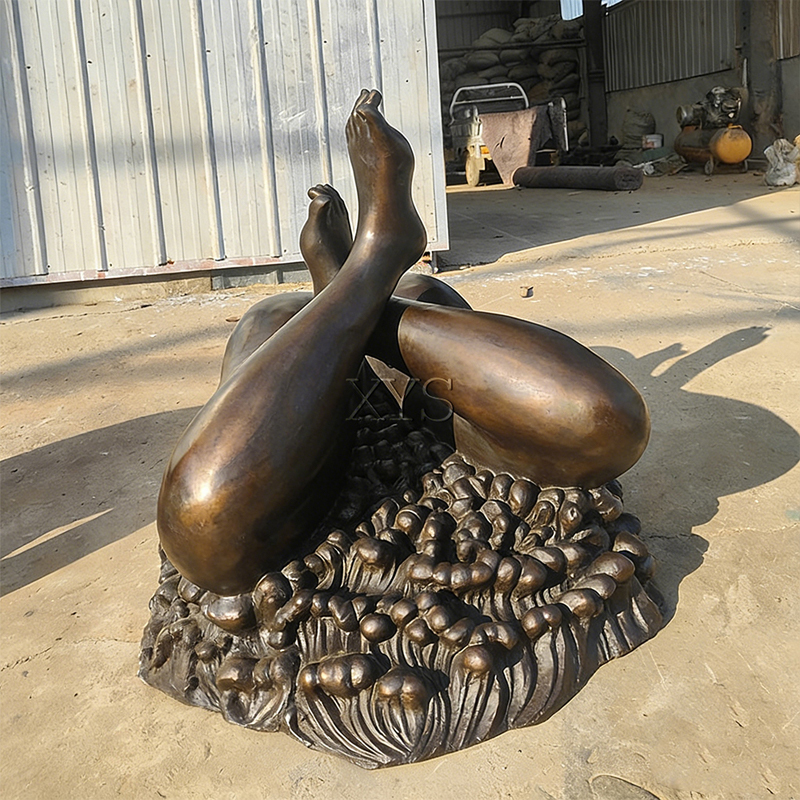 Bronze Figurative Body and Leg Art Sculpture



Daniel H.

Amanda R.

Robert B.

Jennifer S.

James W.

Barry G.

Michael T.

Emily K.

David L.

Sarah M.


Mikey XV

Jagxue

 English
 Español
 عربى
عربى Français
 italiano
 Deutsch