Stand in the Bargello’s first-floor hall in Florence, and a slender bronze youth looks back at you with the calm of someone who has just done something impossible. This is Donatello’s David—not the colossal marble hero most travelers picture, but a lithe, almost boyish figure in bronze, roughly 158 cm tall, standing with one foot on a severed head. It is one of those rare artworks that feels both ancient and startlingly modern. For anyone who works with sculpture, as we do, it is also a masterclass in balance, casting, and nerve.
Content
Donatello turned to the First Book of Samuel for the story: a young shepherd named David, armed with a sling and five smooth stones, faces the Philistine giant Goliath. Most earlier depictions showed David as a king or a victorious warrior. Donatello made him a teenager. The figure stands in a relaxed contrapposto, one hand resting on his hip, the other holding Goliath’s sword. His expression is hard to pin down—thoughtful, maybe a little pleased, perhaps still absorbing what has happened.
The bronze was probably made in the 1440s, though dates as early as the late 1430s have been proposed. It was likely commissioned by Cosimo de’ Medici and stood in the courtyard of the Palazzo Medici, where its nudity and classical poise would have startled visitors. The head of Goliath lies at David’s feet, a reminder that this elegant figure is also a trophy of violence.
Donatello’s David is often described as the first free-standing nude sculpture of the Renaissance and the first bronze male nude since antiquity. That sentence is easy to read quickly, but it represents a huge shift. Medieval art had largely treated the naked body as something to be covered or moralized. Donatello looked back to Greek and Roman sculpture and gave the body back its weight, its curves, and its ambiguity.
It is also a technical first. A free-standing bronze figure of this size, cast hollow with relatively thin walls, requires confident foundry work. The figure’s smooth finish and subtle modeling show how bronze can hold a soft, almost flesh-like surface. The statue is not monumental in scale, but it is monumental in attitude.
Here is where the Donatello statue David becomes more than a symbol: it is a physical object with a biography. It has been moved, restored, copied, and debated. The table below compares it with Michelangelo’s more famous marble David, because the two are often confused.
| Detail | Donatello’s David | Michelangelo’s David |
|---|---|---|
| Date | Probably 1440s; some scholars suggest the late 1430s | 1501–1504 |
| Material | Bronze | Marble |
| Height | About 158 cm | About 517 cm |
| Location | Museo Nazionale del Bargello, Florence | Galleria dell’Accademia, Florence |
| Mood | Youthful, inward, slightly ambiguous | Heroic, alert, muscular |
Bronze casting in the Renaissance was a high-risk business. The lost-wax process begins with a wax model, which is covered in investment material, heated so the wax runs out, and then filled with molten bronze. If a bubble forms or the metal cools too quickly, the cast can fail. Donatello’s David is hollow, which reduces weight and saves metal; the walls are thin enough that the piece feels almost weightless in the air.
In our own bronze workshop, we often tell clients that the wax model is where the sculpture is really won or lost. A millimeter too thick, and the pour can fail; too thin, and the metal may not fill. Donatello’s foundry clearly understood that balance. The result is a figure that looks delicate but has survived more than five centuries.
 Life-Size Bronze Nude Male SculptureA 2-meter outdoor bronze male figure in a wind-facing pose, useful for comparing how contemporary bronze sculpture holds presence.View Product →
For a sense of how a contemporary bronze male figure can carry that same quiet presence, this piece is a useful point of comparison. If you want to go deeper into bronze sculpture types and techniques, we keep a longer guide here: bronze sculpture types and techniques.
Donatello made a marble David earlier, around 1408–1409, when he was still in his early twenties. It was commissioned for Florence Cathedral, though it was eventually moved to the Palazzo Vecchio and is now also in the Bargello. The marble David is more conventional: clothed, victorious, and standing over the giant’s head. It shows Donatello learning from antique sculpture and from the Gothic tradition at the same time.
Seeing the two Davids together is a lesson in material language. Marble invites carving, weight, and frontal clarity. Bronze invites pose, openness, and detail. For clients who love the hand-carved marble tradition, we often point to the way a block is read before the first chisel touches it—grain, color, and flaws all become part of the plan.
 Hand-Carved Marble Bust with Modern Sneaker AccentsA classical hand-carved marble bust paired with contemporary sneaker forms, offering a material contrast for art and trend-focused interiors.View Product →
Donatello’s David influenced Michelangelo, Cellini, and countless later artists. It was copied, cast, and debated long before modern art history existed. In the nineteenth and twentieth centuries, copies entered museums and private collections, and the figure’s silhouette became part of the visual vocabulary of the Renaissance. Today the original is protected in the Bargello, but its pose still turns up in unexpected places.
Contemporary sculptors keep returning to the subject, sometimes in stainless steel, sometimes in weathering steel, sometimes in a direct bronze quote. A mirror-polished David is not a copy; it is a conversation across materials. The Donatello statue David remains a benchmark because it does not rely on size. It relies on proportion, timing, and a psychological edge that is hard to imitate.
 Mirror-Polished Stainless Steel David SculptureA 1:1 stainless steel David with a mirror finish, suited to galleries, clubs, campuses, and urban spaces as a reflective classical landmark.View Product →
If you visit the Bargello, try to arrive early and give yourself time to walk around the statue. The front view is famous, but the back and sides reveal how carefully Donatello modeled the shoulders, the spine, and the curve of the hips. The lighting changes throughout the day, and the bronze seems to change with it.
If you are planning a commission—whether a bronze figure for a garden, a marble memorial, or a stainless steel landmark—the same questions apply: scale, silhouette, patina, and how the piece will be seen from every angle. We are a sculpture studio, not a museum, but we live with those questions every day. If you would like to talk through a project, our team is happy to help: contact us.
Donatello’s David is a reminder that a sculpture can be radical without shouting. It is small enough to feel human, yet it changed what artists thought a body could do in bronze. Whether you see it in Florence or study it from photographs, it rewards the same thing we ask of any sculpture: look slowly, walk around it, and notice how the pose changes from every side.
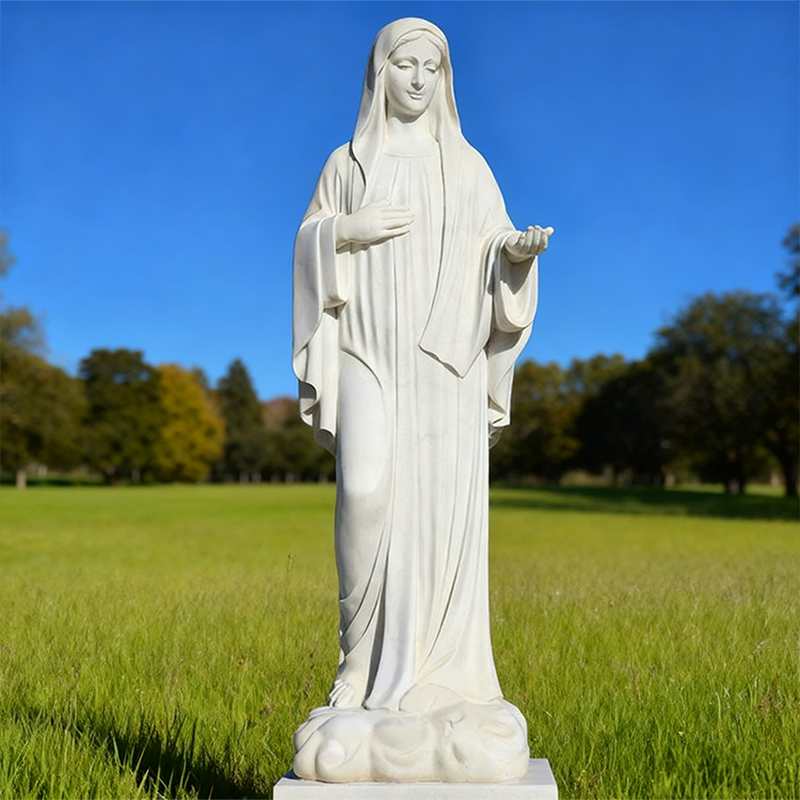 Virgin Mary–Themed White Marble Human Sculpture Standing Statue
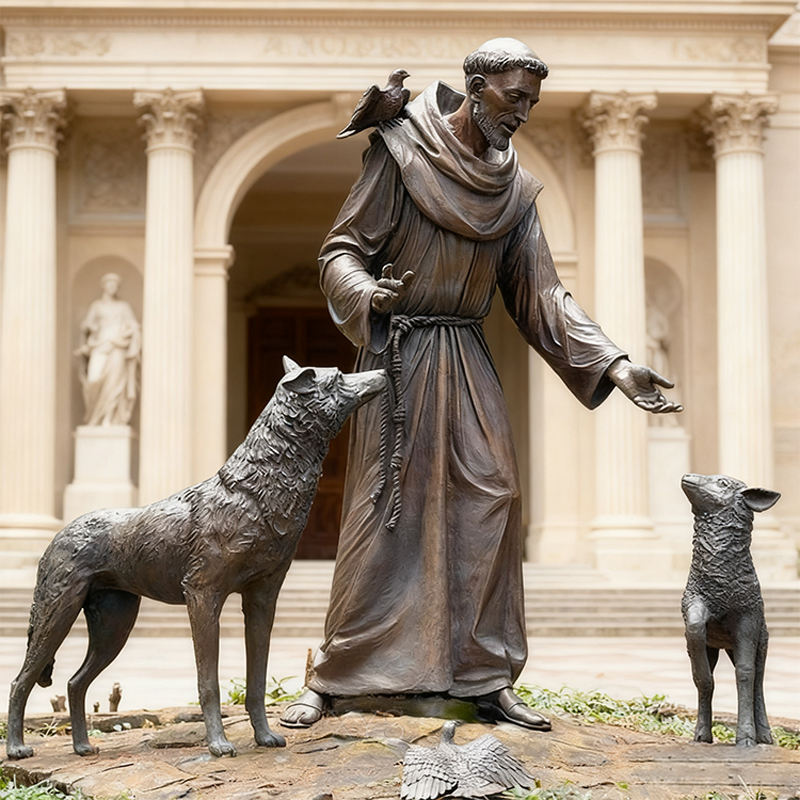 Bronze Saint Francis of Assisi with Animals (Saint Francis and the Wolf)
 Wave and Crescent Stainless Steel Water-Feature Sculpture
 Interwoven Twist-Band Mobius Stainless Steel Water-Feature Sculpture
 Streamlined Ring and Bird Stainless Steel Water-Feature Sculpture
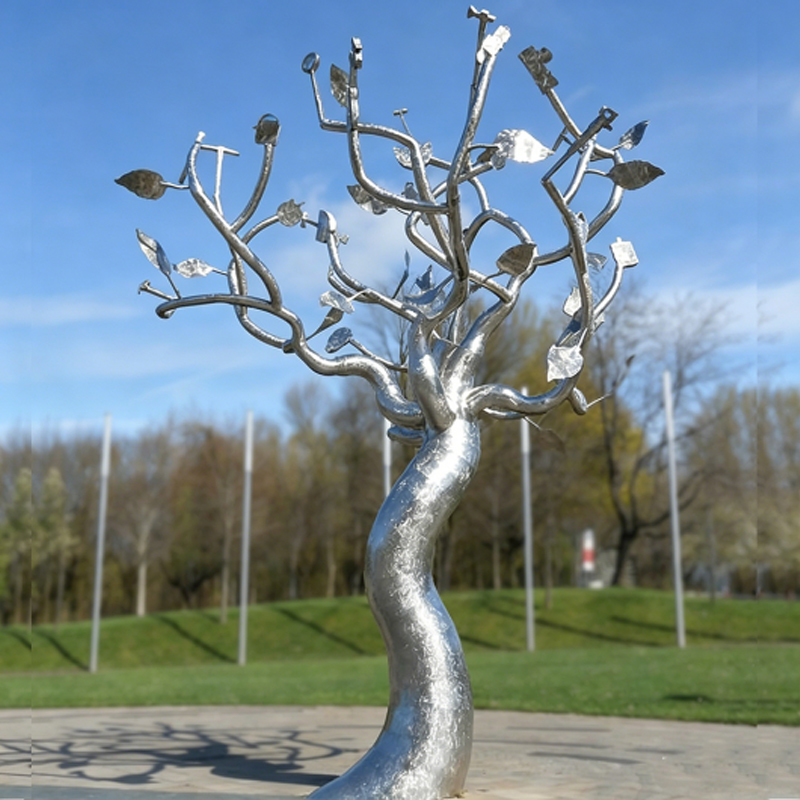 Key and Coin Fortune Tree Stainless Steel Sculpture



Daniel H.

Amanda R.

Robert B.

Jennifer S.

James W.

Barry G.

Michael T.

Emily K.

David L.

Sarah M.


Mikey XV

Jagxue

 English
 Español
 عربى
 Français
 italiano
 Deutsch