Content
A set of bronze circus bear sculptures has just been completed at the Xinyesheng Sculpture workshop for a client in the United States, destined for a Russian tea room in New York. The bears are drawn from the familiar image of the Russian circus: one balances on a single paw atop a metal ball, another performs a full handstand on the same ball, and a mother bear stands on a serving tray carrying a cub and a teapot. Every pose depends on the same trick, an animal as heavy as a bear appearing to rest on a very small point of contact.
The production video shows how that illusion is built, from the first digital model to the gold-finished bronze standing in the factory hall. This article looks at the process through one question: how do you make a cast bronze bear that looks effortlessly balanced but is actually stable enough to ship across the Pacific and stand in a busy tea room for years?
A bear standing on one paw is a dramatic image, but it is also a structural problem. The sculpture only works if the viewer believes the bear is balancing while the object itself stays firmly in place. The designers solve this by treating the ball, the base plate, and the supporting leg as one connected structure, so the visual tension of the pose never turns into a physical risk.
The handstand version makes this even more demanding. With the bear's weight carried through its front paws onto a sphere, the position of the center of gravity, the width of the base, and the thickness of the metal at the contact points all have to be planned before any wax or clay exists.
The video opens on the digital model: a gray, fully sculpted mother bear with a cub clinging to her back, a teapot tipped over her shoulder, and a teacup in her paw, all standing on a stacked tray and cups. The fur is modeled strand group by strand group, so the surface reads as soft and layered even before color or metal is involved.
Digital sculpting also lets the team rotate the figure and check the silhouette from every side. For a piece headed to a tea room, where visitors will walk around it and photograph it from several angles, the pose has to look good from all of them, not just from the front.
Next, the design becomes a physical prototype. In the footage, a reddish bear with a rounded, finely textured face stands on a ball while a worker's hands steady it and check the proportions. Holding the model in real space reveals things a screen cannot: how the paw sits on the sphere, how the head turns, and whether the pose feels playful or awkward.
Corrections made at this stage cost far less than corrections made in metal, which is why the prototype is treated as a decision point rather than a formality.
Once the prototype is approved, the sculpture is reproduced in wax and prepared for lost-wax casting. The bear figures hang from a branching system of rods and are dipped again and again in ceramic slurry and sand. The video shows the result: rough, speckled shells wrapped around the bears, with the supporting rods spreading around them.
The wax is then melted out, and molten bronze fills the hollow that remains. This method is chosen for the fur texture, the small claws, and the handles on the teacups, because the ceramic shell records fine detail that other casting methods tend to soften.
After the shells are broken away, the raw bronze comes out in separate parts. The footage shows silver-gray bears standing on their balls in the workshop, with seam lines and cast marks still visible. Workers join the parts, grind and chase the seams, and rebuild the fur texture across the joins so the figure reads as one continuous casting.
This is also when the balance is verified in practice. Each figure is set on its base to confirm it stands level and steady, because a bear that looks balanced but wobbles on the floor of a tea room is a problem no finish can hide.
The last scenes show the bears in bright gold, standing on their balls on the factory floor under the skylights. The gold coating picks up every ridge of the fur and every curve of the teapot, and it suits an interior built around warmth, tea service, and Russian heritage far better than a dark industrial patina would.
For a hospitality space, the finish also has a practical side. A sculpture that guests walk past every day needs a surface that tolerates handling and cleaning, and a properly applied finish on cast bronze supports that.
Xinyesheng Sculpture is a China-based sculpture manufacturer and custom design metal statue supplier with 13 years of experience in sculpture creation. Its R&D and design team has more than a decade of experience and works across stainless steel mirror-finish sculptures, marble works, weathering steel pieces, bronze casting, and tombstone artistry, integrating design, production, installation, and after-sales service into a single project process.
The circus bear project shows that process applied to a client overseas: a design reviewed on screen, a prototype checked by hand, lost-wax casting for fine detail, careful assembly and chasing, and a finish chosen to suit the room it will stand in. The same approach supports commissions for public squares, campuses, hospitality venues, and private clients in North America, Europe, Asia, and Africa.
A bronze figure that appears to balance on one point is stable because of decisions made long before casting. The designer positions the center of gravity over the contact area, widens the hidden base where the viewer will not notice it, and makes sure the metal is thick enough at the load-bearing joints. Visual lightness is created by the pose; physical stability is created by the structure underneath it.
Casting and finishing then protect those decisions. Even wall thickness, sound welds at the assembly joints, and a final check of the figure standing on its base all confirm that the design works in the real world. The Russian circus bears made for the New York tea room show how a playful, gravity-defying pose and a sturdy bronze structure can coexist in a single sculpture.
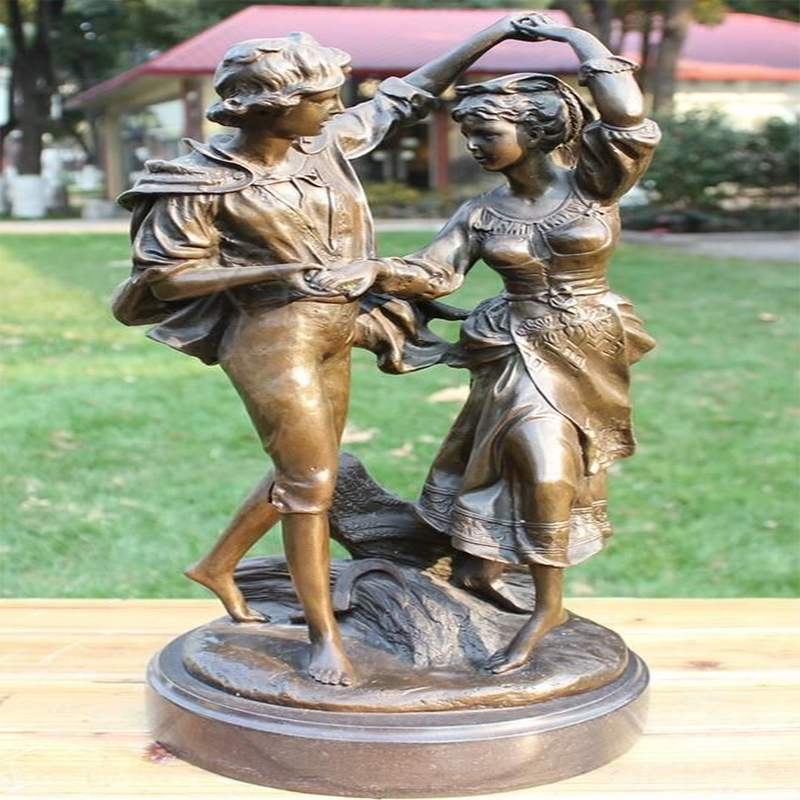 Bronze Life-Size Dancing Couple Sculpture – Heart Figure for Park Decoration
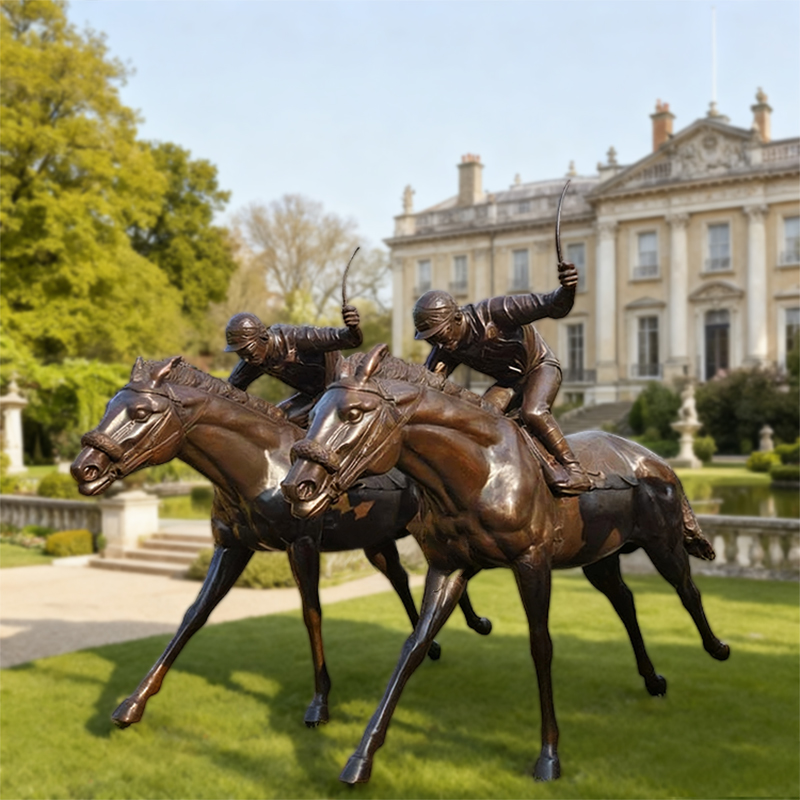 Cast Bronze Horse Racing Sculpture – Equestrian Theme
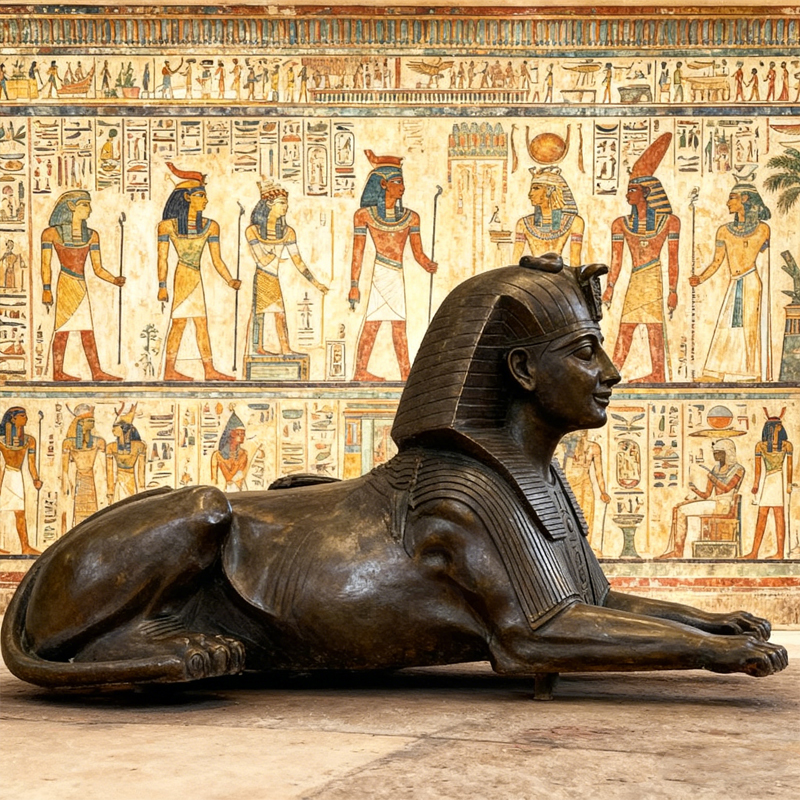 Bronze Large Sphinx Sculpture – Ancient Egyptian Mythology
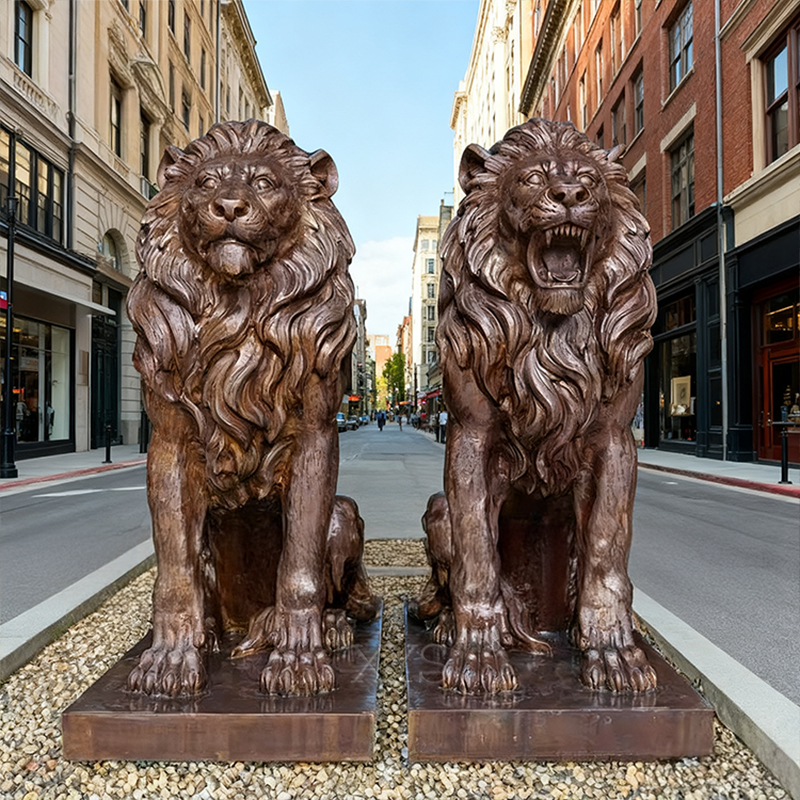 Bronze Sitting Lion Sculpture – Classic Garden Decoration
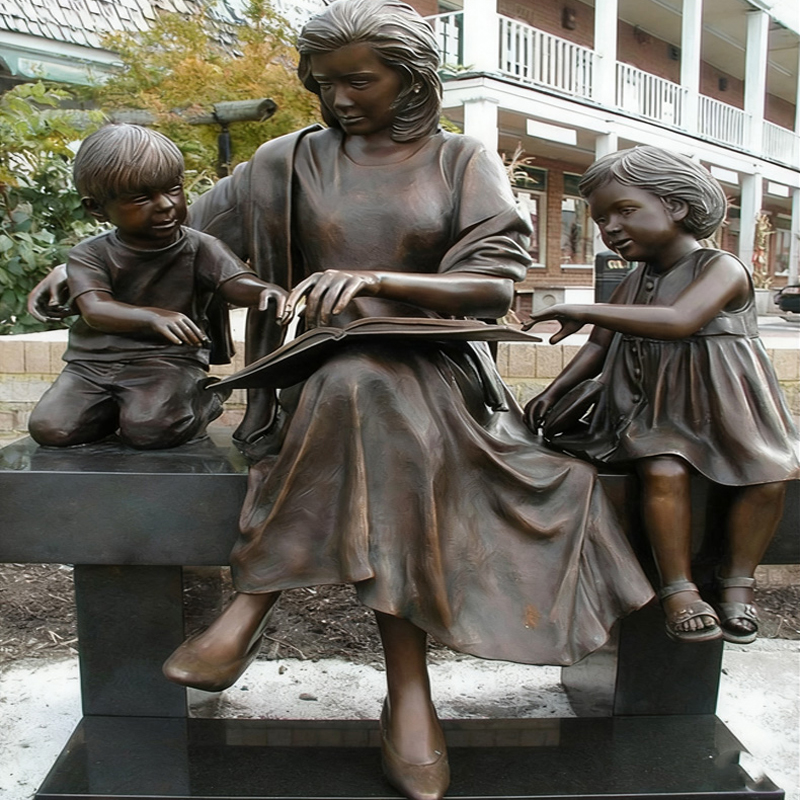 Bronze Parent-Child Reading Sculpture – Modern Artistic Design
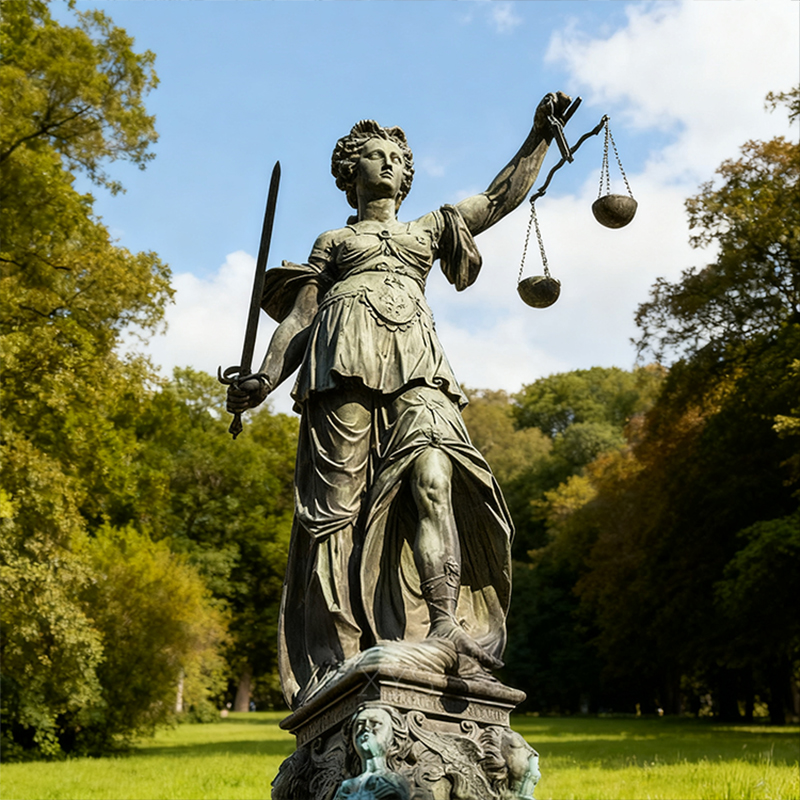 Bronze Libra Lady Justice Sculpture – Metal Model



Daniel H.

Amanda R.

Robert B.

Jennifer S.

James W.

Barry G.

Michael T.

Emily K.

David L.
Sarah M.


Mikey XV

Jagxue

 English
 Español
 عربى
 Français
 italiano
 Deutsch