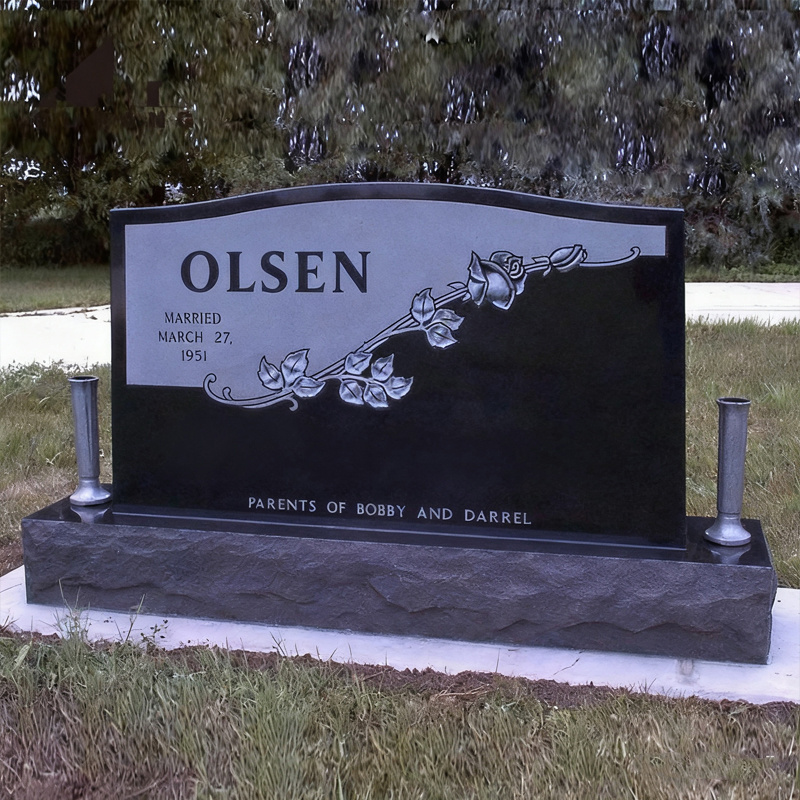
Relief ornament is the decoration you notice with your fingertips before your eyes catch up: an acanthus leaf curling along a lintel, a row of shallow saints above a church door, a raised pattern on a memorial tablet that only appears when the late sun rakes across it. What separates a relief from a free-standing figure is simple and stubborn — a relief never leaves its background. It grows out of a flat plane, and that plane stays part of the composition.
That one rule governs how reliefs are designed, carved, cast, fixed, and eventually read by the people who walk past them. Below we unpack the vocabulary, the materials, and the practical decisions that make a good relief ornament hold up outdoors for decades.
Content
In sculpture, a relief is any work in which figures or patterns project from a supporting background, usually a flat panel or a wall. The background is not a pedestal you can walk around; it is the picture itself. Because the third dimension is compressed into a shallow depth, shadow does most of the drawing. A panel that looks soft and vague on a workbench can turn crisp on a wall facing the sun, and a beautifully modelled relief can flatten out completely in diffuse indoor light.
This is why relief ornament sits so naturally on architecture. Friezes, spandrels, tympana, door panels, balustrades, tombstones, and fireplace surrounds all need decoration that belongs to a surface rather than standing in front of it. Relief gives a designer depth without demanding floor space, and it lets a story run horizontally across a facade the way a line of text runs across a page.
Most of the confusion around relief ornament is vocabulary, not craft. Carvers and foundries group reliefs by how far the form rises out of its background, and the categories below cover almost everything you will be asked to specify.
| Type | Projection from the background | Where you usually see it |
|---|---|---|
| Bas-relief (low relief) | Less than half the depth of the form | Friezes, plaques, coins, interior panels |
| Medium relief | Roughly half the form stands free | Altar fronts, spandrels, garden walls |
| High relief | More than half, sometimes fully undercut | Portals, monument faces, dramatic facades |
| Sunken relief | Form is cut into the surface, never above it | Temple walls, engraved panels, lettering |
| Pierced relief (openwork) | Background removed entirely, form acts as a screen | Screens, railings, window tracery |
A single commission often mixes two or three types. A memorial might use sunken lettering, a medium-relief portrait, and a pierced border; a neoclassical arch can combine high-relief figures at the crown with low-relief foliage in the spandrels. Mixing is normal — what matters is that the transitions feel intentional rather than accidental.
Our neoclassical double-figure marble arch is a useful example of how high relief and an open frame can share the same stone without either one winning.
 Neoclassical Double-Figure Marble Sculpture ArchA double-figure neoclassical arch in two-tone stone, offering high-relief carving and an open frame for courtyard or wedding focal points.View Product →
Relief ornament is older than writing. Egyptian temple walls used sunken relief — the image cut into the stone and never above it — because the sharp shadow line survived strong sunlight and, very often, a layer of paint. Greek architecture turned relief into rhythm: metopes and the Parthenon frieze are essentially a storyboard in marble. Roman sculptors pushed projection further on triumphal columns and sarcophagi, where figures almost step out of the stone.
The Gothic portal took that energy and wrapped it around an entrance, stacking archivolts of figures above the congregation's head. The Renaissance brought perspective into relief, treating the panel as a small stage set. Modern and contemporary work tends to return to abstraction — a repeated geometric motif, a pierced screen, a face broken into facets — which proves the format adapts to any era's taste.
Material choice decides how a relief ages, how finely it can be detailed, and what it costs to ship and install. In our studio the conversation usually lands on one of five options.
Ornamental angel figures carved in shallow relief are among the oldest forms of this work, and they still read beautifully above a doorway or along a chapel wall.
 Hand-Carved European Style Stone AngelA 2 m hand-carved natural stone angel with detailed drapery and wings, suited to villa courtyards, gardens, or hotel clubs as a graceful focal piece.View Product →
Once the type and material are settled, a handful of practical details determine whether the relief looks right in place.
Contemporary ornament often leans on one large idea instead of a crowded scene, and a faceted face in weathering steel can carry an entire wall on its own. If the rust finish appeals to you, our notes on weathering steel as a decorative finish cover how that surface behaves over time.
 Abstract Face Weathering Steel Decorative SculptureA large faceted face in weathering steel, made as an avant-garde landmark for plazas or art museums and developing a rust finish over time.View Product →
Our own story began in Quyang, a stone-carving town in Hebei, in a workshop small enough that everyone knew every chisel by name. Thirteen years later we run design and production across a partner factory network of more than 8,000 square metres, with a team that moves between marble, bronze, stainless steel, weathering steel, and fiberglass depending on what a project actually needs. Around ten thousand pieces leave the workshops each year, heading for plazas in Europe, campuses in North America, and religious and memorial sites across Asia and Africa.
For a relief commission, that experience translates into something fairly simple. You can send a sketch, a photograph of a facade, or a rough dimension, and we will come back with a type, a material, and a fixing method that suits the site. If you are still weighing the options, talk to our team and we will walk through it together — no obligation, and no pressure to decide before the drawings make sense.



Daniel H.

Amanda R.

Robert B.

Jennifer S.

James W.

Barry G.

Michael T.

Emily K.

David L.

Sarah M.


Mikey XV

Jagxue

 English
 Español
 عربى
 Français
 italiano
 Deutsch