Content
Stainless steel has become the dominant material in contemporary sculpture, and the reasons go well beyond aesthetics. Grade 304 and Grade 316 stainless steel contain 10.5–18% chromium, which forms a passive oxide layer on the surface — a self-repairing barrier that resists rust, UV degradation, and chemical exposure without any coating. This means a well-fabricated stainless steel sculpture installed outdoors in 2000 will look structurally identical in 2040, with only routine cleaning required.
Compare this to bronze, which develops patina and requires periodic waxing, or Cor-Ten steel, which is designed to rust on the surface (a process that must be carefully controlled). Stainless steel requires no such maintenance cycles. For municipalities, developers, and private collectors placing large-scale works in public or coastal environments, this translates to a dramatically lower total cost of ownership over decades.
Beyond durability, stainless steel offers structural integrity that enables sculptors to achieve geometries impossible in stone or bronze. Its tensile strength of roughly 515 MPa allows cantilevered forms, paper-thin edges, and towering vertical elements to remain stable under wind loads — which is why the largest site-specific public sculptures of the past 30 years, including Anish Kapoor's Cloud Gate in Chicago, are built from this material.
The finish applied to a stainless steel sculpture determines not only its appearance but how it interacts with its environment. Choosing the wrong finish for a setting is one of the most common procurement mistakes made by architects and landscape designers.
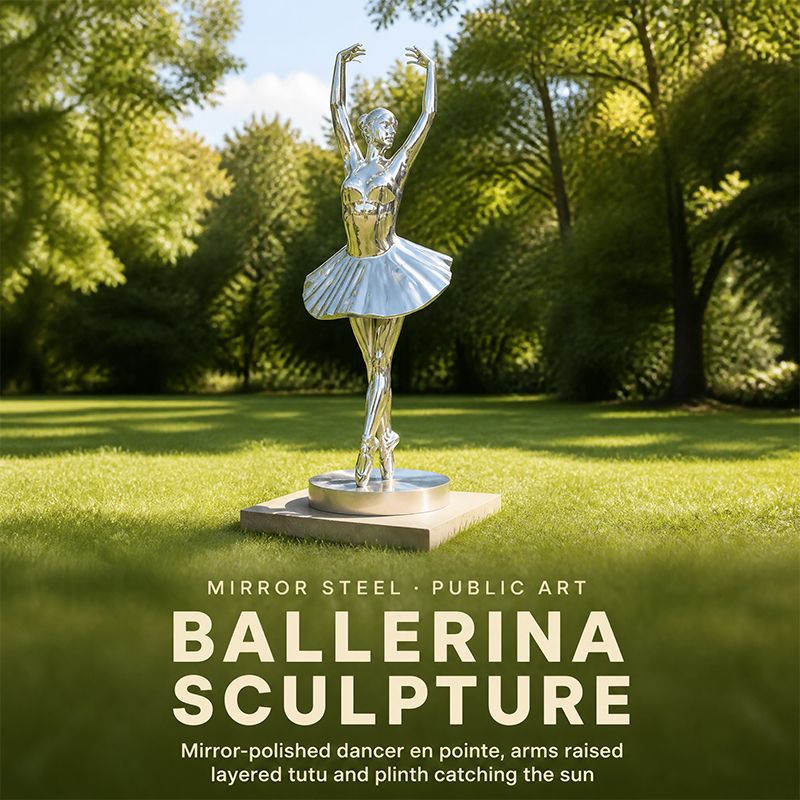
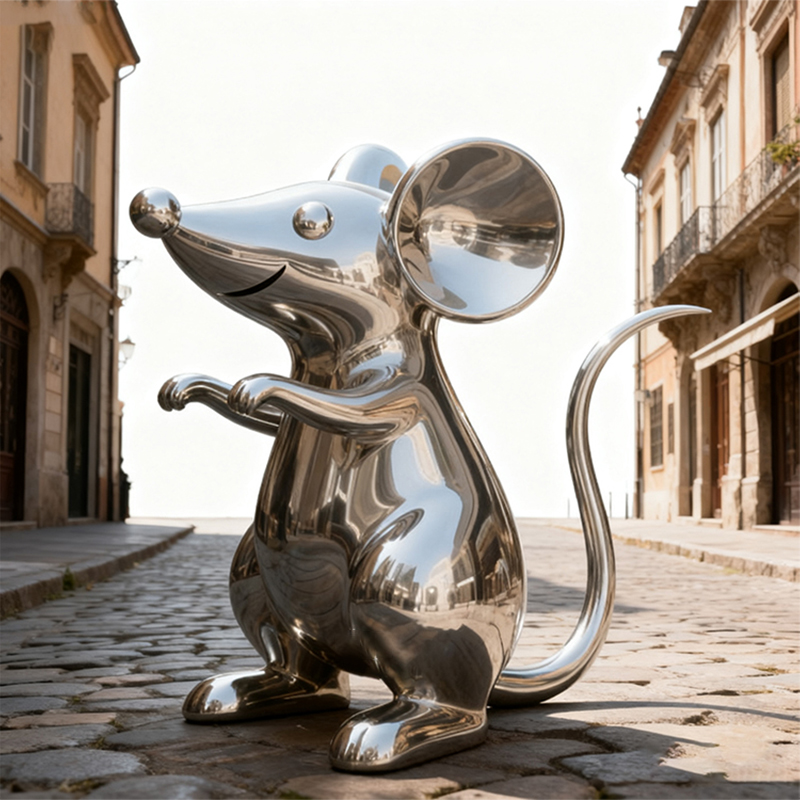
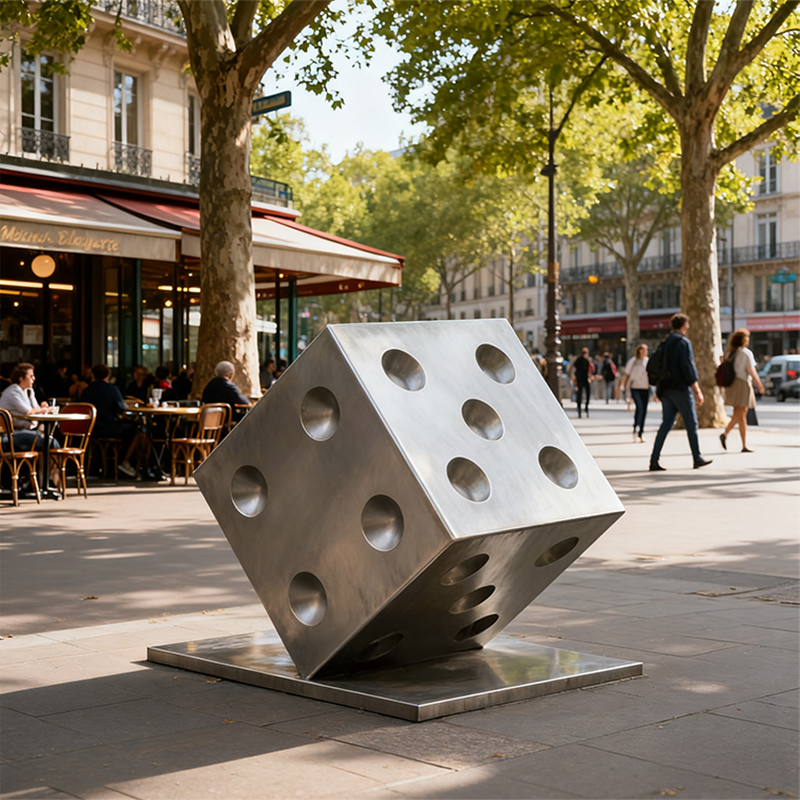
This is the high-reflectivity finish associated with iconic public installations. The steel surface is buffed to a near-perfect reflective state, effectively turning the sculpture into a curved mirror. It works exceptionally well in urban plazas, botanical gardens, and indoor atria where the surrounding environment becomes part of the artwork. The drawback: fingerprints and smudges are highly visible, making it less suitable for interactive or touch-accessible pieces unless a maintenance program is in place.
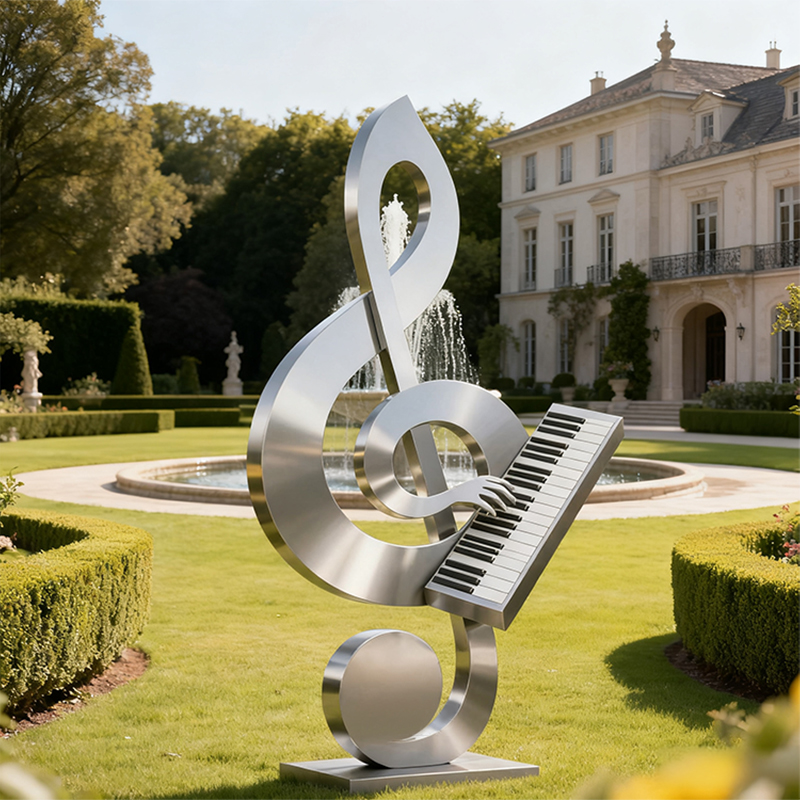
Achieved by grinding the surface in one direction with abrasive belts, this finish produces a soft, matte sheen with fine directional lines. It is the most widely used finish in commercial and residential sculpture because it is easier to maintain, hides minor scratches better, and produces a more understated aesthetic that integrates with a wider range of architectural styles.
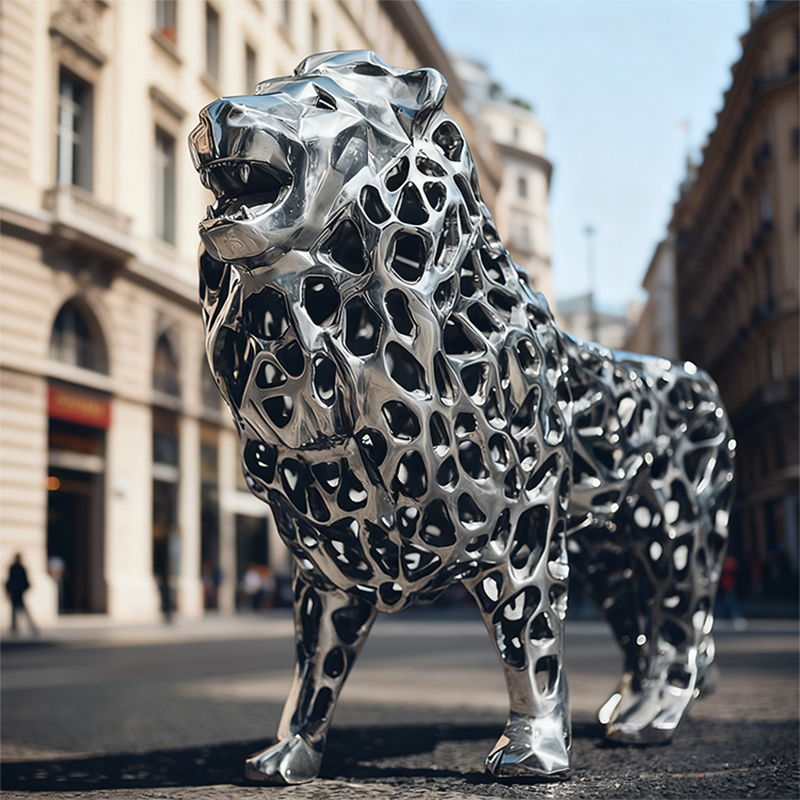
Sand or bead blasting creates a uniform, non-directional matte texture. This finish diffuses light evenly and gives sculptures a more organic, tactile quality. It is frequently chosen for figurative works and natural-form sculptures where a reflective surface would undermine the intended realism.
Through electrochemical coloring (without dyes or paints), stainless steel can be given stable iridescent colors — gold, bronze, blue, green — by growing the chromium oxide layer to specific thicknesses. These colored finishes are durable but can fade under prolonged UV exposure, so they are best suited to covered outdoor spaces or interior installations.
| Finish Type | Reflectivity | Maintenance Level | Best Setting |
|---|---|---|---|
| Mirror (No. 8) | Very High | High | Urban plazas, indoor atria |
| Brushed (No. 4) | Medium | Low | Commercial, residential gardens |
| Sandblasted | Low | Very Low | Figurative works, natural settings |
| Electrochemical Color | Variable | Medium | Covered outdoor, interior |
The material's versatility means it is employed across a wide spectrum of artistic styles, from monumental abstractions to delicate decorative pieces. Understanding these categories helps buyers and specifiers match the right sculpture type to their project intent.
The most commercially prevalent category. Abstract stainless steel sculptures typically feature curved planes, spiraling forms, or interlocking geometric shapes. They are non-representational by design, making them culturally neutral — an important factor for corporate campuses, hospitals, and international public spaces. Sizes range from tabletop pieces under 30 cm to landmark installations exceeding 10 meters in height.
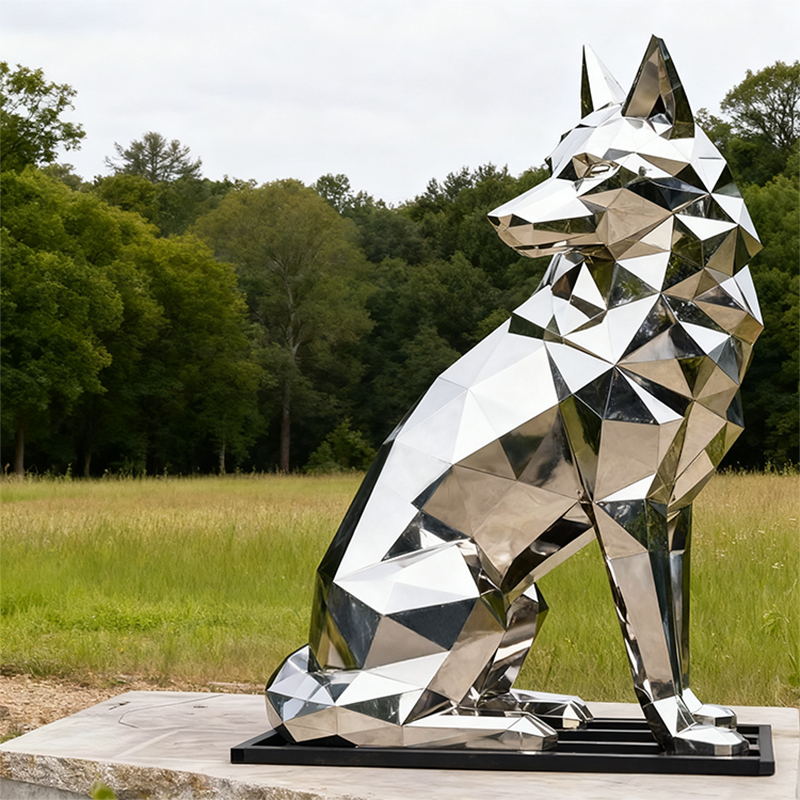
Representational stainless steel sculpture — human figures, animals, and narrative scenes — has gained significant ground as fabrication technology has improved. CNC cutting combined with skilled hand-forming now allows highly detailed figurative work to be produced in stainless steel with accuracy and repeatability, making it viable for editions and commissions at scale.
Stainless steel's combination of strength and light weight makes it the preferred material for kinetic works — sculptures designed to move in response to wind or mechanical drives. The material's corrosion resistance is particularly important here, as the moving joints and pivot points of kinetic sculptures are difficult to access for repainting or re-coating.
For residential and commercial landscape applications, stainless steel garden sculptures are typically smaller scale (0.5–3 meters), designed to integrate with planting schemes. Popular forms include botanical abstractions, water features with integrated sculpture, and contemporary takes on traditional garden ornaments. Grade 316L is strongly recommended for garden use, particularly in areas with acidic soil or fertilizer exposure, as it provides superior resistance to chlorides and mild acids compared to standard 304.
The fabrication process has a direct and significant impact on the final quality of a stainless steel sculpture. Buyers evaluating suppliers should understand the key production stages and what distinguishes high-quality execution from acceptable-but-mediocre work.
Large-scale stainless steel sculptures are engineering projects as much as they are artworks. Successful installation requires careful pre-planning across several technical domains.
Any sculpture over 2 meters in height installed in a public space typically requires a certified structural engineering report. Wind load calculations must account for the sculpture's geometry (flat surfaces catch more wind than open forms), the local wind speed rating for the installation zone, and dynamic loads from gusting. Most jurisdictions require sculptures in public spaces to withstand wind speeds of at least 120 km/h without permanent deformation or anchor failure.
The anchoring system is typically the most critical and most under-specified element of large sculpture installations. Anchor bolts should be 316 stainless steel to avoid galvanic corrosion at the base plate interface. The concrete foundation depth and diameter are determined by the overturning moment calculation — for a tall, wind-exposed sculpture, the foundation can be substantially larger than the sculpture's footprint.
In marine or coastal settings, Grade 316 or 316L is mandatory — Grade 304 will develop surface rust (tea staining) within months in chloride-rich air. Even with 316, sculptures installed within 500 meters of the ocean require more frequent cleaning to remove salt deposits before they can initiate pitting corrosion. Some fabricators apply a clear protective coating (e.g., Permalac) to coastal installations as an additional barrier, though this requires periodic reapplication.
Whether commissioning a bespoke artwork or purchasing from a catalog, the following criteria separate reliable suppliers and high-quality work from lower-grade alternatives.
For buyers working with limited budgets, purchasing from an established series or limited edition range — where fabrication costs are amortized across multiple units — offers a way to acquire professionally fabricated stainless steel sculpture at significantly lower price points than bespoke commissions.



Daniel H.

Amanda R.

Robert B.

Jennifer S.

James W.

Barry G.

Michael T.

Emily K.

David L.

Sarah M.


Mikey XV

Jagxue

 English
 Español
 عربى
عربى Français
 italiano
 Deutsch