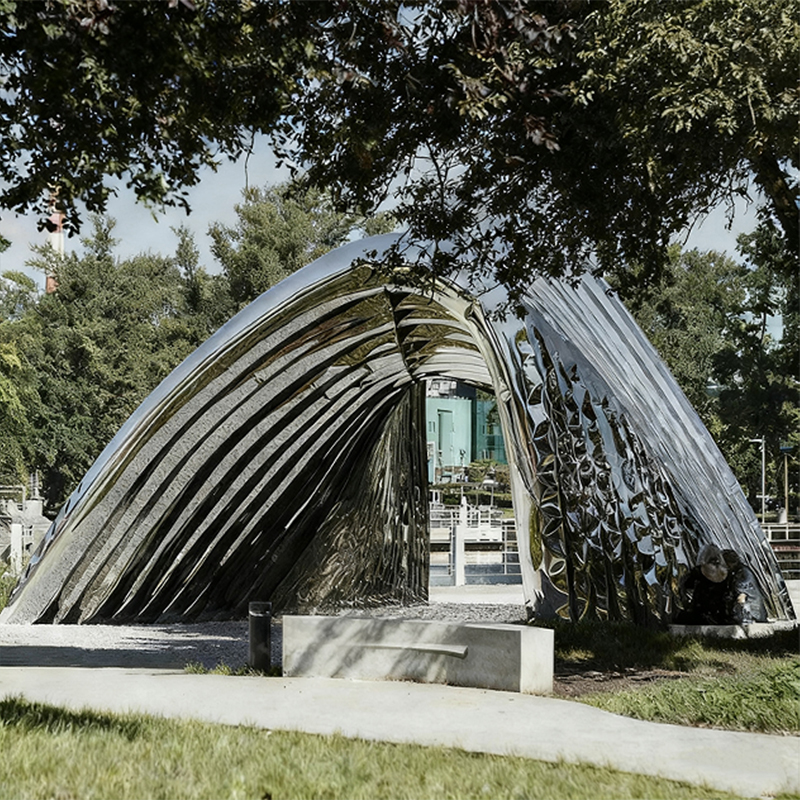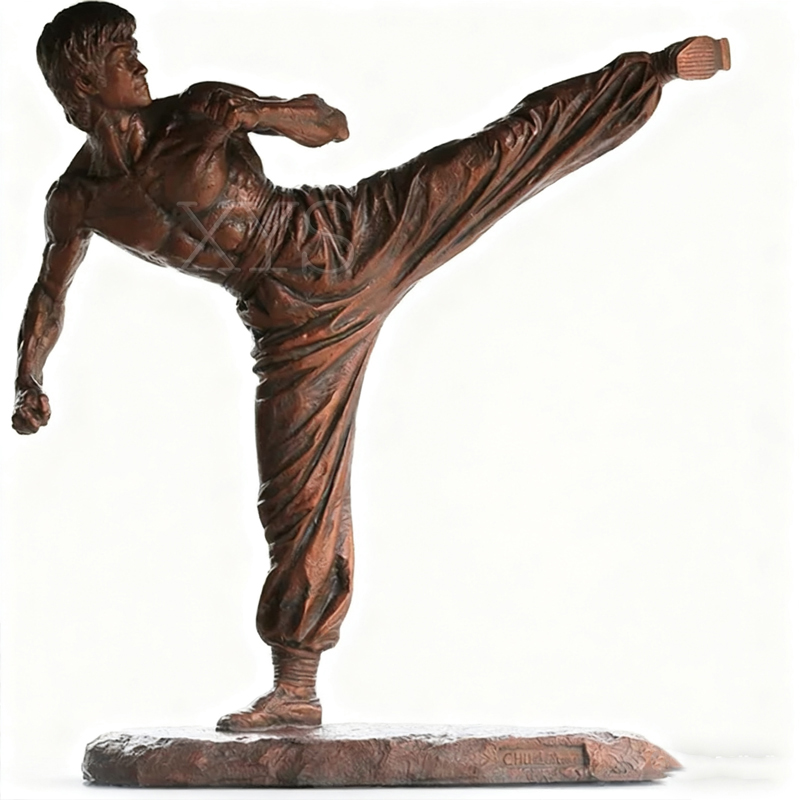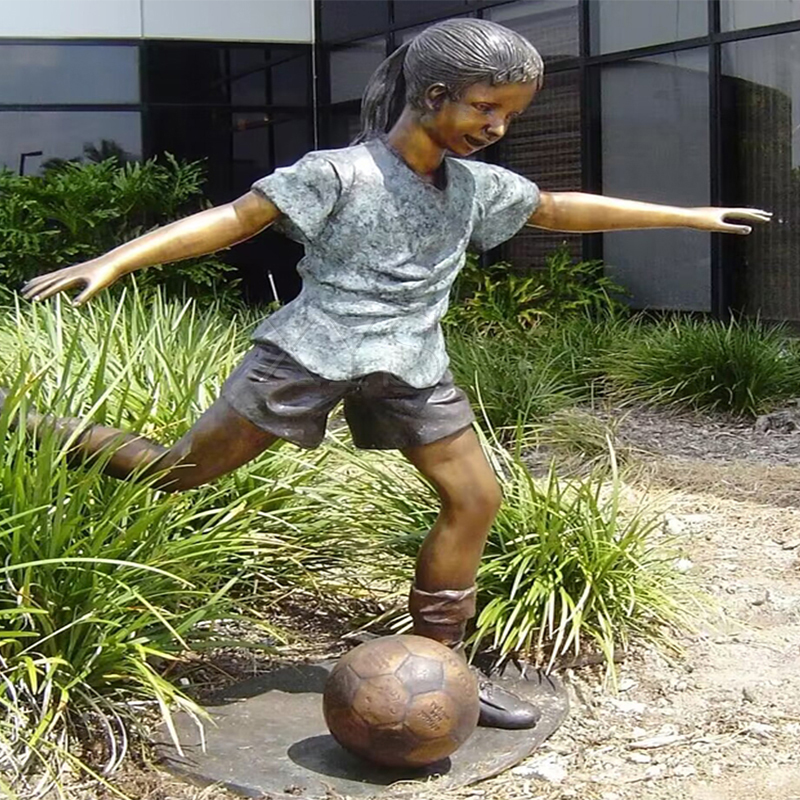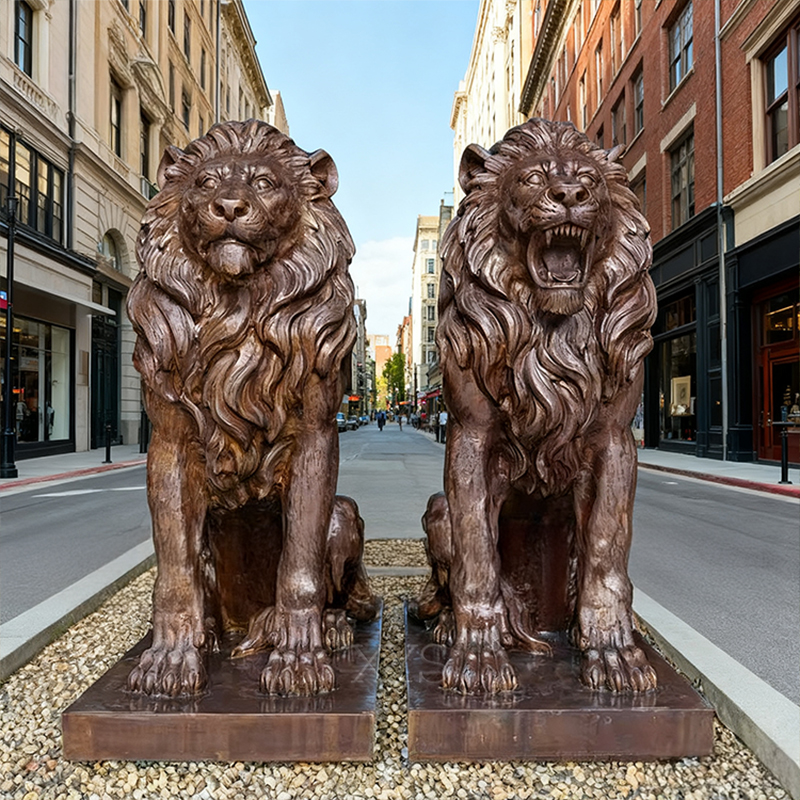
Walk through any major museum, public square, or gallery featuring figurative or abstract metalwork, and bronze will dominate. From the monumental equestrian statues of Renaissance Italy to the intimate modernist figures of Alberto Giacometti, from ancient Chinese ritual vessels to contemporary public memorials, bronze appears with a consistency that no other metal approaches. This dominance is not accidental, nor is it purely a matter of convention. Bronze earns its place as the preeminent sculptural metal through a convergence of physical properties, casting behavior, surface aesthetics, and long-term durability that no single alternative fully replicates. Understanding why bronze holds this position requires examining each of these dimensions in practical detail.
Content
Bronze is an alloy of copper and tin, typically containing between 88% and 90% copper and 10% to 12% tin, though the exact composition varies by application and tradition. This combination produces a material with properties that neither metal possesses individually. Pure copper is too soft and has a high melting point of 1,085°C that makes casting difficult. Pure tin is far too brittle for structural use. Combined in bronze proportions, the resulting alloy melts at approximately 900°C to 950°C — significantly lower than pure copper — flows readily into complex mold cavities, and solidifies with minimal shrinkage and porosity compared to many other casting metals.
The lower melting point is practically significant. It means that foundries can work with less energy, simpler furnace equipment, and shorter heat cycles than iron or steel casting requires. It also means the molten metal remains fluid long enough to fill intricate mold details — the folds of a garment, the texture of hair, the hollow interior of a thin-walled vessel — before solidifying. This fluidity window is one of the primary reasons sculptors from antiquity onward chose bronze over alternative metals when precision of detail was a priority.
Modern sculptural bronzes often include small additions of silicon, zinc, or lead to improve specific casting characteristics. Silicon bronze — an alloy of copper, silicon, and manganese with minimal tin — has become particularly common in contemporary art foundries because it produces exceptionally clean castings with minimal porosity and is easier to weld and repair than traditional tin bronze. These alloy refinements maintain all the visual and surface qualities that define bronze aesthetically while improving the practical experience of working with the material.
The lost-wax casting process — known in French as cire perdue — is the technical foundation of bronze sculpture's expressive range. The process has remained fundamentally unchanged for over 5,000 years, a testament to how effectively it translates a sculptor's intentions from soft, malleable modeling materials into permanent metal. Understanding the steps clarifies why bronze, specifically, is so well suited to this method.
The critical intersection between this process and bronze's material properties occurs at the pour stage. Bronze's relatively low melting temperature, combined with its surface tension and viscosity characteristics at pouring temperature, allows it to flow into the finest ceramic shell details before the shell draws heat away and solidifies the metal. Metals that are too viscous at pouring temperature — or that solidify too quickly — cannot fill the intricate detail that a skilled sculptor carves into a wax or clay model. Bronze occupies a sweet spot that no commonly available metal fully matches.
The longevity of bronze sculpture is not merely impressive — it is unmatched among common sculptural metals. Bronze artifacts recovered from ancient Mediterranean shipwrecks, having spent two thousand years on the ocean floor, retain their form and surface detail with a fidelity that would be impossible in iron or steel. The reason lies in bronze's corrosion chemistry. When exposed to atmospheric oxygen and moisture, bronze forms a stable layer of copper oxides and carbonates — the patina — that adheres tightly to the underlying metal surface and acts as a self-limiting barrier against further corrosion. Unlike iron rust, which is porous and continues to propagate beneath the surface until the metal is consumed, bronze patina is dense, adherent, and chemically stable. Once formed, it protects the metal beneath it effectively for centuries.
This corrosion behavior makes bronze an outstanding choice for outdoor sculpture in virtually all climates. Cast iron and steel outdoor sculptures require regular protective coating — paint, wax, or sealant — to prevent rust that will, if neglected, eventually compromise the structural and aesthetic integrity of the work. Bronze outdoor sculptures, by contrast, can be left to develop their natural patina without structural risk, requiring only periodic wax application to stabilize and protect the patina layer from pollutant deposits and acid rain.
The comparative durability of bronze versus alternative sculptural metals is summarized below:
| Metal | Outdoor Corrosion Behavior | Maintenance Required | Expected Lifespan (Outdoor) |
|---|---|---|---|
| Bronze | Stable self-protecting patina | Wax every 1–3 years | Centuries to millennia |
| Carbon Steel | Progressive rust without protection | Paint or coat every 3–7 years | Decades (with maintenance) |
| Cast Iron | Porous rust, structural risk | Regular painting, rust treatment | 50–150 years (maintained) |
| Stainless Steel | Good resistance, can pit in marine | Periodic cleaning | Centuries (grade-dependent) |
| Aluminum | Stable oxide layer, surface dulling | Minimal | Many decades |
Beyond durability, bronze patina is itself an aesthetic phenomenon of considerable depth and complexity. Natural patina develops over years and decades as the copper in the alloy reacts with atmospheric oxygen, carbon dioxide, sulfur compounds, and moisture to form layered surface compounds — copper oxide (cuprite), copper carbonate (malachite), and copper sulfate (brochantite) — each with distinct colors ranging from warm brown and black through green and blue-green. The specific patina that develops depends on the atmospheric environment, the alloy composition, and the micro-topography of the cast surface.
Art foundries apply chemical patinas deliberately in the finishing stage, using controlled applications of acids, sulfides, nitrates, and heat to achieve specific color ranges far more rapidly than natural weathering would produce. Common patina chemicals and their effects include ferric nitrate for warm golden-brown tones, liver of sulfur (potassium polysulfide) for dark brown to black, cupric nitrate for blue-green, and hydrochloric acid for mid-range greens. These applied patinas are then stabilized with wax to fix the color and protect the surface from further uncontrolled atmospheric reaction.
No other commonly used sculptural metal offers this range of surface color chemistry. Stainless steel presents a neutral, uniform silver surface. Aluminum anodizes to limited color ranges. Cast iron rusts to predictable oranges and browns. Bronze, through patination, can present virtually the full spectrum from warm gold through chocolate brown, olive, deep green, blue-green, and near-black — and can be selectively patinated so that highlights on raised surfaces contrast with darker recesses, creating a three-dimensional modeling effect that enhances the sculptural form even under flat light conditions.
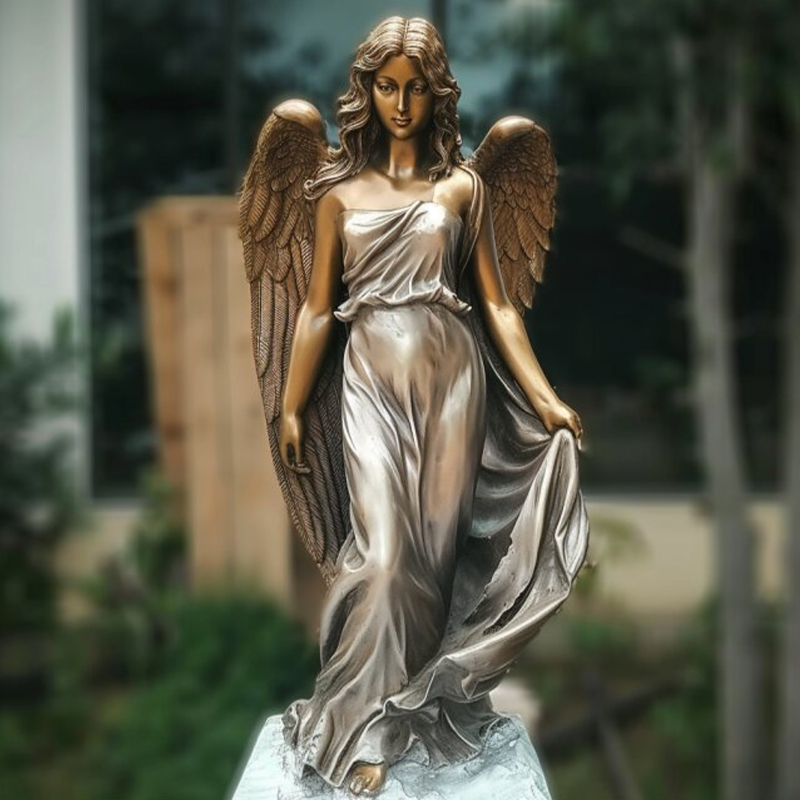
Bronze combines respectable tensile strength — typically 200 to 550 MPa depending on alloy and temper — with sufficient ductility to withstand impact, vibration, and thermal expansion without cracking. This combination is critical for outdoor public sculptures, which must endure vandalism, wind loading, freeze-thaw cycling, and occasional physical impact over decades of public exposure. Cast iron, while harder, is brittle and will fracture rather than deform under impact; a bronze sculpture struck by a vehicle or falling tree limb is far more likely to dent or bend than to shatter catastrophically.
Bronze's strength-to-weight characteristics also enable the thin-wall casting that makes monumental sculpture economically and physically viable. A typical large-scale bronze figure is cast with walls between 3mm and 8mm thick, producing a hollow shell that captures the full exterior detail of the sculptor's model while using a fraction of the metal a solid casting would require. This hollow-shell approach reduces material cost, total weight, and the structural demands on the armature or base supporting the work. A solid bronze casting of a life-size human figure would weigh approximately 600 to 700 kg — essentially immovable without heavy equipment. The same figure cast hollow in traditional lost-wax bronze weighs 80 to 120 kg, manageable with standard installation rigging.
A practical but frequently overlooked advantage of bronze is its repairability. Bronze welds cleanly using TIG (tungsten inert gas) welding with matching bronze filler rod, and repaired areas can be re-patinated to match the surrounding surface with a degree of invisibility that is impossible in most other metals. This means that damage to a bronze sculpture — whether from vandalism, accident, or natural deterioration — can typically be restored to near-original condition by a skilled conservator. Cast iron cracks are far harder to repair without visible evidence; stainless steel welds discolor and require grinding and polishing that often leaves visible marks; aluminum welds are structurally acceptable but difficult to match aesthetically when patina is a critical surface quality.
The global art foundry ecosystem has developed over centuries specifically around bronze, creating a deep pool of specialized knowledge, tooling, and skilled labor that supports the medium's continued dominance. Major art foundries in Pietrasanta, Coubertin, Walla Walla, and Ningbo maintain the full spectrum of lost-wax casting capability — from small edition bronzes under 30cm to monumental works exceeding 10 meters. This infrastructure means that a sculptor working in bronze today has access to centuries of accumulated technical knowledge, established quality standards, and a competitive marketplace of specialist fabricators that no other sculptural metal comes close to matching.
The convergence of all these factors — casting fluidity, surface chemistry, structural durability, patina aesthetics, thin-wall capability, repairability, and a mature production ecosystem — explains why bronze has held its position as the preeminent sculptural metal for over five millennia and shows no signs of relinquishing that status. Artists working in every style and tradition continue to choose bronze not out of habit but because, for sculpture that must endure and communicate across time, no other metal does what bronze does as well.



Daniel H.

Amanda R.

Robert B.

Jennifer S.

James W.

Barry G.

Michael T.

Emily K.

David L.

Sarah M.


Mikey XV

Jagxue

 English
 Español
 عربى
عربى Français
 italiano
 Deutsch