Content
In classical home interiors, every object earns its place not only through beauty but through purpose. Marble functional sculptures occupy a unique position in this philosophy—they are simultaneously works of art and objects of everyday utility. Carved from one of the world's most enduring natural stones, these pieces bring the weight, texture, and visual prestige of ancient architecture into the domestic space. Whether gracing an entrance hall or anchoring a study, marble functional sculptures signal a commitment to quality that synthetic materials simply cannot replicate. This guide presents ten must-have types for anyone furnishing or refining a classical home, with practical guidance on placement, material selection, and what to look for when buying.
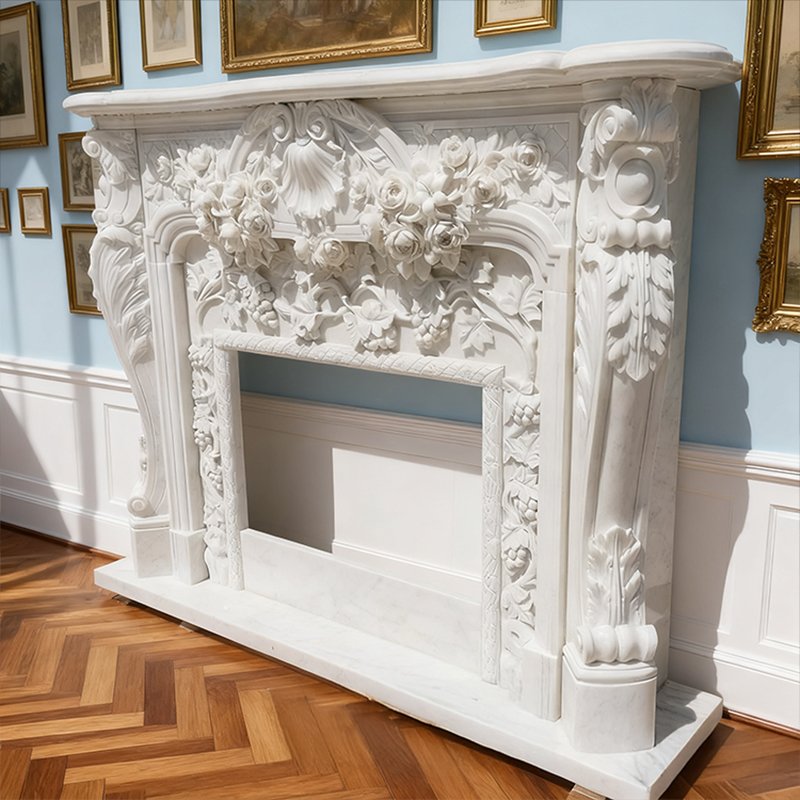
No classical interior is complete without a marble fireplace surround. This is arguably the most structurally significant marble functional sculpture in any room—it frames the hearth, anchors the wall composition, and defines the room's formal axis. Historically, surrounds were carved in white Carrara or creamy Botticino marble with relief decorations including egg-and-dart mouldings, acanthus scrolls, and figural panels. Today, authentic surrounds are available as antique originals or high-quality reproductions carved by hand in Italy, Portugal, and India. When selecting one, pay close attention to the mantle shelf depth (a minimum of 20 cm is recommended for display), the proportional relationship between the opening height and the overall surround height, and whether the piece is load-bearing or purely decorative. A well-chosen surround transforms an ordinary wall into a room's centrepiece.
Marble pedestal columns serve a dual role: they are sculptural forms in their own right and functional display platforms for busts, vases, plants, or clocks. In classical interiors, pairs of pedestals flanking a doorway, mirror, or fireplace create a formal symmetry that is fundamental to the aesthetic grammar of Georgian, Neoclassical, and Beaux-Arts decoration. Pedestals are typically turned or tapered, with a square plinth base and capital top. Heights range from 80 cm for tabletop-style plinths to 120 cm for full column pedestals. Nero Marquina (black with white veining) and verde Guatemala (deep green) are popular choices for drama, while white statuary marble suits lighter, more restrained schemes. Always ensure the top surface area is large enough to safely support the intended display object.
Marble bookends are among the most accessible and practical marble functional sculptures for any classical home library or study. Their substantial weight—far exceeding that of metal or resin alternatives—means they genuinely hold large volumes of art books, encyclopaedias, or leather-bound classics in place without slipping. Classical designs take the form of miniature architectural fragments: broken columns, Ionic capitals, lyre-shaped forms, or sculpted lion heads. The tactile experience of handling solid marble bookends is distinctly different from hollow decorative objects, and that sense of permanence is itself part of their appeal. When buying, look for pieces with felt or rubber pads on the base to protect shelf surfaces, and choose a marble type that complements the room's other stone elements for visual cohesion.
Candlelight and marble share a natural affinity—the warm glow of a flame animated by the translucency of white or onyx marble creates an atmosphere unmatched by electric lighting. Marble candle holders range from simple single-taper bases to elaborate multi-arm candelabras inspired by Roman torchères. As functional sculptures, they serve actively at dinner tables, on mantelpieces, and in entrance halls during evening entertaining. The most durable designs feature brass or bronze inserts within the marble socket to protect the stone from heat and wax. Onyx marble—a banded, semi-translucent variety—is particularly striking when candlelight passes through it. Pair matching holders in Calacatta marble for a formal dining table, or use a single oversized candelabra as a focal point on a console table.
The marble mortar and pestle is one of the oldest functional sculptures in domestic history, appearing in kitchens and apothecaries across ancient Greece, Rome, and Renaissance Europe. In a classical home, a generously proportioned mortar and pestle displayed on a kitchen shelf or island is both genuinely useful for grinding spices, herbs, and salt, and visually grounding in a way that modern electric grinders are not. White Carrara marble is the traditional choice due to its density and non-porous surface when properly sealed. Sizes range from 10 cm diameter (suitable for spices) to 20 cm or more (ideal for pastes and larger quantities). Unlike cheaper granite versions, a marble mortar develops a subtle patina with use, becoming more beautiful over time as micro-textures develop in the bowl's interior.
A marble console table—specifically one where the base itself is a sculptural marble form rather than a metal frame with a stone top—represents one of the grandest expressions of marble as functional sculpture in the home. Classical console bases take the form of carved eagles with spread wings, stylised sea horses, scrolling acanthus supports, or paired female caryatid figures. These motifs derive directly from 18th-century French and Italian furniture traditions and remain the gold standard for entrance halls and formal reception rooms. When the entire base is hand-carved marble and the top is a matched slab, the piece achieves a monolithic quality that commands respect. Such consoles are investments that appreciate over time, particularly when sourced from documented craftsmen or reputable antique dealers.
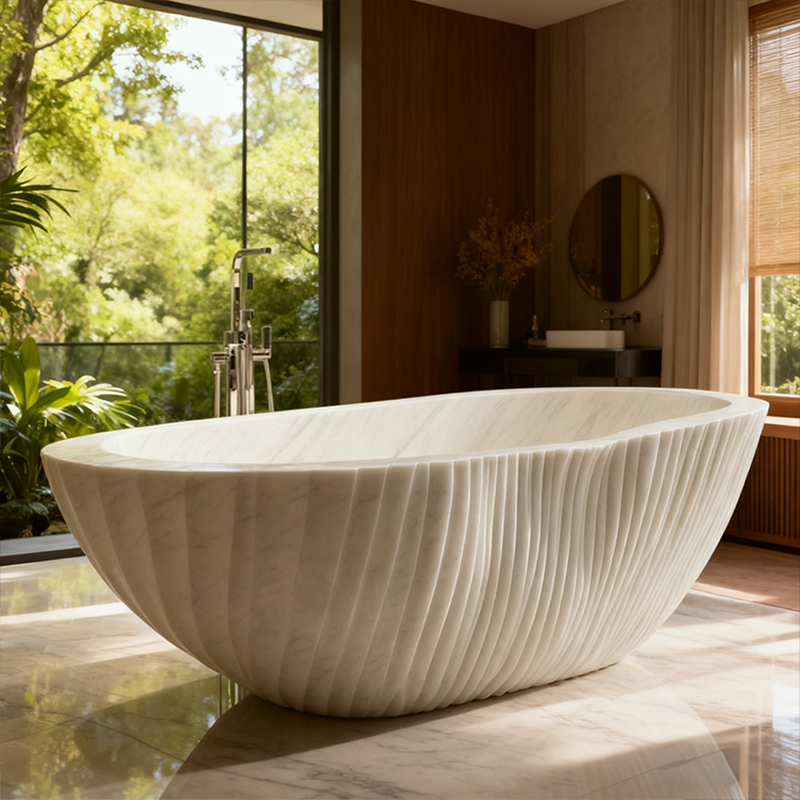
The classical bathroom is an extension of the home's decorative language, and marble functional sculptures play an essential role in elevating it beyond the merely functional. A coordinated set of marble bathroom accessories transforms a vanity into a curated still life. Key pieces to consider include:
Choosing a single marble variety across all pieces creates a unified, hotel-quality aesthetic. White Thassos or honed Calacatta are particularly popular for bathrooms due to their clean visual tone and compatibility with chrome, brass, and dark wood finishes.
A classical study deserves tools worthy of its purpose. Marble desk accessories function as miniature architectural sculptures that organise the workspace while communicating intellectual seriousness. The most common and desirable pieces are compared in the table below:
| Accessory | Functional Purpose | Recommended Marble |
| Letter opener base | Holds a silver or brass letter opener upright | Verde Guatemala |
| Pen and pencil cup | Organises writing instruments | White Carrara |
| Paperweight | Secures loose papers and correspondence | Black Nero Marquina |
| Desk blotter frame | Frames a leather or paper blotter pad | Botticino Classico |
| Stamp and seal tray | Stores wax seals, stamps, and ink | Calacatta Gold |
In classical reception rooms and dining spaces, marble fruit bowls and serving platters bridge the gap between still-life art and practical tableware. A deep-carved marble bowl filled with seasonal fruit on a dining table or sideboard references centuries of European still-life painting while remaining genuinely useful. The best versions are carved from a single block of marble, with walls thin enough to have elegance but thick enough to be durable. Fruit bowls in white statuary marble with a polished interior and honed exterior create an interesting textural contrast. For serving platters, a large rectangular slab of Calacatta or Emperador marble on small bun feet makes an exceptional cheese and charcuterie board—the cool stone temperature naturally preserves cheese, and the dramatic veining provides a visually stunning backdrop for food presentation at dinner parties.
Classical homes with formal gardens, terraces, or entrance courts benefit enormously from marble urns and exterior functional sculptures. Garden urns serve as planters, focal points at path terminations, and symmetrical accents flanking steps or gateways. The most traditional forms include the campana urn (bell-shaped body on a spreading foot), the Medici urn (with lion-mask handles), and the krater form (wide-mouthed with scroll handles). For outdoor use, it is essential to select marble varieties with low water absorption rates—white Carrara and Portuguese Estremoz are well-tested choices for temperate climates. Interior drainage holes must be properly drilled to prevent water logging and frost damage. Placed at the top of exterior stairs or framing a formal garden entrance, a pair of matching marble urns signals the classical ambition of the entire property and creates a powerful visual welcome from the moment a visitor arrives.
Investing in marble functional sculptures requires some knowledge of material care to ensure longevity. Marble is calcium carbonate, which means it is vulnerable to acidic substances including lemon juice, vinegar, wine, and many common cleaning products. All marble pieces used in kitchens, dining rooms, or bathrooms should be sealed with a penetrating impregnator sealer upon receipt and re-sealed annually. For polished surfaces, use only pH-neutral stone cleaners and soft microfibre cloths. Avoid placing marble bookends or accessories directly on rough surfaces without felt pads, as the stone base can scratch both the marble itself and the furniture beneath it.
When sourcing pieces, prioritise suppliers who can confirm the quarry of origin and provide care documentation. Authentic hand-carved marble will show subtle tool marks and natural colour variations that mass-produced resin imitations cannot convincingly replicate. The slight imperfections in genuine marble—a faint vein running unexpectedly across a mortar bowl, a ghost-like inclusion in a bookend—are evidence of the material's natural origin and are to be celebrated rather than avoided. These ten categories of marble functional sculpture, thoughtfully chosen and properly maintained, will serve a classical home not just for years but for generations.



Daniel H.

Amanda R.

Robert B.

Jennifer S.

James W.

Barry G.

Michael T.

Emily K.

David L.

Sarah M.


Mikey XV

Jagxue

 English
 Español
 عربى
عربى Français
 italiano
 Deutsch